

Home Blog Page 120

Norland camp gets upgrade thanks to OTF

0

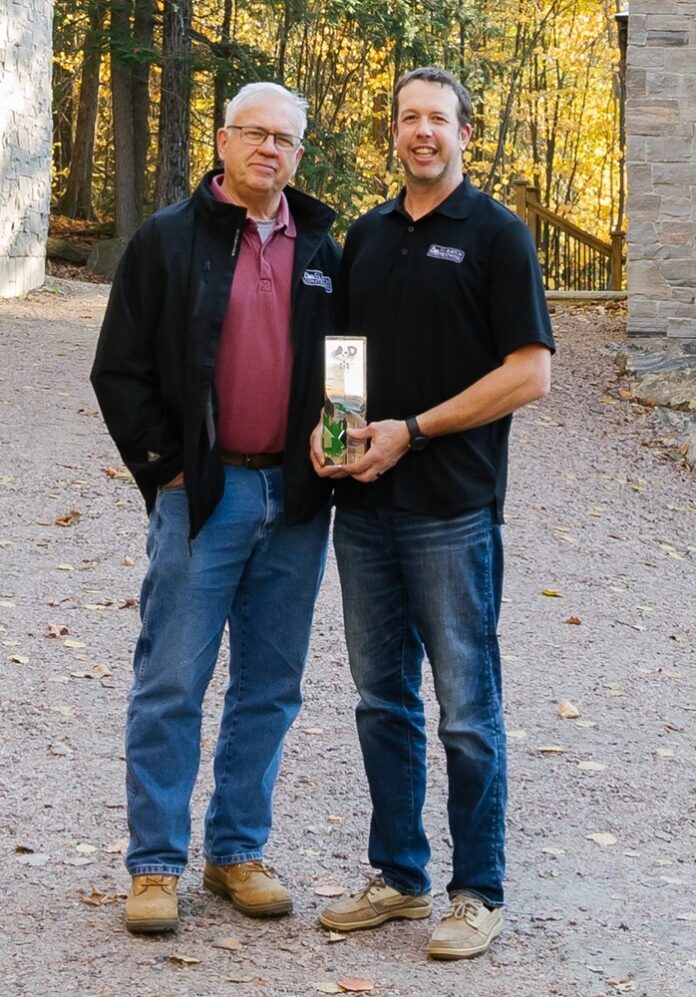
Camp Endobanah in Norland recently announced it is using a $117,200 Ontario Trillium Foundation grant to transform a 1940s Toronto Transit Commission women’s quarters to the camp’s updated main lodge.

Camp president Matt Welland said there was a ceremony Oct. 26 to mark the milestone.

He said MPP Laurie Scott was on hand to see what the non-profit group had done with the money it received last fall.

The year-long grant was used to renovate and update the camp’s main lodge, which has been reconstituted from one of the TTC’s temporary structures rebuilt at the camp in 1946 and now a permanent feature at Camp Endobanah.

“Funding provided to Camp Endobanah, by the OTF, will provide improved accessibility allowing all campers to enjoy this wonderful facility,” Scott said.

She added, “these improvements will enable the camp to offer activities to the community year-round, taking advantage of nature throughout the seasons.”

The funds were used to upgrade the camp’s main lodge and kitchen insulation, heating systems, LED lighting, windows and doors to provide better energy efficiency and more comfortable year-round use. Door hardware and washroom upgrades have improved accessibility and efficiency.

Welland said the OTF grant allowed them to transform the focal point of the camp, the main lodge, to make it more accessible, energy efficient and comfortable. “A building that started its life as a TTC temporary women’s quarters at Yonge and Eglinton in Toronto, has had new life breathed in to it to support the local communities that operate their camps from Camp Endobanah,” he added.

Camp Endobanah is a not-for-profit camp run entirely by volunteers. Since 1932, the camp has offered a rental space for youth and family groups to operate their camp programs.

Union lead hoping to avoid postal strike

0

The longer negotiations between Canada Post and the Canadian Union of Postal Workers (CUPW) over a new contract stretches on, the more likely there will be a strike, says Doug Ford, president of the local 564 covering Lindsay and Haliburton County.

Approximately 55,000 letter carriers, mail service couriers, postal clerks and mail handlers nationwide have been working without a contract since Dec. 31, 2023, Ford said. Union officials have been in talks with higher ups from the Crown corporation for months, but as of Nov. 6 no deal has been struck.

Canada Post’s latest offer, presented last week, included annual wage increases amounting to 11.5 per cent over the next four years, while also including protections for defined benefit and pension plans for current employees.

Speaking to The Highlander Monday evening, Ford said the offer didn’t address workers’ main concerns.

“When Canada Post publicizes the offers they’ve made, what they focus on is things like wage increases. But they’re not telling the public about what they’re trying to take away,” Ford said. “Canada Post has told the public they wish to get into seven-day delivery to compete with Amazon – CUPW, I don’t think, is disagreeing with that. Where the problem lies is in the language of the contract.”

Ford said, now, all CUPW employees enjoy “predictable” schedules with regular hours during the traditional work week. While there’s an acceptance workers may have to lose weekends, Ford said what’s being proposed goes further than that.

“Today, you might have a Monday to Friday job, but in the new contract you’d be expected to work seven days a week. Possibly four hours some days, and eight to 12 hours other days. These are things the union sees as non-negotiable,” Ford said.

He also expressed concern over a two-tier wage and benefits system Canada Post is trying to include in a fresh deal, meaning new employees would start at a significantly reduced rate. “We want everybody to be equal,” Ford said.

In a statement to CBC Nov. 3, Canada Post said it is “rapidly falling behind in today’s highly competitive, customer-focused parcel delivery market,” and is proposing a seven-day work week as a possible solution.

The Crown corporation has reported losses of $490 million through the first six months of 2024 and $3 billion since 2018.

Ford said of the approximate 100 unionized employees in the region, about 95 per cent voted in favour of a strike mandate. Nationwide, CPUW reported approximately 90 per cent of employees supported a potential strike.

“We’ve given the national executive board the right to bargain on our behalf. But we don’t want to be on strike. That’s not what anybody wants. Most of our members are living paycheck to paycheck. Nobody can really afford to go on strike, especially over the holidays,” said Ford.

The union has to provide 72-hours’ notice before striking – Ford predicts if that were to happen, the first step would be rotational walkouts in major hubs like Toronto, Montreal, Ottawa, Halifax, and Vancouver. If a full-scale lockout is called, customers in the County would be impacted, he said.

Ford said he’s been with Canada Post since 2007 and has been involved in multiple labour disruptions – the last in 2018, which ran for three days before the federal government mandated the postal workers return to work and sent the issue to binding arbitration.

Ford expects a similar thing would happen again, though retains hope for a negotiated contract.

“That’s what all organized labour people want to see. Unfortunately, history with Canada Post has shown often that just isn’t possible. We’ve had to settle for third party negotiated agreements in the past,” he said.

Since 1965, CPUW has been involved in 19 major labour disputes with their employer.

OPP investigating fatal ATV collision in Haliburton

0

The Haliburton Highlands detachment of the Ontario Provincial Police (OPP) is investigating a fatal single all-terrain vehicle (ATV) collision in Haliburton.

On Nov. 2, at approximately 3:45 p.m., OPP responded to a single ATV collision on Glamorgan Road. The lone rider was transported to hospital by Lindsay Emergency Medical Services (EMS).

The individual, a 32-year-old from Haliburton, was pronounced deceased at the hospital.

The OPP Traffic Incident Management Enforcement Team attended to process the scene. Members of the OPP are continuing the investigation, in conjunction with the Office of the Chief Coroner.

The OPP is requesting that if anyone has any information that may assist investigators to contact OPP at 1-888-310-1122 or Crime Stoppers at 1-800-222-TIPS (8477) or www.khcrimestoppers.com.

Deputy mayor wants pressure on busing

0

Responding to resident concerns about safety in downtown Minden – in light of a new school board policy making children walk 1.6 km to Archie Stouffer Elementary School – staff reported back to council Oct. 31 about safe movement in the core.

Council had asked staff on Sept. 26 to look into crossing guards.

CAO Cynthia Fletcher noted the township has already been working on the file. For example, in the summer, they expanded the existing community safety zone to include all of Water Street and the remaining portion of Bobcaygeon Road through Minden village. The roads department has also installed four digital speed limit signs to help slow traffic.

The CAO added mayor Bob Carter, and Dysart mayor Murray Fearrey, recently met with Trillium Lakelands District School Board (TLDB) officials; and plan to contact MPP Laurie Scott to request a meeting with the Ministry of Transportation.

Fletcher added, “there are several potential changes to infrastructure that staff are exploring.” However, she said they have to investigate further and crunch some numbers for budget deliberations.

One thought is pedestrian crosswalks on Bobcaygeon Road, and, or Water Street, with locations to be determined. Fletcher said they could remove the two courtesy crosswalks on Bobcaygeon Road and install a “proper” one. There could be another on Water Street near the footbridge. She said they would need to develop concept renderings, get public input and do a traffic study. The crosswalks would have to be approved under the Highway Traffic and Accessibility for Ontarians with Disabilities acts.

Staff are also working on a proposal to upgrade sidewalks and ramps for better access to all pedestrians, including those with mobility issues. There may be grant money available.

Fletcher said they could also look into lowering the speed limit on Bobcaygeon Road.

When it comes to crossing guards, she said it would be something new for the township and needs more investigation. They are governed under the Highway Traffic Act and there are many requirements, such as certification, on-going training, supervision, and safety equipment, among others.

“Staff intend to have further conversation with the OPP, local school and colleague municipalities who offer this service,” she said.

They could also investigate a Walking School Bus program, the CAO reported.

“Like a motorized bus, there is a planned route with scheduled pick-up points or ‘stops’… which has many benefits for children and families, including safety, better health, and socializing with friends and neighbours.” Coun. Pam Sayne did question liability under such a program.

Deputy mayor Lisa Schell said she is worried TLDSB will continue to increase walking distances. “I don’t want to stop putting pressure on the school board. It’s their responsibility. I don’t want the townships to take it on and let them get away with doing whatever the heck they want.”

Coun. Tammy McKelvey agreed with the “need to put pressure on… if they can’t do busing, they can do crossing guards. People need to be encouraged to contact the school board to do the job they are supposed to be doing.”

The staff report was received for information.

Low water levels continuing on reservoir lakes

0

Parks Canada’s water management team says an extended trend of below-average precipitation has impacted watersheds across the Trent-Severn Waterway, including the reservoir lakes.

“Most lakes are well below long-term average water levels. Most of the reservoir lakes remain at their respective winter set dam configuration. The Gull River reservoirs are 35 per cent full, and the Burnt River reservoirs are 35 per cent full,” the Trent-Severn Waterway said on Nov. 5.

They added the central reservoirs are 40 per cent full and The Gull and Burnt River flows are significantly below average. They added Parks Canada continues to actively monitor water levels, flows, and weather forecasts across TSW, since these factors are used to determine dam operations on a daily basis.

The TSW noted rainfall amounts for September and October have contributed to 25-75 per cent less precipitation compared to the long-term averages. The months of September and October contributed to values that are less than 50-75 mm than the long-term mean. The five-day forecast suggests a temperature trend above the freezing mark and about 3-16 mm of rain.

“The extended low amounts of precipitation have decreased flows and water levels at most locations. The most recent rainfall events were spatially variable and not significant, as a result currently, flows remain below average and receding across the Trent-Severn Watershed. The current forecast indicates that water levels and outflows may continue to decline and are subject to change depending on amounts of rain in the forecast.”

Minden targets end of March for full STR

0

Acknowledging “there’s been some hiccups, to say the least, along the way,” Minden Hills’ chief building official Eric Guay tabled a report to an Oct. 31 council meeting seeking approval for a staged approach to the new short-term rental bylaw.

Council passed its bylaw to regulate and govern the operation of STRs Sept. 12. Guay said staff have been working with Granicus Canada on implementation as the bylaw came into force Oct. 1. Granicus got the contract for monitoring and compliance.

“An essential role of the service contract was to provide an effective roll out to the STR registration and compliance program; however, the implementation has not progressed as originally anticipated,” Guay said.

“There have been implementation delays due to the vendor not being able to adequately meet the townships’ requirements.”

He noted that recently both Highlands East and Algonquin Highlands have adopted a staged approach to the roll out of their STR programs. “In a concerted effort to have continuity amongst the lower-tier municipalities regarding STR implementation, staff recommend that council adopt a similar implementation process,” Guay suggested.

He said stage one would be an implementation phase, until May 31, 2025, with a focus on education, voluntary compliance, and conditional approvals of licences. “The expectation will be that staff will work with operators to achieve compliance with all aspects (of the bylaw) during this time frame.”

He said enforcement will focus on potential hazards to occupants and neighbours, so anything of a health and safety risk, as well as environmental issues; things such as high-risk sewage systems, access for emergency service vehicles, fire threat, and building code issues.

Stage two would see active enforcement as of June 1, 2025. “All requirements pertaining to the bylaw will be enforced and all properties that remain non-compliant will have demerit points, administrative penalties applied, and will be subject to the issuance of orders to achieve compliance,” Guay said.

Mayor Bob Carter said he was “really troubled” by the June 1 date. “The number in my head is March 31. If you got me April 30, I could probably live with that.” However, he said he wanted the full court press to occur before the May 24 weekend.

Coun. Tammy McKelvey agreed, saying she’d like full enforcement to begin in the winter season to ensure renters “here to enjoy the winter season are safe.” And Coun. Ivan Ingram also preferred a March 31 date. The majority of councillors directed staff towards that date.

CAO Cynthia Fletcher said between now and then, “the program is not stopping. We are taking applications, having conversations with operators, we need some time for staff and community members to have an education and adjustment period.” At the same time, she said there would be enforcement for “egregious non-compliance.”

Council received the report for information only.

AH starts short-term rental licenses

The registration and licensing system for the Township of Algonquin Highlands’ shortterm rental bylaw went live Nov. 1.

It is available to residents through the shortterm rentals page of the Algonquin Highlands website, where you can also access the bylaw and its associated documents. Under the bylaw, residents who operate short-term rentals must register them with the township and obtain an operating licence.

The page also contains staff contact information. AH planning and bylaw staff are available to answer questions and help guide residents through the registration process.

U-Links to tackle ‘worst invasive species’

0

U-Links Centre for Community Based Research has kick started a year-long investigation analyzing the threat of invasive phragmites to four watersheds in the northern part of Haliburton County.

Jim Prince, U-Links co-chair, said the nonprofit recently received $20,000 from the Invasive Species Centre to identify patches of the plant – described as one of the most dangerous and prevalent invasive species in Ontario – on Redstone, Kennisis, Growler, and Lipsy lakes in Dysart et al.

The effort, led by a group of more than 25 County-based volunteers, will see approximately 200 kilometres of roads assessed. Prince said U-Links will also map out 20 public water access locations across the County, to see how widespread the problem is.

“Managing invasive phragmites has been identified as a priority in Ontario. The Ontario Phragmites Action program is a new effort to enhance a coordinated response to invasive phragmites across the province,” Prince said, noting the effort is provincially funded. “The primary objective is to expand collaborative action on invasive phragmites across Ontario.

“Haliburton County does have some reported invasive phragmites and it is important to further understand the extent of the problem here,” he added.

Also referred to as European Common Reed, invasive phragmites has been prevalent in Ontario for decades. The Ministry of Environment, Conservation, and Parks (MECP) describes it as a perennial grass that largely invades wetlands and beach areas. The plant spreads quickly, out-competing native species for water and nutrients. Once settled, it releases toxins from its roots into the soil to hinder the growth of and kill surrounding plants.

Because of its ability to change ecosystems, invasive phragmites is a threat to fish, birds, and land-based animals.

Prince said it’s a major problem in much of southern Ontario and stretches as far north as Sudbury and Sault Ste. Marie. Early indications, he said, suggest invasive phragmites hasn’t completely taken hold in Haliburton County – yet. He’s hoping by identifying problematic areas, U-Links can establish a plan to eradicate the plant before it spreads.

The organization enlisted the help of Lynn Short, a horticulture professor from Humber College, who has extensive experience identifying and removing invasive phragmites around Georgian Bay. Short came to Haliburton County over the summer to train local volunteers.

“Lynn has perfected a removal technique – basically you take a shovel and dig at a 45-degree angle and remove the roots, which are called rhizomes. If you carefully do that in targeted spots, it’s possible to effectively remove it,” Prince said.

Several areas Short has treated on Georgian Bay have shown signs of life – with native plants taking over again.

U-Links has identified several sample removal plots it would like to work on – near Kennisis Lake – though will need to apply for funding in 2025. There will likely be money available, Prince said, with the Ontario government investing $16 million into invasive phragmites identification and eradication over the next few years.

While many may not know invasive phragmites by name, Prince said most can identify it. Capable of growing up to five metres tall, the plant bunches in wetland along roadways. In impacted areas, there can be up to 200 plants per square metre.

“It takes over so quickly. It already has in many urban areas south of us. The good news story here is we’ve got patches of it, yes, but they’re not huge plots yet. We have a chance to stop this before it fully takes hold,” Prince said.

Sara Gregorini and Frank Figuli are the project leads at U-Links and have been working with volunteers and three intern students from the University of Guelph on mapping. Most of the mapping has been complete, Prince said.

One of the benefits, he believes, is U-Links will be able to add to an online database showing anywhere invasive phragmites is found in Ontario. Right now, he called Haliburton County a “data desert”, with very little information available.

RPM Haliburton to be home to Yamaha

0

RPM Marinas owners, Alan and Ann Gordon, have announced their Haliburton location is slated to become one of Yamaha’s “leading showrooms.”

“We’re bringing Yamahas here (from Redkenn RPM) so it will be in the busiest commercial area in the County. We’re doing upgrades on the building in order to brand it as a Yamaha-quality dealership in terms of ambiance through its look and feel,” Ann said last week.

To bring this about, RPM Marinas has been moving out inventory to make way for new stock. Although they sold Wedgewood RPM on Twelve Mile Lake earlier this year, Haliburton RPM, Redkenn RPM and Balsam RPM in Coboconk remain firmly in place.

“We will continue to support our 3,000-customer client base, effectively manage a winterization/storage business of over 1,000 boat/sled customers and provide 600 visitors to the County with rental boats/ sleds so they can enjoy our Haliburton lakes in the summer and sledding in the winter,” Alan said.

Ann said on Oct. 31, “a couple of days ago, we began moving boats off-site in order to make room for the change. We were overstocked in boats and wanted to right size the business, knowing that Yamaha was coming. Kawasaki is still going to be sold out of here, but most of the branding here will be Yamaha, most of the branding at Redkenn will be Kawasaki. Kawasaki will also be down at Balsam.”

Alan added they will still carry other brands, and they understand brand loyalty, but will have less of those product in stock.

Ann said, “we want to announce that this is big news for us and with the sale of Wedgewood RPM, we continue to invest in the marine and powersports business into our 14th year of business in the County.”

Alan said Yamaha has recognized County Road 21 into Haliburton as a “huge commercial area.” He said it took three years to get the deal done. Ann added it’s a more central location, so, “now we’ll be able to better service Minden, Haliburton, Kennisis/ Redstone area and Coboconk areas.”

Alan said they would still be servicing, selling and storing marine and powersports products at Redkenn and Balsam RPM. Ann added the plan is to keep their customer profile up there and Yamaha will still be up at Kennisis, too. “We have added a major extension to storage facilities at the Redkenn RPM location and put new docks in at the Haliburton and Balsam RPM locations over the past four months.”

But for the Haliburton location, Ann said, “we’re going to make this spectacular. We’re basically looking at the business and asking ‘what is right for Haliburton and for us?’ We were in a growth phase. But we’ve sold one marina in the last year, so we’re no longer in a growth phase. I’ve finally convinced Alan, who is 67, that he needs to slow down by bringing everything major into this location. It will allow Alan to be central and on top of everything.”

Alan added, “the whole concept is people come up here to play – we have all the toys. I love this business… 99 per cent of people you’re dealing with are happy to be here, happy to buy toys and they’re excited.”

Carr committed to student innovation

0

Since 2016, Hal High teacher Christine Carr has been helping students reach their potential by developing important life skills, on top of academics, through the school’s popular leadership class.

Running each semester, students are encouraged to identify issues, projects or causes they’re passionate about – and challenged to come up with plans to initiate change or growth – either at school, or in the Haliburton County community.

Carr was recognized for her work during a recent Trillium Lakelands District School Board (TLDSB) meeting in Minden Oct. 22, where she received a director’s recognition for innovation and leadership award from Wes Hahn. Carr was nominated by HHSS principal Jenn Mills.

“Christine goes above and beyond in everything she does for our students… she provides experiences and opportunities for students to connect in school life, to become leaders for themselves and others,” Mills wrote in her submission. “Christine has taken the curricular expectations to another level, focused on continuous school improvement and inspiring students to be better.”

Speaking to The Highlander this week, Carr said she was honoured to receive the award, saying she’s carrying on the work started by Paul Longo, who launched the leadership class and ran it for several years before passing it off in 2023.

Also teaching French and English at HHSS, one of Carr’s first influences was to make the leadership class bilingual. That’s been a big hit, she said.

The class typically attracts around 20 students each semester – Carr said there are 16 enrolled now, but there were more than 30 participants last spring.

No matter the class size, her approach is always the same.

“We start the course by brainstorming everything the students are interested in and passionate about in the community, within the school, and what they’d like to see change. Then we make committees based on that,” Carr said. “Then they get to work tackling their project. Committees learn to set action plans, goals, and how to follow through.

“We focus a lot on finding out what everyone’s individual skills are, then building on that to help them take on leadership roles, increasing confidence, and inspiring them to do the work in whatever their chosen area is,” she added.

Last year, one group floated the idea of cleaning up the school courtyard, which was overgrown with weeds and had been unused for years and turn it into an outdoor classroom. Students worked with businesses in the community to bring their vision to life, with the new space opening last June.

Another committee wanted to raise money to help students cover costs associated with playing school sports. They brought in $1,000, which was used to cover uniforms, registration fees, and transportation costs.

“It teaches them skills they can use for the rest of their lives – they can be applied to wherever they go after high school. The course is about equipping youth with what they need to be successful and have the confidence to know they can make a difference. They just have to put themselves out there and try,” Carr said.

One of the focuses this semester is on boosting school spirit – the class recently hosted a themed ‘Halloween Week’ at the school and organized a dance. Students are also assisting with upcoming school awards and Remembrance Day assemblies.

In early October, Hahn and 25 students attended a retreat at Camp White Pine in Haliburton. The Canadian Student Leadership conference brought 500 students and 100 staff from across the country to the Highlands for a weekend of learning and networking.

“Christine’s involvement in the conference demonstrates her innovation and leadership… to empower students to make a difference in their school and community,” Hahn said.

Pilgrim: ‘hold fast to those stories’

0

Belinda Wilson recalls walking into the Ardenne Abbey, near Caen, France, during the 2013 Royal Canadian Legion Ontario’s Pilgrimage of Remembrance tour.

“I just felt such evil and such overwhelming fear,” she said. “I didn’t know what had happened in this place, but I knew it was something awful.”

In June 1944, 20 Canadian soldiers were massacred in the abbey’s garden.

During orientation, Wilson learned the terrible history of the place and said it stuck with her. So much so, that it was the first song she wrote upon returning to Canada.

She was working on another tune at the time, but “all a sudden this song just pushed its way out; just fell out of my head.” This despite the fact she had been resisting it, since it brought back horrible memories and feelings. “But I couldn’t help it and so I wrote it.”

The events at Ardenne Abbey were part of the Normandy Massacres, a series of scattered killings during which up to 156 Canadian prisoners of war were murdered by soldiers of the 12th SS Panzer Division during the Battle of Normandy.

“Every time I sing that song, 11 years later, it still affects me,” she said.

Wilson has had people with ancestors from the massacres approach her after speaking engagements. When she apologizes, they inevitably tell her they were glad she performed it, as “it keeps them alive.”

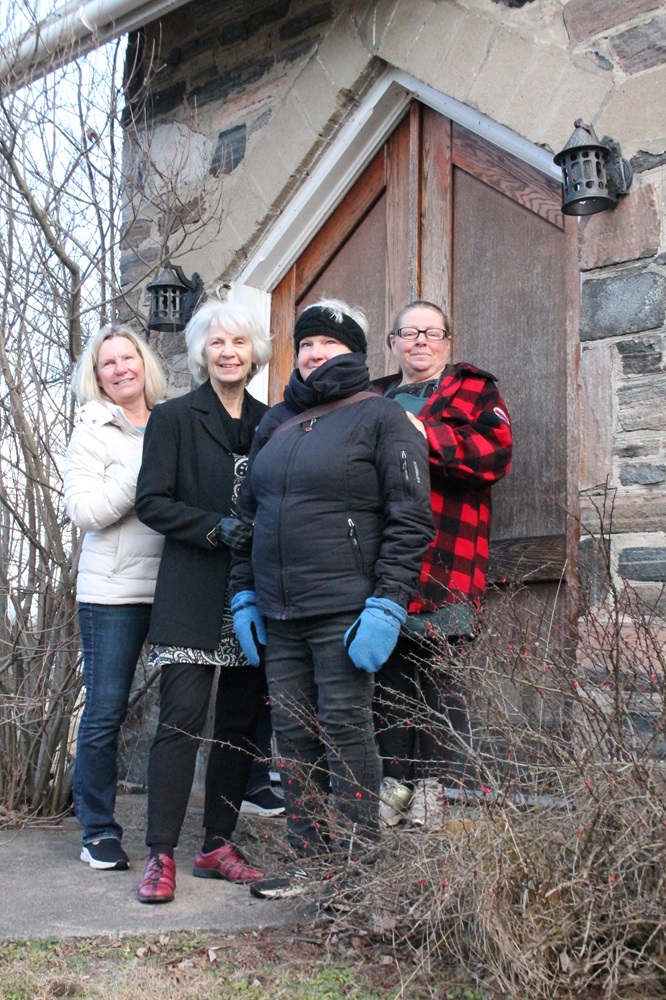
Wilson, from Coboconk, presented ‘In the Footsteps of Heroes’ Nov. 3 at the Irondale Church. She is a Legion supporter, and military history enthusiast. The talk was part of the Service, Courage, and Sacrifices series presented by Bark Lake Cultural Developments.

Despite joining the pilgrimage in 2013, Wilson is still speaking about her experiences. She thinks she is up to 75 public engagements across Ontario, when most stop presenting after two years – when the next pilgrimage takes place.

The pilgrims go to Canadian battlefields, memorials, and cemeteries, with her trip mostly in Belgium and northern France, with a quick foray into the Netherlands.

“I always start off by telling people I am not a historian. I’m not here to give them a history lesson. If they want a history lesson, they can Google it. What I try to do through my photos, stories, songs, is help them to understand how I felt at these different places and try to evoke the importance of these stories, and of sharing these stories.”

She said every presentation is one-of-a-kind because people react, and interact, differently afterwards. People bring their own stories and memorabilia.

As a songwriter, she expresses uniquely about her experiences. “I knew there were songs to be written when I got back.”

She’ll also remember the number of times people thanked them. She recalls that at Dieppe, “people were coming up and even if you didn’t understand French, you knew what they were saying anyway. They were saying ‘thank you’, and they were trying to tell you about their grandfather, who took a Canadian soldier and hid him in a barn; their mother who prepared some quick meals when Canadian soldiers were trying to escape the Nazis. It was just ‘thank you, thank you, thank you’, and it just makes you so humble as a Canadian to be on the receiving end of that kind of gratitude.

“It’s ingrained in them, generation after generation, It’s not an obligation. It’s not something you have to do, it’s something you want to do because you feel it’s necessary, that debt can never be repaid in their opinion.”

Wilson’s message for this Remembrance Day – with the ranks of Second World War veterans nearly gone?

“Any of them who are left, find out as much as you can from them; some of them are now starting to talk about it when they wouldn’t 20-30 years ago. Hold fast to those stories. Listen to what they’re saying. Listen to how they’re saying it. Watch their eyes. So much can be told by a person’s eyes because sometimes they’re not telling you the whole story because maybe it’s too gory or maybe they don’t think it was that big a deal because they survived.

“If you have the privilege of encountering a veteran, stick out your hand and say ‘thank you’.

She quotes from the lyrics of her abbey song, “another story to tell, tell the people, tell the children, remember them well.”