

Home Blog Page 114

Ontario government announces rural police relief

0

The Ontario government has announced $77 million in relief funding for rural municipalities feeling the pinch with escalating policing costs.

Solicitor general Michael Kerzner said the investment will help smaller communities address shortfalls in its Ontario Provincial Police (OPP) budget. Costs are up across the board, Kerzner noted in a Nov. 29 release, due to a new contract signed by the province and the Ontario Provincial Police Association in July.

“Our government is working closely with municipal partners and our women and men in uniform to keep communities across Ontario safe,” Kerzner said. “The financial relief [proposed] will help municipal leaders balance their budgets and invest in their communities while ensuring no change to the policing provided by the OPP that keeps families and businesses safe.”

The plan includes a 3.75 per cent bill reduction on 2023 total reconciled costs, a 44 per cent reduction on 2023 reconciled overtime costs, and a 10 per cent reduction on amounts invoiced for 2025 policing costs.

In addition to these changes, the provincial government is continuing its annual $125 million court security and prisoner transportation transfer payment program for 2025.

It’s welcome news for townships in the County – in October, Algonquin Highlands mayor Liz Danielsen expressed concern after learning police costs in the municipality were increasing $210,000 next year – a 21 per cent jump. At that meeting, treasurer, Jean Hughes, said rates were up between 16 and 30 per cent across Ontario.

The OPP provides municipal policing services to 330 municipalities across Ontario.

Mail workers say strike ‘hard on all of us’

0

With negotiations between Canada Post and the Canadian Union of Postal Workers (CUPW) picking up again this week, County-based mail men and women say they’re hopeful of getting back to work soon, with holiday season in full swing.

It’s been 21 days since more than 55,000 postal workers nationwide walked off the job, shutting down the country’s postal system. Employees have been without a contract since Dec. 31, 2023.

After talks between the two parties broke down Nov. 26, Canada Post spokesperson Phil Legault said the union was presented with “a comprehensive framework for reaching negotiated agreements” on Dec. 1.

“This includes proposals to bring greater flexibility to the corporation’s delivery model, while also demonstrating movement on other key issues,” Legault said. “It is our hope these proposals will reignite discussions and, together with the support of mediators, help the parties work toward final agreements.”

No further details have been shared, though Doug Ford, president of CUPW local 564 covering Haliburton County, indicated the offer doesn’t go far enough.

“The union shared the framework isn’t really touching on the key issues we’re far apart on,” Ford said.

Last month, the Crown corporation offered an 11.5 per cent wage increase over the next four years, while also including protections for defined benefit and pension plans for current employees.

Nine workers who deliver in Haliburton, Minden, Bracebridge, Kinmount, and Sunderland were in front of the Minden post office Nov. 28 talking to people about why they’re striking.

“It’s very hard on all of us – it’s getting colder out, Christmas is coming. None of us really wants to be here. We don’t understand why we have to keep fighting. We’ve been doing our jobs,” said Dolly, who works in the County.

“It’s mentally draining being here,” added Laura, another local worker. “Nobody gains from a strike. I think the thing we’re finding hardest to accept is the fact the CEO and executives are sitting up there telling us what to do, telling us about all the money the company is losing… well, they’re making way more than we do.”

Canada Post reported losses of $315 million for the third quarter of 2024, and $3 billion since 2018.

Dolly said she’s worried about her pension and benefits but noted she’s also fighting for worker equity.

“I want to make sure we’re all equally paid – we do the same job, yet we have rural routers being paid differently from urban. We should be equal all the way and we’ve been fighting for this for years,” Dolly said.

Ford noted in an earlier interview that all previous Canada Post offers had included a clause that would create a two-tiered pay scale, with new workers starting at a reduced wage.

With the company looking to transition to a seven-day work week, saying that’s needed to compete with Amazon, Dolly said most workers don’t have a problem with that.

“We’re willing to work with that – we just want to see a plan, to make sure everything is done properly. Until then, we’re strong,” Dolly said. “CUPW is the union that brought maternity leave to Canada, so if we can do that, we can do other things too.”

Laura added, “this isn’t just about us. This is for the people coming through who will take our spots. We need to keep jobs secure for the younger generations, because there aren’t many left anymore.”

School board suspends more than 1,100 students

0

The Trillium Lakelands District School Board (TLDSB) says it issued 1,888 suspensions board wide in 2023-2024, to 1,101 students. Of those, 971 were high schoolers, and 917 elementary students. There were 13 expulsions.

The board does not break down the figures by County, so it is not known how many there were at Haliburton Highlands Secondary School, or the five elementary schools.

TLDSB releases the numbers at a board meeting each year, and did so at their Nov. 26 gathering. Staff also provided an overview of mental health services, and supervised alternative learning (SAL) data.

Schools adhere to the provincial code of conduct and school boards’ code of conduct, as well as the board’s code of conduct procedure.

“When inappropriate student behaviour occurs, school administration investigates the incident and determines the most appropriate way to respond. In some circumstances, short-term suspension is a useful tool. With serious infractions and incidents, long-term suspension or expulsion may be the response that is required,” staff said.

They added their ethos is one of correction and support. The program for suspended and expelled students includes an action plan designed to help with both academic and non-academic goals.

TLDSB’s SAL program provides opportunities for students to re-engage in their education after periods of absence, and allows them to access both academic and non-academic support. Forty-six students were admitted to SAL, and 127 to REAL SAL.

When it comes to mental health services, staff said there were 1,208 referrals made to mental health counsellors, with the top reasons being anxiety, family dynamics and self-regulation. Some 235 students who’d missed school 15 or more days in a row were referred to reengagement counsellors. And 63 students presented with suicide ideation.

The board prioritized mental health and well-being in its 2022-2027 strategic plan. The board employs 13 regulated counsellors, with a focus on mental health promotion, prevention and early intervention. They also refer to community-based agencies.

Minden council dusts off budget shoes

0

Minden Hills taxpayers got their first look at the township’s 2025 budget Nov. 21 – with a starting point of an estimated 8.7 per cent levy increase.

That will not be the final number when council is expected to endorse the completed document early next year.

Director of finance and treasurer, Wendelin Lonergan, said, “staff has really done a dive and we are still working at diving deeper to make sure everything is refined.” She said the staff goal is a “reasonable” increase.

Lonergan said there were a number of external pressures. They include increased OPP billing, which could raise taxes three per cent in the township. Wages will create a crunch, with the township finally having a full complement of staff, and wages up four per cent, and benefits nearly 11 per cent. It looks like there will be no Provincial Offences Act revenue and insurance costs are up six per cent.

The treasurer said there’s pressures on everything the township does, without considering the cost-of-living allowance and inflation.

Minden Hills is working on a new asset management plan that will pinpoint deficiencies in fleet, building and equipment. They hope to offset with bulk purchasing and reviewing whether projects remain important, or if the focus has shifted.

CAO Cynthia Fletcher said there were still some unknowns to be brought back in January.

She commented, “we made some headway in 2024 on stabilizing our workforce, and starting to focus on streamlining and modernizing some of our customer service processes. We made infrastructure improvements and we started putting a lot of focus on engaging our community.”

She said success stories included the Village Green restorations, accessible public washrooms in the downtown, moving waste management and waste diversion in-house, significant infrastructure investments, and several community events.

“In 2025, we will continue modernizing and streamlining more customer service processes, focus on community engagement, more infrastructure improvements, and turn our minds to long-term financial planning as well.”

The township is so far looking at a two per cent increase for water, and three per cent for wastewater.

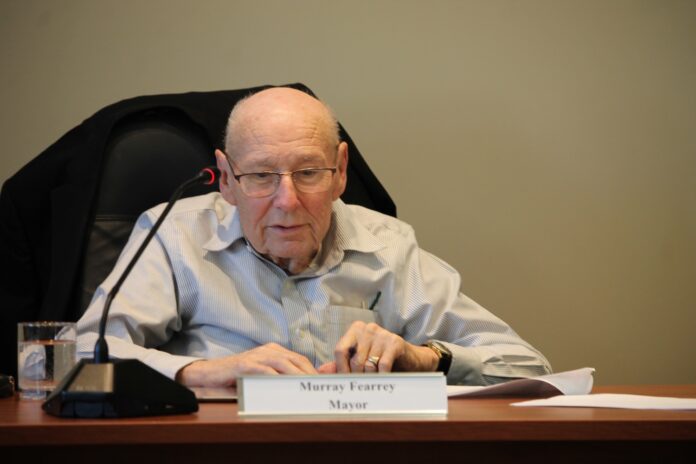
Mayor Bob Carter noted taxpayers pay to the school board, township and Haliburton County.

During the public meeting portion of the agenda, former coun. Jean Neville spoke to the Lochlin Community Centre. She sits on a committee for the hall, which has been left dormant since COVID, “which is a critical length of time for any building, let alone one of this vintage,” she said.

“We urge this council to dedicate funds to at least start this restoration in the 2025 calendar year… with help from willing tradespeople… maybe saving the old structure is the best way to go,” she said. Speaking to the 8.7 per cent increase as of Nov. 21, Coun. Pam Sayne said she was pleased there are going to be local municipal delegations to the Minister of Finance at upcoming conferences. “We cannot continue with these kinds of increases on a regressive property tax… this has to stop somewhere.”

AH looks at backyard camping

0

Algonquin Highlands council is considering a zoning bylaw change that could pave the way for people to legally camp on private residential property within the township.

Coun. Sabrina Richards said she was shocked to learn recently that residents are not permitted to camp on their property at any time during the year. Municipal planner Sean O’Callaghan confirmed Nov. 21 that people can only camp on established campgrounds, Crown land, or on their property temporarily while building or renovating a home – with a permit required.

“You cannot camp on developed or vacant residential property. Enforcing that is, admittedly, an issue. If it’s occurring over a weekend, then it’s not likely to be enforced. If it’s an ongoing activity… that’s where [we’d intervene],” O’Callaghan said.

Mayor Liz Danielsen said she was “gobsmacked” by the revelation.

“The idea that your kids can’t pitch a tent in their own backyard, that’s nuts,” the mayor said.

O’Callaghan noted most municipalities prohibit camping on residential property. In his report to council, he stated camping is a temporary activity that is best directed to areas where the use is ordinarily expected and can be adequately serviced.

Not intended to target kids looking to spend a night underneath the stars, O’Callaghan noted the bylaw is designed to prevent people from establishing tents and trailers as permanent living spaces. He also expressed concern over some campers not having access to washroom facilities.

The planner said he was most worried about people camping on vacant land.

“On the subject of housing, we’re trying to encourage activity, but I’m picturing a vacant lot where someone buys it with the intent of camping on it a couple weeks per year. That becomes a lot that’s never going to have a house on it, at least in the near term. It’s essentially a lot you’re taking out of the bank of available developable lots in the township,” O’Callaghan said. “It’s not promoting development in the community.”

Deputy mayor Jennifer Dailloux and coun. Lisa Barry both took issue with the rules.

“I think of how young families might save to buy a little piece of vacant land, but they’ll have to save another 50 years before they can build on it. In the meantime, they want to enjoy that space, pitch a tent, take their kids and remind them what it feels like to be in nature and develop that relationship with the environment,” Dailloux said, noting she doesn’t see a problem with that.

Barry added, “I think if you [want to camp] on a piece of property you’re paying taxes on annually you should be able to. A lot of families can’t afford to go on vacations or rent Airbnbs. Our motto is ‘this is where nature begins’. I would like to see some support for how people who have property can enjoy it before having to wait until there’s a residence on it.”

O’Callaghan said North Frontenac, French River, and Lake of Bays all have bylaws that allow camping on certain developed properties, limiting people to 14 or 21 days outdoors. The planner said he’d like to see a cap put on the number of consecutive days people can camp.

CAO Angie Bird suggested council differentiate between camping in a tent and in a trailer, noting trailers have washroom facilities to ensure the proper disposal of waste. She also recommended against allowing people to camp on waterfront properties.

“There are no washroom facilities on the shoreline,” Bird said, indicating human waste could end up in the water.

Danielsen suggested implementing a permit system for people who want to camp on vacant property. She also said she’d have a hard time displacing anyone living in a trailer, whether it contravenes the bylaw or not.

“We know we have a serious housing shortage – if you see a trailer that’s not supposed to be on a property, you know someone is living there. Often, they’ve got nowhere else to go. I struggle with that. I’m not sure how we deal with that,” the mayor said.

Council directed O’Callaghan to bring back bylaw revisions that would allow people to legally camp on private property. Once ideas have been brought forward, the public will be consulted on next steps, Danielsen said.

Township finds license of occupation fix

0

Algonquin Highlands has partnered with insurance firm Marsh Canada Ltd. to offer residents a first-of-its-kind solution to protections required through the township’s license of occupation policy.

Speaking at a Nov. 21 meeting, planner Sean O’Callaghan said the municipality and Marsh have developed a custom insurance policy covering taxpayers should an accident occur on a licensed deck or other form of infrastructure abutting a lake.

New legislation requiring residents who own property across a municipal road from a waterbody, which has a dock or other infrastructure installed on nearby township land, to register it has been in place since Jan. 1 of this year. O’Callaghan said the policy protects the township from liability and will help staff maintain records.

The planner said he’d heard from residents who were having trouble obtaining high enough insurance policies – the township requires a minimum $2 million coverage – requiring a solution.

There are two options – a $2 million premium, costing $350 plus tax each year, or a $5 million premium, which runs $500 plus tax. He asked if council wanted to make it a requirement that residents take out a policy with the municipal provider, but mayor Liz Danielsen felt people should have a choice.

“For people unable to find an insurer… or if this is a cheaper option than they’re being offered, this gives them a choice,” she said.

Deputy clerk Sarah Hutson recommended the township change its policy to require a minimum $5 million premium – saying if a claim is made and the payout exceeds $2 million, the license owner may be responsible for covering the difference. She said depending on the statement of claim, the township could be impacted too.

Council held firm at $2 million, while also offering a $5 million option. O’Callaghan estimates about 350 properties will require license of occupation policies.

Cottager ‘shocked’ dog shot with pellet gun

0

Moore Lake cottager Jake Moreau is still reeling after his dog, Bowie, was shot between the eyes with a pellet gun Nov. 24.

Moreau said the 100-pound snow white Husky mix is recovering from its injuries, but the family is shaken since their cottage, “is supposed to be a place to relax and unwind; a place of solitude where you can reduce stress levels.”

Moreau said he had returned to the family cottage, and, as usual, Bowie came running to the car to greet him. Happy to be home, Moreau jumped out of the car and went to give the dog some attention when he saw something on his forehead, right between his eyes.

“You can imagine my surprise, shock and anger when I realized it was a pellet from a pellet gun.”

He quickly took Bowie inside to show his father, John, and girlfriend, Lise, frantically asking where the dog had been that afternoon. They took pictures and performed an in-house surgery to remove the pellet.

“Thank goodness he is OK and is healing up well to this moment,” Moreau added.

His father told him to call police. “The 911 operator was incredible. She kept us calm and took our problem very seriously. She did a great job. The police also showed up very quickly. The officer who responded was very thorough and sympathetic.”

Moreau said they told police they thought there were only two people in the area that weekend. He said the family eliminated one as a suspect, and police went to talk to the other. He said they got a call about 40 minutes later from police, saying the person they were talking to had a pellet gun with the same calibre slugs as found in the dog.

Moreau said, “he admitted he was doing target shooting that afternoon, but did not shoot the animal…. The officer said the individual wanted us to come down so he could apologize. Weird? If he did not see the dog and did not shoot it, why would he want to apologize? Why would a pellet be placed perfectly between the eyes of an animal if it was an accident?”

Moreau said the man did not admit to shooting the dog but his story “was not at all logical. If he was target-shooting at a target about six feet off the ground, how could he place a pellet between the eyes of my dog who stands about three feet off the ground? The only way this shot placement could have occurred is if the dog was looking directly at the muzzle of the gun. And he claimed he didn’t see the animal…. a 100-pound snow white Husky mix against a green/brown background.”

Moreau said “they quickly realized the conversation was going nowhere.” He said police asked if they wanted to press charges, “but warned us that while the evidence that the pellet was fired from his gun is present, it is very difficult to prove intent as he would likely keep the same story of it being an accident.”

Moreau said, “I guess the real problem is that we have been going up to my cottage for over 20 years with our wonderful pets.

“Now, it feels like we have to constantly be aware of the dogs’ whereabouts. It’s really a terrible situation we are in now and we are not sure what our dogs did to deserve it.” He said the animals have great temperaments.

Haliburton Highlands OPP Const. Rob Adams confirmed no charges had been laid. He reminded people to follow all safety regulations, wear appropriate gear, and be aware of your surroundings when handling firearms – including pellet guns.

Moreau said they did want to thank the 911 dispatcher and police that responded to their call and took their situation seriously.

“With everything going on in the world today, people do not hear enough stories about the 99 per cent of good law enforcement members. They should be praised and we are very thankful for their help.”

Winter weather arrives with bang in County

0

Intense squalls this past weekend blanketed parts of Haliburton County with more than 25 inches of snow as the Highlands belatedly transformed into its usual winter wonderland.

Environment Canada issued a winter weather advisory for Central Ontario Nov. 29, with cottage country hit hardest. Parts of Muskoka were buried under about 40 inches of snow over the weekend, with the OPP closing Hwy. 11 connecting Orillia and Huntsville. Traffic was rerouted via Hwy. 400 and Hwy. 35.

Haliburton Highlands OPP had a busy time, responding to 10 minor and one serious collision over the weekend.

One person, a man in his 20s, was airlifted to a trauma centre with “life altering” injuries following a single-vehicle collision on Kennisis Lake Road Nov. 29. Police closed the area between Growler Lake Drive and Bitter Lake Road for much of the day, reopening around 9 p.m.

Const. Rob Adams with Haliburton Highlands OPP said near-freezing temperatures and heavy snowfall are key factors in winter collisions.

“Stay alert to winter conditions that can change quickly, placing extra demands on your vehicle and driving skill. Drive according to the weather conditions, your ability, and allow extra travel time,” Adams said. “Conduct a maintenance check on… windshield wipers, washer fluid level, windshield defrost, and tire condition. Stock up on your winter survival kit [to keep] in your vehicle.”

Algonquin Highlands and Minden Hills each declared significant weather events Nov. 29, essentially shutting down municipal services and facilities over the weekend. The Stanhope tree lighting ceremony, set for last Friday, was cancelled.

Trillium Lakelands District School Board called a snow day, shutting down all County schools. An opening reception for the ‘Safe and Well 2’ exhibit happening at Rails End Gallery in Haliburton was rescheduled for Dec. 6.

Snow squalls battered northern parts of the County again Dec. 3. The system, moving in from Georgian Bay, dumped another 20 inches on Parry Sound, Huntsville, Bracebridge and Dorset area, according to Environment Canada.

HKPR heads into 2025 with $188K deficit

0

The Haliburton, Kawartha, Pine Ridge district health unit (HKPR) is projecting to finish the year with a $188,467 budget shortfall, with medical officer of health Dr. Natalie Bocking admitting funding increases from the Ministry of Health, capped at one per cent for 2024, 2025 and 2026, aren’t enough to maintain current service levels.

Addressing the HKPR board Nov. 21, Bocking said the health unit was prepared for a deficit and planned to use cash reserves to cover it.

The organization approved $500,000 be taken from a cash surplus reserve fund, made up from monies received from municipal partners within the district, to balance the budget in 2024. Bocking said the in-year job vacancies, which HKPR didn’t fill, and other operational efficiencies meant less than half that amount was used.

Looking ahead to 2025, Bocking said the health unit is projected to use $297,089 to balance next year’s budget. While HKPR has an agreement to merge with Peterborough Public Health (PPH) in 2025, it has yet to receive provincial approval, meaning the two health units had to submit separate budgets for the coming year.

Costs are slated at just under $22.4 million, split into three streams – provincial and municipal cost sharing, which covers all basic health unit expenses; one-time money for select provincially-funded programs; and money coming in from other provincial grants.

HKPR is expecting to receive $13.08 million from the province next year, a one per cent increase, $2.89 million from Northumberland County, $2.56 million from City of Kawartha Lakes, and $666,396 from Haliburton County. Municipal contributions are up five per cent, Bocking said.

The health unit will receive another $1,185,500 to support the Ontario Seniors Dental Program and $247,000 from the Infection and Prevention Control (IPAC) hub.

Staff salary and benefits account for about 70 per cent of costs, with Bocking saying two new collective agreements resulted in a 3.65 per cent increase in wages from last year.

To cut costs last year, HKPR left four previously staffed positions vacant after existing staff left or retired. Those positions remain unfilled, and Bocking noted there are two additional vacancies this year.

“Gapping has an impact on services and programs… the budget we’re presenting enables us to maintain our current level of service, but that’s not necessarily the level of service we had two years ago, or five years ago,” she said, noting decreased resources have impacted work in injury prevention and recreational activity promotion.

HKPR still has around $1.4 million in the bank, though Bocking noted the interest on that is supporting the equivalent of two fulltime staffers in next year’s operating budget.

Bocking said using cash reserves for operational expenses “is not sustainable longterm.”

Kawartha Lakes board representative Dan Joyce called on the province to increase its spending in public health.

“In 2022, we had almost seven per cent inflation. Last year was about 3.5 per cent, this year is tracking at two-to-two-point-five per cent. We’re seeing a common theme here and across all sectors – libraries, social services – no increases, or [minor] increases from the province. The rest is falling on property taxpayers,” Joyce said.

“I’m sure we’re not the only health unit with these problems. The province will have to open the tap at some point,” he added.

Board chair David Marshall noted, with a merger between HKPR and PPH still preferred, the two parties may need to align on a collective strategic direction. He said PPH committed to using around $1 million in reserve funds next year, while asking for a 12 per cent increase from municipal partners.

“If we look at a merger budget, we have to understand both organizations are running deficits. That will continue. If the two units merge, there’s two very different strategies and leadership approaches at play… which, I think, is concerning,” Marshall said.

HKPR spokesperson Ashley Beaulac confirmed Nov. 25 there has been no merger update from the Ministry of Health since the two parties applied last spring.

Meanwhile, following a presentation by Bocking to County council Nov. 27, warden Liz Danielsen panned the provincial government for its lack of support. She noted they are giving the health unit one per cent in funding over three years, but Haliburton County is faced with five per cent increases year over year. “That is just not right.”

Health unit discusses risk of bird flu after confirmed case in B.C.

0

The Haliburton, Kawartha, Pine Ridge district health unit (HKPR) is monitoring after the first human case of highly pathogenic avian influenza (bird flu) was confirmed in British Columbia recently.

Dr. Natalie Bocking, HKPR medical officer of health, said a Richmond, B.C. teenager was diagnosed with the virus in early November. He was admitted to the province’s specialist children’s hospital, where he remains in critical, but stable condition.

Concerns around bird flu have heightened in recent years, with the virus killing millions of poultry across North America since 2020. The most recent strain, H5N1 can be particularly nasty, Bocking notes, with it mainly targeting the respiratory tract. It can also cause gastrointestinal and central nervous system issues.

While human-to-human transmission is rare, Bocking advised people to avoid handling dead or sick birds. She said there’s been an increase in the virus over the past two years, most significantly to cattle. Bocking said the affliction has also taken hold with pigs.

“When you see a basic increased transmission, then an increased transmission within mammals, then from mammal to humans, that puts the virus at an advantage to continue to continue to mutate and potentially develop into a strain that could be passed on from human to human,” Bocking said.

Last year, HKPR confirmed one local case, in a flock of infected poultry, but there haven’t been any concerns since. The last fatal case of bird flu reported in Canada was in Alberta in 2014.