Home Blog Page 7

Abbey Gardens’ holiday market returns

0

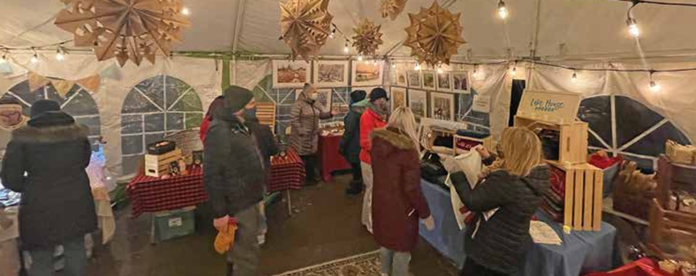
After a brief hiatus, Abbey Gardens has announced the return of its holiday night market.


This year’s event will be on Saturday, Nov. 15, from 4-8 p.m.

Executive director Angela Kruger said the festive community offering transforms the Abbey Gardens property into a winter wonderland, where visitors can shop, sip, and celebrate the magic of the season.

“Following record-breaking attendance in past years, the market is back and better than ever. Guests are invited to stroll along illuminated pathways, explore a cozy, heated vendor tent filled with local artisan creations, and enjoy festive food and drink from the Abbey Gardens Food Hub and local partners,” Kruger said.

She added there will be holiday-themed cocktails and warm beverages, from cider to hot chocolate, and other seasonal sips on offer. So, too, will be wood-fired pizza, sweet treats, and café favourites.

Some 20 local artisan vendors are offering handmade gifts, jewellery, décor, and seasonal treasures.

Kruger added there would be “exclusive Food Hub finds and festive surprises. Ambient lights, fire pits, and cheerful music filling the air with warmth and joy.

“The holiday night market truly captures the spirit of Abbey Gardens. It’s where our community comes together
to celebrate creativity, connection, and local craftsmanship — all against the backdrop of our twinkle-lit gardens.
The response this event has received in previous years reminds us how much people value gathering in nature and supporting something that gives back.”

Admission is by donation, with priority entry for online ticket reservations (walk ins welcome as space allows). All proceeds support Abbey Gardens’ environmental education and restoration projects that help connect people with nature and sustainability year-round.

For more information, visit abbeygardens. ca/event-details/abbey-gardens-holiday
night-market.

Abbey Gardens is a charitable organization in the Haliburton Highlands created with a mission to transform a spent gravel pit into a green space dedicated to developing economic, ecological, educational, and recreational growth within the community.

Kruger said they are proud to be FEASTON certified for carrying Ontario products in their Food Hub. It is a social
enterprise that produces, promotes, and sells sustainable, local food to engage the community and support Abbey Gardens.

Other big events:

• Santa Claus parade in Minden Nov. 15, starting at 11 a.m. followed by Christmas in the Village at the cultural centre until 3 p.m.

• Diwali in Haliburton, Nov. 15, 6:30 p.m. at the Haliburton Legion. The event is suitable for adults, youth and children. Tickets are $40 for adults, $20 for students and children under 18 are free. Tickets are available
online at www.dancehappenshere.com or at Redmans Records. For more information see www.dancehappenshere.com

Giving County veterans a proper burial

0

It’s a frosty morning as genealogist Adele Espina climbs out of her pick-up truck on one of the internal roads at Evergreen Cemetery in Haliburton.

She knows exactly where she is going thanks to cemetery records.

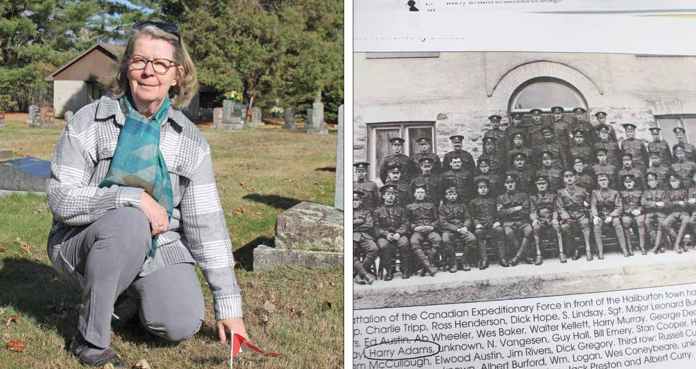
She stops at one gravesite, marked only with a small Canadian flag she had placed there the day before. No gravestone. But that is something Espina is working to rectify.

Her research has unearthed that the man buried beneath her feet is Harry Adams, who served with the 109th Battalion in the First World War. Adams was born in 1864 in England, but moved to Canada. He enlisted at the age of 50, giving a false birth year, and died in 1948 at the ripe old age of 84.

He is buried in a McKnight family plot, since his last wife was a McKnight. For some reason, perhaps financial, there was never a marker of any sort erected.

Espina has found out quite a lot about Adams, partially through Ancestry.com, including that he married three times. She later opens a folder over a hot drink at Castle Antiques in Haliburton and reveals gems such as service records, death certificate, and photos of Adams with his regiment taken outside the Dysart et al municipal office and elsewhere.

She has submitted the necessary paperwork to the Last Post Fund, a national non-profit organization that provides grave markers for veterans. Espina said it might take a couple of years before Adams gets his.

‘Who more to be remembered than our veterans’

The genealogist estimates there are approximately 50 veterans requiring grave markers across Haliburton County. She’s on a quest to get them all one.

“There’s plenty of soldiers or veterans who are buried here and do have military markers…and a lot of family markers that veterans are attached to, and then there are veterans who, for whatever reason, slipped through the cracks and have no monuments whatsoever,” Espina says while standing at Adams’ grave.

Espina said part of her niche in the Haliburton Highlands Genealogy Group is cemeteries. She has access to burial maps. She jokes there is a name for that: taphophile; a person who loves cemeteries, gravestones, and funerary art and history.

“Well, I don’t think any of us want to be forgotten … and who more to be remembered than our veterans,” she says of her journey.

For each vet she researches, she builds a tree on Ancestry.com and gathers all the information she can. She’s also now using the recently-released Haliburton Highlands Digital Archives of newspapers. “I’ve just been vacuuming up any details that I can find and it’s been helpful.”

Her dad was in the Royal Canadian Air Force in the Second World War, seconded to the U.K.’s Royal Air Force, just 19 when he went on his first bombing mission.

Her maternal grandfather had been with the Canadian Expeditionary Force in the First World War, but never got to France, as he came down with the Spanish flu, but recovered, and worked in a hospital. Library and Archives Canada have records of him, right down to his sickness temperatures. Her daughter went to Royal Military College, serving as a combat systems engineer in the Navy before going to medical school.

Espina’s interest began when she worked for the Minden Museum, on a sesquicentennial project, looking into military personnel records. She came up with over 500 people in Haliburton County who were born in the Highlands and served, or lived there and served. She did an exhibit at the cultural centre in 2009. “I plastered the walls of the Welch room … with all their attestation papers and the exhibit was really well received. That’s what got me going on the people who had served.”

She talks about a vet who had a military grave marker until 1991, but it’s gone now. “So, I can get him another one.” All she has to do is prove the person is dead, buried in that particular cemetery, and that they served in the military.

She added, “this is something concrete that I can do. I think the reward for me will be the day that those markers are put up.”

OPP roll out town halls to sparse crowd

0

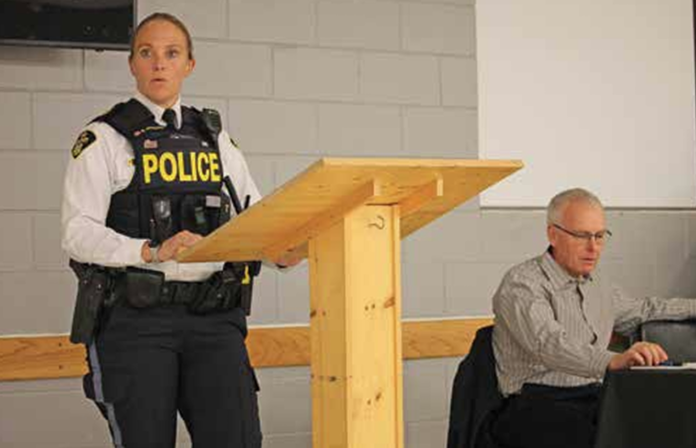
The new detachment commander for the Haliburton Highlands OPP said she is committed to holding more town halls in the County in future – despite a disappointing turnout for an event Oct. 29 in Minden Hills.

People said they only found out about it after seeing a post on the County website that day. OPP said they had advertised the event on X (formerly Twitter) on Oct. 10. Minden Hills Coun. Tammy McKelvey suggested it would have been better to have advertised in local newspapers.

Staff Sgt. Deb McClure said it was a learning opportunity for them, and they would review marketing in future.

“I think these community outreaches are very important, and it gives me an opportunity to hear from you and vice versa. Collectively, we are a team in this community,” she told a sparse crowd.

She said she planned to hold similar events in future in all four Haliburton County municipalities. She would not commit to how frequently the town halls would be held or when the next one will be.

McClure said the town halls are about education, safety and conversation. There were officers talking about traffic and road safety, being safe on the water, preventing property crime, school safety, and the Mobile Crisis Response Team.

She added, “we’re working hard to increase our presence in schools, and build stronger relationships with youth; to make our roads and neighbourhoods safer places. We know that real progress does not happen in isolation. It happens through partnerships. It isn’t just about hearing from you, but about working with all of you. We need you to be the eyes and ears in our community. When you see something, please say something. When you have concerns, share them with us. Your insights help us respond more effectively to keep the community safe together.”

Audience participant Krystal Shannon said police follow-up on investigations is a problem.

She talked about a recent incident in Gooderham involving some “sketchy” people who appeared to have stolen items in a vehicle and were canvassing a property. She said police were called, and did come, but the complainants were never interviewed and OPP never contacted them afterwards.

McClure said while arrests were made in connection with the incident, Shannon’s point about follow up was “fair” and “valid.” She noted police often cannot tell community members much during investigations.

The chief was asked about a concern about the number of cruisers during a shift in Haliburton County and a perception there are not enough.

She said, “they’re the same concerns across the province. There is never enough. Unfortunately, it comes with a cost and we do what we can with our resources as best as we can based on so many factors.”

She noted they always have back-up across the region, and those officers may not be as visible to the general public as they use unmarked cars and wear civilian clothing.

Officer Isaac Austin spoke to property crime, saying it is “a huge issue in this community because it is so relatable.” He said everybody had come to the cottage to find a broken window, a stolen piece of equipment, or siphoned or stolen gas. However, he said the community street crime unit is very active in the Highlands.

He had some prevention tips, such as writing down VIN numbers, or putting your driver’s licence number on property, so it can be identified and returned. He told people to keep shed and garage doors locked, and have security cameras.

Minden Hills coun. Pam Sayne asked, “what is driving crime here? Addictions, poverty, crime syndicates? I think we have to get to that in order to turn things around.”

Legion flying flags of military heroes

0

This is a banner year for the Haliburton Legion.

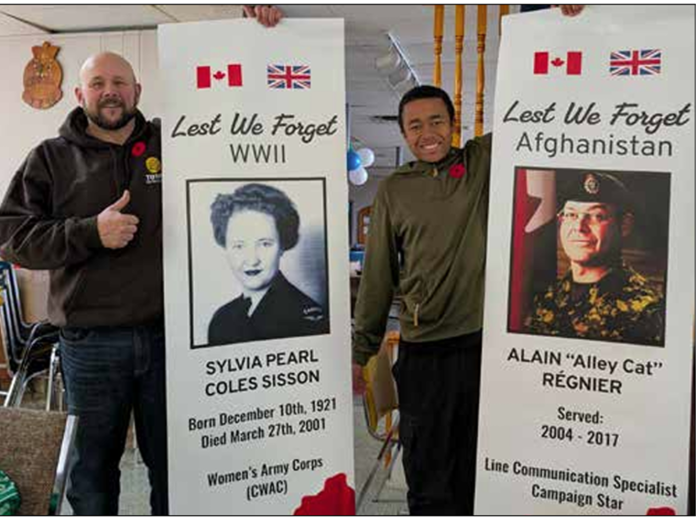
This week, flags commemorating 24 of the community’s military veterans were hung in the downtown – part of an effort to bring more awareness to and honour the sacrifices many have made defending their country.

The project was spearheaded by legion president Mike Waller, who started looking into getting banners made last fall.

“I’m surprised it’s taken Haliburton so long to do this,” Waller said. “I think it’s important that we honour the people who came before us, show respect for what they had to do. If they didn’t give what they did, we wouldn’t be here today.”

Waller said he approached Dysart et al township and the Haliburton BIA earlier this year and was given the green light to proceed. There are 12 banners, with a service member honoured on either side. The bulk are men and women who served during the First and Second World Wars, with some from the more-recent excursions in Afghanistan.

The banners state the veteran’s name, which war they participated in, the year they were born and the year they passed. Waller noted only one of those included is still living.

This is the second display to debut in Haliburton County recently after Irondale Church had banners made up for its ‘Service, Courage and Sacrifice’ series in 2023. The church honoured 40 people associated with the hamlet who served Canada in various aspects of war.

Waller said he wanted to bring something similar to Haliburton after hearing about the Irondale display and seeing new ones released in Bancroft and Apsley. He said there was an effort about eight years ago to bring banners to Haliburton, but it didn’t get off the ground.

Each side of a banner costs $150, which is covered by the families of those featured. Waller said he opened nominations in the spring, with all those that applied making the cut.

He said Gerald Sharp, who installed the pieces, and Dysart et al coun. Pat Casey, who assisted with research, were key contributors to the campaign.

Casey has three family members featured, his grandparents Earl Casey, Holly Sisson and Sylvia Sisson. He told The Highlander that he believes more needs to be done to remember those who paved the way for future generations.

“I think Remembrance Day activities have started to wane over the years… I thought this was a great way to commemorate the bravery our forefathers had in putting their lives on the line for freedom,” Casey said. “The freedoms we have today didn’t come by chance. These people had to work and sacrifice for it.”

Casey and Barry Hart will be at the Haliburton Legion Nov. 10 and Hal High Nov. 11 to tell tales about their grandfathers, who were both tail gunners during the Second World War. Presentations at the legion are open to the public, running at 1:30 and 6:30 p.m.

Waller said he’s hoping to grow the banner collection, saying anyone with a military background can be included.

“As long as they were in the service, that’s all that matters,” Waller said. “Next year, I’m hoping to get them up in mid-October, that way they can be up for a month and people can really take notice.”

Anyone interested can contact Waller at 705-854-9237.

Dog shelters pitch plan to Minden Hills

0

Minden Hills council, at its Oct. 30 meeting, was asked to work with Paws at Killara Station and Snowflake Meadows for dog control services in the township.

Owner of Paws at Killara Station, Susan Peel, made the pitch. She noted they provide a similar service to the Township of Algonquin Highlands.

“Minden Hills faces a growing challenge in managing stray, lost, and abandoned dogs. With the township’s population increasing, so too are reports of animals found wandering, neglected, or surrendered,” Peel said.

She added that now the burden of care falls almost entirely on volunteers and rescues without formal municipal support. In 2024, Snowflake Meadows spent more than $107,000 on veterinary care for more than 200 animals across Ontario, including about 60 from Minden Hills, she added.

Peel said their proposal would provide the township with “a clear, low-cost, and sustainable solution.”

Essentially, Paws would serve as the official pound intake, working to reunite lost dogs with owners through social media and microchip scanning. Snowflake Meadows would provide spay and neuter, veterinary care, and adoption services for unclaimed or surrendered dogs. Peel said both are insured, reducing the township’s liability and administration would be minimized, as the rescues would operate a lost and found dog portal which the township could link to.

She asked council to approve service agreements, educate the community about the process for reporting and handling lost and stray dogs, and provide bylaw support when needed.

Peel said at the moment, there is no clear reporting process for residents or staff; the OPP and vets redirect cases inconsistently; volunteers and rescues are covering the costs; and the township carries risk and responsibility without a structured solution.

Peel estimated a maximum annual budget of $25,000, basing that on $300 per month to Paws, and $380 per unclaimed dog for Snowflake.

“Many Ontario municipalities already rely on pound–rescue partnerships rather than operating their own facilities,” she said.

Deputy mayor Lisa Schell said it’s been 10 years since Peel came to council with a similar pitch in 2015 and the problem has only gotten worse. Coun. Pam Sayne said she and Coun. Shirley Johannessen met with Paws and Snowflake Meadows as it was an “ongoing and growing problem. We need to get something going.”

Coun. Ivan Ingram said it was a great idea, but felt the township needed to reintroduce dog tags. Peel said that could work with lifetime licensing and mandatory microchipping in the township’s dog bylaw.

Mayor Bob Carter said he’d like to know the status of the township’s existing bylaw before proceeding. He wanted clarity on the nature of the role between the municipality and Paws and Snowflake and how that looks in other townships.

Council has asked for a staff report and will discuss the pitch further then.

Provincial minister visits wellness hub

0

Point in Time executive director Marg Cox welcomed Ontario’s associate minister of mental health and addictions, Vijay Thanigasalam, for a tour of the Haliburton Youth Wellness Hub Oct. 23, saying the space has served as a refuge for hundreds of struggling teenagers since its opening in 2021.

The facility, operated by Point in Time, was one of 10 youth hubs funded through a provincial pilot four years ago. Since then, demand has spiked – Cox shared how the centre, located on Dysart Avenue, has gone from seeing 139 youth in 2020-21 to 168 in 2024-25. Service visits have climbed from 440 to 879, with enrollment in skills and wellbeing activities quadrupling, from 593 to 2,292.

“We were one of the first out of the gate and have been operating with only one minor cost of living increase. We know what inflation has been doing… we’re really interested in sustaining the model of youth hubs and being able to stabilize the operation of existing hubs,” Cox said.

The hub offers mental health, substance use and general supports to youth aged 12 to 25, Cox said.

After recently purchasing a four-acre property on County Road 21 in Haliburton, Cox said the organization is trying to gather support for a new building. She asked Thanigasalam if the Ontario government would support the project.

“We’re seeing double the number of youths from when we started – and we know there’s lots more that would like to utilize the hub, but we don’t have any other space,” Cox said. “We’re trying to create a community hub in Haliburton. We want to provide integrated services for infants right up to the age of 25.”

Thanigasalam was non-committal at the meeting but acknowledged there is money available to support program expansion for mental health and addictions services.

Pam Weiss, a former board member at the youth hub, said the facility – open 9 a.m. to 5 p.m. Monday, Wednesday and Friday and noon to 8 p.m. Tuesday and Thursday – has been lifesaving for some local youth – including their own child.

“I have a gender-diverse child who has been diagnosed with anxiety, depression, bipolar, borderline personality, ADHD, and OCD. We started with Point in Time when they were eight years old and they’re 25 now,” Weiss said. “In April, they will turn 26 and age out of the youth hub, which has been like a second home these past four years.”

Weiss said her child utilized the space for employment services, counselling, to see the nurse practitioner, and to learn how to cook. It was one of the only places in the community they felt comfortable socializing, Weiss added.

“Without the hub, I’m not sure what we would have done… there would be a lot of kids that would have been lost, including mine,” Weiss said.

Cox said the current plan is to sever the new four-acre property, a process she expects will take about a year. She’s hired an architect and surveyor to assist with design and will soon be commissioning a traffic brief.

“All of those will help us determine what it is we want to build and where. Then we’ll be reaching out to the province, foundations and the community to raise the money to build the thing,” Cox said.

Thanigasalam declined an in-person interview following the visit, while his office did not respond to follow-up questions as of press time.

McCaig Second World War story shrouded in mystery

0

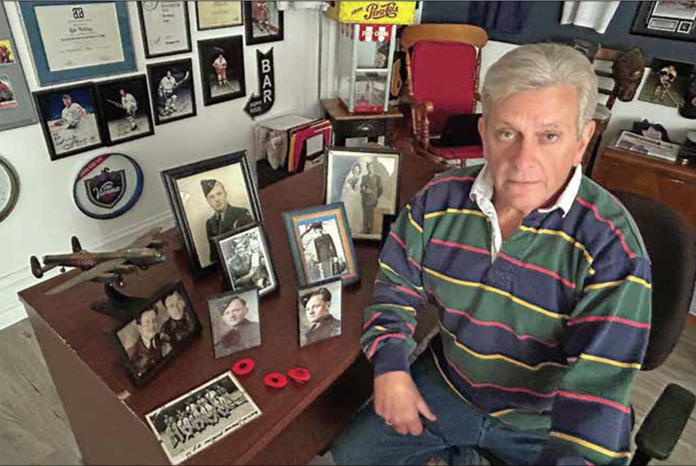
The lead up to Remembrance Day is always a time of reflection for Haliburton’s Rob McCaig, who has compiled a running history of his family’s extensive involvement in the Second World War – including a mystery that remains unsolved today.

His parents, Keith and Nina McCaig, were each involved in the effort – the former an airframe mechanic and tail gunner with the Royal Canadian Air Force (RCAF) and the latter a cook with the Women’s Royal Naval Service.

Four uncles also enlisted – Clifford, the eldest, was the first to join in 1940, signing up for the army and later becoming a member of the special forces team ‘The Devil’s Brigade’. Wally, Keith’s twin, and Arnold joined the air force in October 1941, while Norman joined the army in 1942.

“The McCaigs were a big family, eight boys and one daughter – they had a farm in St. Louis de Gonzague, Quebec,” McCaig said. “Half of them went overseas to fight and the rest stayed back to run the farm… they had a lot of adventures, the McCaig boys.”

Clifford was 23 when he enlisted, Arnold was 22, while Keith, Wally and Norman were 19. Nina was a teenager, too, though the furthest she traveled was Halifax, where she was stationed on the HMS Cornwallis until 1946.

All but one of the McCaigs made it home following the war – sadly, Arnold never returned from what McCaig described as a top-secret mission to Albania on June 28, 1944. The details of that operation remain shrouded in mystery, he said.

An eight-man crew left a British Royal Air Force airbase in Brindisi, Italy in a Handley Page Halifax bomber shortly before midnight. They were carrying out an unknown mission 10 miles north of Lake Ohridsko in Albania when their plane was shot down by enemy forces. Albania, though considered partisan in the war effort, was largely occupied by German forces.

“The interesting thing is, the Halifax usually carried a seven-man crew, but this time they had eight people. I have all the letters that were sent to my grandparents and mom, who was first married to my Uncle Arnold in September 1942. She then married my dad six years later,” Rob said. “The extra crew member was someone from the National Liberation Army of Yugoslavia.”

Military records state five members of the crew bailed from the plane before it crashed. Albanian forces stated there was no sign of Arnold during the bailout, though he could have been one of the first to jump. There were three bodies found at the crash site.

Rob said initial letters home in early July said Arnold was missing in action. A second letter arrived later in the month, saying Arnold had been found alive and was temporarily safe, but that his whereabouts could not be disclosed. The letter also advised that until further information is received, Arnold would remain classified as missing.

On Dec. 28, a third letter was received stating the other crew members who made it back reported seeing three bodies at the crash site – though the military has never confirmed that Arnold was one of them.

“Arnold is still unaccounted for and any further information of his whereabouts will be forwarded,” the letter stated.

McCaig said key details from the mission – when the plane started taking fire, how many times it was hit, and the order of men bailing from the plane – were included in Arnold’s personal file.

“How did he write up and submit this report if he died in that crash?” McCaig ponders. “I believe Arnold did die, but we have no idea when, where or how. There’s no documented proof whatsoever.”

Another letter was received in May 1945, saying Arnold was presumed dead. Seven years later, in 1952, the McCaigs received a final letter generally confirming Arnold’s death but said “due to circumstances outside British control” it wasn’t possible to send search teams into Albania to locate his grave.

Arnold was an air gunner warrant office class 1 with the 148 squadron who, as of June 27, 1944 was confirmed to have flown in over 50 missions.

McCaig said the ordeal hit his mother, Nina, hard. The McCaigs took her in after she left the Navy. Years later, once confirmation of Arnold’s death came through, romance blossomed between Nina and Keith. They were married in 1948.

A year later, Nina received a letter addressed to her but written in Italian. Rob said she took the note to a translator, who burst into tears and tore the letter to pieces.

“My mom never knew the contents of that letter throughout the remaining years of her life,” McCaig said. “Every Remembrance Day was really tough on her. She wanted to go overseas to look for Arnold.

“They were absolutely in love. They wrote over 100 letters back and forth to one another. He wrote her the day before his final mission,” he added.

McCaig hasn’t given up hope of finding out what happened to his uncle – efforts are ongoing today to locate downed Halifax bombers that have been lost or buried over time. A trip to Albania, to try and source some answers himself, is on his bucket list.

So too is a trip to Malta – an island nation in the Mediterranean Sea. There, Arnold’s name is inscribed on a memorial to all those who served in the RAF and RCAF but didn’t make it home.

With this year marking the 80th anniversary of the war’s conclusion, McCaig feels it’s more important than ever to keep these sorts of stories alive.

“There isn’t a family that the war didn’t impact, but the McCaigs had a lot of involvement. It’s important to recognize the sacrifices – they were all so young when they enlisted, and they didn’t make a ton of money. The average soldier made $850 a year, if you were an officer or special services, you were lucky to get $2,000.

“My family enlisted because they believed in our country. Unfortunately, in the case of my Uncle Arnold, that belief cost him his life,” McCaig said.

Of the approximate 1.6 million Canadians who served in the Second World War, 44,090 died, according to online service files through Library and Archives Canada. Lest we forget.


We will remember them

0

Dysart et al mayor Murray Fearrey helped kick off the Haliburton Legion’s annual poppy campaign Oct. 31, making the first donation to legion president Mike Waller.

Each year, the legion uses money raised through poppy sales to put on a veterans’ dinner for those who served and their families, with former military personnel having their ticket covered.

This year’s event takes place Nov. 9, with doors opening at the legion at 4 p.m. and dinner served at 5:30 p.m.

Tickets are $30 per person. Contact Waller at 705-854-9237 to purchase your ticket.

Dutch woman honours Canada’s heroes

0

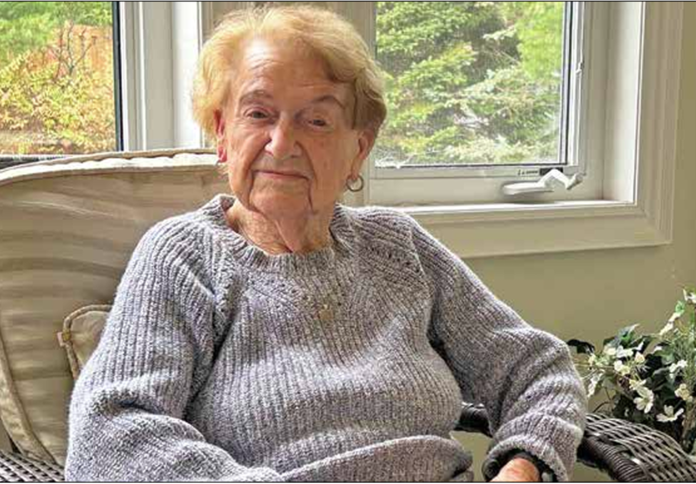
As a young girl, Minden’s Lainey Hunting remembers sneaking out of her home at night – not for fun, or to socialize with friends, but for survival.

The 97-year-old grew up in Eindhoven in the Netherlands – a city ransacked and occupied by German forces for the bulk of the Second World War. Hunting was 12 when her hometown was taken over.

“I remember waking up one night because there was a lot of noise. There were so many cars out on the road heading down the street. Not many people had a car back then, but the ones that did left Holland because they knew the Germans were coming,” Hunting said.

It was May 1940 and the Axis powers, led by Nazi Germany, invaded the Netherlands as part of a larger plan to conquer France and secure important airfields and ports for future use against the U.K. Hunting said the occupation was swift.

Soldiers quickly took over a Philips Electronics factory in the city, using it as a homebase for its operations. They implemented an 8 p.m. curfew for residents, took what they wanted from people’s homes and seized all existing food supplies.

Hunting said she and her family – mom, dad and six siblings – survived on scraps. Workers at the Philips factory served soup once a week, but other than that it was up to the family to scrounge up whatever food they could find.

“I’d sneak out after curfew to go to the potato fields. Sometimes there would be little ones left and I’d be so excited taking them home,” Hunting said. “It was a risk… if a German soldier had spotted me, I’d have been shot for sure.”

Hunting said she was terrified of the Nazis. After the occupation, Philips workers initially refused to make bullets and weapons for the Axis – so German soldiers took 10 each day and executed them until the workers relented. She also recalls observing the Germans rounding up Jews and sending them to concentration camps.

One of her best friends at the time, a Jewish girl from Austria, attempted to flee the city with her family, though Hunting doesn’t know if they made it. “I never saw her again,” she said.

There was no school. Instead, Hunting said the days were filled with frequent visits to the nearby bomb shelter. The sirens would ring multiple times per day, she said, signalling bombers in the sky.

“There was a woman who told jokes to try and keep all the kids quiet and distracted. But we’d always hear the whistles, which meant the bombs were coming. Then we started to pray,” Hunting said.

Eindhoven was completely levelled by the time the Allied forces re-took it in September 1944 – it was the first Dutch city to be liberated. Hunting, by then 17, remembers seeing the tanks rolling in, carrying waving soldiers. The red maple leaf stitched to their uniforms coming across like a giant beacon of hope.

“I remember everyone climbing on the tanks and singing – people were so happy,” she said.

It was short-lived – a few days later, the Germans returned with bombs of their own. Thousands died, Hunting said.

“I’ll always remember the Canadians covering as many bodies as they could. So much that seemed like nothing much, or no big deal, they did it. That meant so much to the people of Holland,” Hunting said.

Hunting married in her early 20s and, with the country still rebuilding, opted to move to Canada – first to New Brunswick, then Bronte, a fishing village near Oakville. She and her husband, Harry, came to Haliburton County in 1967, purchasing the former Big Bob Lake Lodge with their friends, William and Nellie Brouwers.

As Remembrance Day approaches, Hunting said she’ll always be thankful of the Canadian soldiers who freed her from German captivity.

“They helped us out when nobody else could… in schools in Holland today, kids learn a lot about Canada and the liberation. There’s a big connection between the two countries,” Hunting said. “The Canadians saved us.”

Food for thought at Harvest Hali forum

0

Six years after challenging the community to form ideas for developing and maintaining a sustainable food system in the Highlands non-profit group, Harvest Haliburton, is preparing to provide some answers and possible solutions this week.

The volunteer organization is hosting a food forum at Pinestone Resort Nov. 7, gathering a collection of County-based growers, experts from the food industry, service agencies and tourism operators together to talk about methods that have worked within our borders and beyond.

Barrie Martin, Harvest Haliburton’s co-chair, said this is a follow-up to a 2019 event and provides “an opportunity to bring everyone up to speed on food issues and to learn from contrasting viewpoints.”

Dr. Sara Epp, a professor at the University of Guelph, will serve as the keynote speaker. Jean Tyler, a longtime County farmer and coordinator of the forum, said Epp’s talk will unpack all aspects of agricultural sustainability in rural communities like Haliburton County.

Following Epp will be an hour-long talk on growing and homesteading, featuring Haliburton Farmers’ Association president Minna Schleifenbaum, Katie Metauro of Waverly Brook Farm and Godfrey Tyler from Rising Sun Gardens.

The afternoon will feature a discussion with local sellers, with vendors from the Haliburton County Farmers Market joining Abbey Gardens executive director Angela Kruger, Haliburton Foodland owner Brad Park and Terri Mathews-Carl, owner of Rhubarb and Juna restaurants, on a locallythemed forum.

Attendees will also hear from those who help people suffering with food insecurity daily – Gena Robertson from SIRCH Community Services, Tina Jackson from Central Food Network, Brian Nash from the Rotary Harvest Program and Nell Thomas from the Food Alliance for Haliburton County.

Tyler said she hopes the event will help to spark fresh conversations about food sustainability.

“The intent of the first one we did was to keep going, but COVID really knocked the wind out of our sails. We do need to regroup, to be the organization that gives answers and offers hope to people,” Tyler said. “We need to rethink what we’re doing as a community. How can we support one another to improve food security and local food production.”

Tyler said she and her husband have been growing food for 31 years and boast forestry, maple syrup, vegetable and beef operations at their farm in Haliburton. She said being a farmer is a lifestyle choice – and one she’s eager to imprint on the next generation.

“Succession planning is very important – it’s not easy to farm, there’s a lot of techniques that we know that, if young people are willing to come out and be on the farm with us, they can learn about,” she said.

While there was a surge in people establishing homesteads throughout the County during the pandemic and the years that followed, Tyler said those operations are usually single-minded – growing enough to sustain their own household, rather than growing food for the wider community.

Years ago, the Tylers were big believers in community-supported agriculture (CSA). They ran a shared vegetable garden on their farm from 1994 to 2015, offering up to 70 different crops to subscribers, who paid for what they took away. “The model is possible, but it’s difficult work,” she said.

They still offer plots on their land to people who want to grow their own food, though numbers have been fleeting. She believes the path to success for those looking to start out, no matter the size or scope of the operation, is talking to those already in the industry.

The forum is free to attend, with people being asked to register online at harvesthaliburton.com.