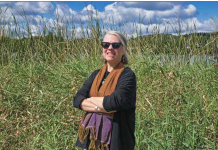

ACM Designs’ Andria Cowan Molyneaux is in Paris, France this week for a show called Maison&Objet.
It’s no holiday. European and other international vendors have brought goods the Haliburton-based company could consider buying to help them combat the current trade war with the U.S.
In the spring, Cowan Molyneaux was in Scotland doing the same thing.
“Our business is completely impacted by tariffs because we import a lot of the goods that we sell,” she said.
“I’m going to Paris because I have to go. I have to find alternatives and there isn’t enough made in Canada that gives you a variety to choose from. It’s truly a business requirement for me to do this so we can look at our sourcing with a macro lens that is somewhat protected.”
Nor are they alone, Cowan Molyneaux said. “It’s naive to think a small town in rural Ontario would not be impacted by what is going on in international trade. It very much is.”
On Tuesday (Sept. 8), Canadian countertariffs, which range from 15 to 50 per cent, came as a tit-for-tat response to U.S. president Donald Trump’s latest 50 per cent tariffs on Canadian goods imposed last month.
Cowan Molyneaux, who is also president of the Decorators and Designers Association of Canada, said most of the companies ACM Designs purchase from are in the U.S. However, figuring out pricing isn’t as simple as knowing what products will be taxed and by how much. That is because the goods may have been designed in another country, and manufactured in another before being shipped to the U.S.
Stop ‘talking trash about the U.S.’
For example, if ACM Designs buys cabinet handles from the U.S. that have been made in India, they have to factor in the U.S. could be in a trade war with the Asian country. There could be additional fees or duties.
“Over the last two years, I’ve gotten a PhD in trade. We have to,” the business owner said. “It’s so difficult when you’re pricing. The amount of education required to protect yourself, your clients, is exponential.”
Another thing ACM Designs is doing to mitigate the impact is manufacturing some of its own stock. As for measures to assist businesses, Cowan Molyneaux said something similar to the CERB program rolled out during COVID would help.
Unease and unknowns
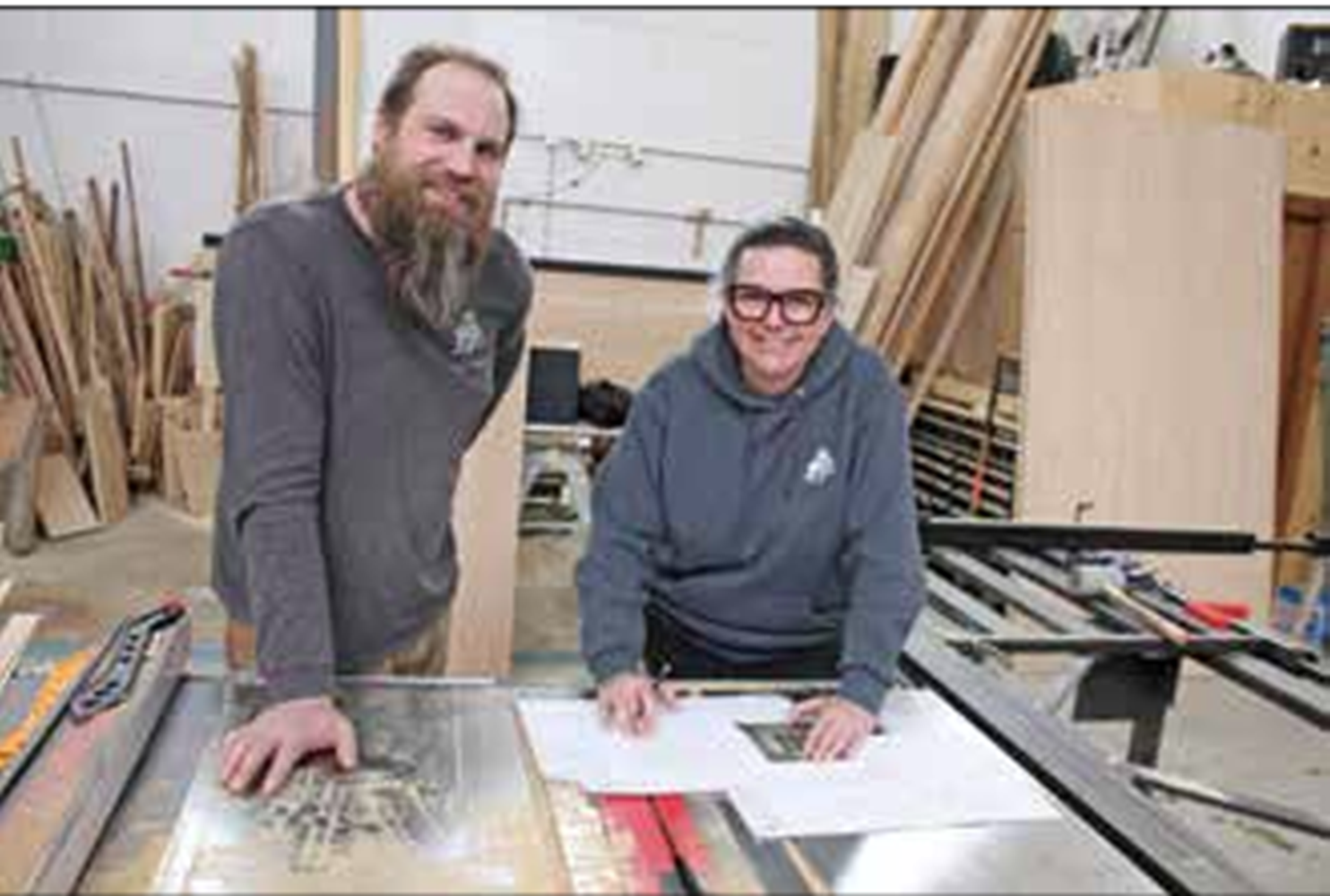
Brandi Hewson of WAI Products & Kohara + Co is also feeling the tariff pinch, and said the trade war is affecting all of us.
“People who are considering purchasing, or making a big renovation, or any of those things, are uneasy about spending money at the moment.”
She added that with tariffs and counter-tariffs, there is an element of the unknown.
For example, she said “someone comes in and buys a light fixture from us. We get it shipped. Then we get hit a month later with different fees, duties and tariffs because of this nonsense. It’s not like we can go back to the customer and say ‘you know that light fixture you bought? There was actually a 30 per cent tariff on it, so we need that money’.”
Hewson said they are trying to create protective buffers, such as making quotes only valid for seven days, or prewarning people they might be hit with additional fees. But, when dealing with 40 different lighting manufacturers, and trying to figure out who is getting hit with tariffs, and counter-tariffs, where components are made, and more, is a huge time-sucker.
The business is also exploring more made-in-Canada, and non-U.S. options. They would like to do their own manufacturing, but would need outside financial support.
They also do a lot of online sales that are being impacted, Hewson said. “In the last month, we’ve had three orders that were rejected because the customer was hit on the other end.
“It’s unease and unknown and trying to make sure we can be as informed as possible, but also trying to continue business as usual because the more time we spend trying to figure things out, the more our eye is off the ball; we need to make sales.”
Hewson added that even if a business feels it is not directly being hit, “they are putting price increases through. It’s almost an excuse to raise prices.”
Treat U.S. better
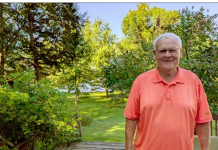
Heat-Line’s Lorne Heise said, “this round of tariffs are going to affect our sales in the United States far more than before.”
He said they have products for the RV-coach industry made in Algonquin Highlands, that “are going to get hit hard. The price of them is going to be unachievable in the U.S.”
He thinks Heat-Line will have to “get a foothold” south of the border, such as finding a U.S. company to manufacture for them; or creating their own operation. However, he said that is a big undertaking.
Heise said they use Ontario companies for parts, with those companies reliant on the automotive industry, and “now they are in jeopardy… that could be a really bigger concern looking forward.”
With 38 years’ experience in manufacturing, Heise believes Canadian businesses across the board are “in peril. The future is so uncertain. It’s hard to have a plan.”
Heise said he likes American people, “and without them on our border, Heat-Line would not even exist. They’re great to do business with. The idea that we are talking trash about the United States really bothers me.
“I don’t think people understand that you’re trying to do business with a neighbour… I don’t poke you and I don’t criticize you, I don’t say bad things about you, then walk in the door a year-and-a-half later and think I’m going to make a great deal with you. That’s not the way you do it.”
Heise said all Highlanders should care. He said Heat-Line employs 36 people, supporting 36 families, and provides international products. He added small businesses are crucial to the economy.
“It matters to everybody, big time.”