
By Adam Frisk Local Journalism Initiative Reporter
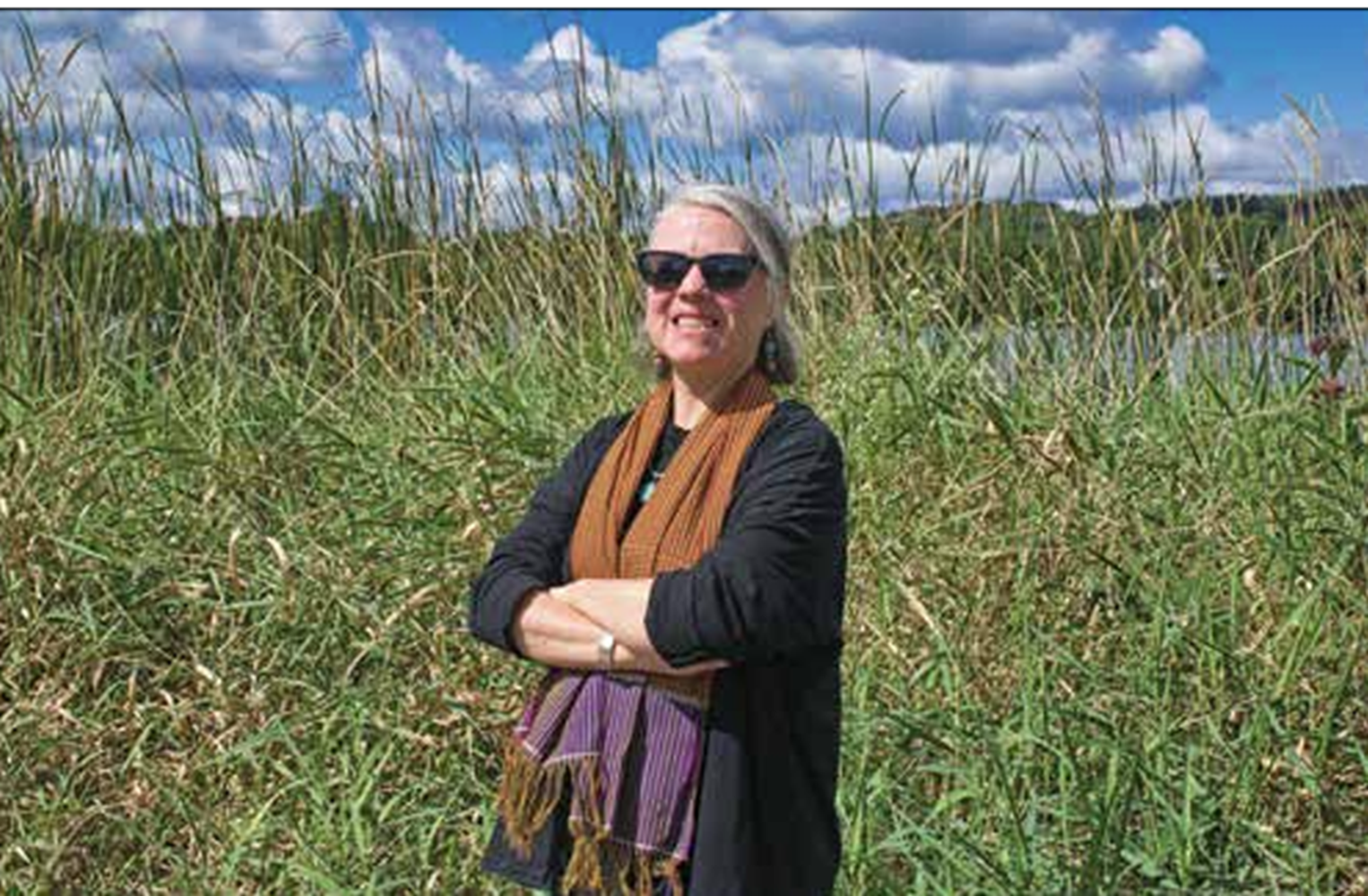
Linda Coneybeare was working at her desk at Transat Travel on Highland Street 25 years ago, when an urgent bulletin popped up on her computer screen
Coneybeare was managing the Haliburton agency back then and immediately pulled up CNN. A second message from the head office popped up: North American airspace was shutting down completely, and every commercial plane was being ordered to land immediately.
“I started my career with British Airways,” Coneybeare said. “I always thought it was the most wonderful, glamorous job. All of a sudden, there were these beautiful jets being used as weapons. It really upset me.”
Coneybeare said she started going through client files to track down locals travelling. A Haliburton resident was on a flight returning home from Italy. With Toronto Pearson’s runways packed, his plane was diverted to Atlantic Canada. It was one of hundreds redirected across the East Coast during Operation Yellow Ribbon.
Later that afternoon, the attacks hit closer to home for Coneybeare. Her 10-year-old son, Patrick, and his classmate Robbie walked down Highland Street from school to wait at her office, just like any other weekday afternoon. The friend’s mother called ahead, and asked if Coneybeare could talk to the boys before they saw the horrific news coverage on television.
She took the two boys outside and sat them down on a bench near the village barn. “I sat down and explained to them what had happened,” she recalled. “I told them, ‘you’re going to see pictures that are frightening… but we’re safe. The world has changed, and it will never be the same’.”
The travel industry barely moved in the weeks after the attacks. Coneybeare said bookings dried up completely, leaving her to lay off her staff and manage the office alone. It wasn’t until late November that nervous clients slowly started calling again to ask about new airport security protocols and whether it was safe to fly.
While Coneybeare was navigating the impact of the terror attack in the County, Haliburton resident Melinda Hummel was living through the chaos on Manhattan’s Upper West Side. had happened,” she recalled. “I told them, ‘you’re going to see pictures that are frightening… but we’re safe. The world has changed, and it will never be the same’.”
The travel industry barely moved in the weeks after the attacks. Coneybeare said bookings dried up completely, leaving her to lay off her staff and manage the office alone. It wasn’t until late November that nervous clients slowly started calling again to ask about new airport security protocols and whether it was safe to fly.
While Coneybeare was navigating the impact of the terror attack in the County, Haliburton resident Melinda Hummel was living through the chaos on Manhattan’s Upper West Side.
Hummel explained that she was waiting tables at Ruby Foo’s on Broadway in 2001 after returning from teaching English in Vietnam. She said she had just walked back to her 96th Street apartment from running an errand to the bank when her mother called from near Gravenhurst, telling her to turn on the TV. That’s when she watched the second plane strike the World Trade Center.
With the subway system cut off, she said that commuters began making the trek north away from Ground Zero.
“Everybody’s coming uptown in soot,” Hummel said. “Everybody’s coming up like zombies.”
Ruby Foo’s opened its doors that afternoon, becoming a gathering place for New Yorkers, including stressed family members and off-duty colleagues connected to firms like Cantor Fitzgerald, which lost 658 employees in the North Tower.
Hummel said the attacks changed the direction of her life. Within a month, she was baptized, moved over to Brooklyn, and eventually returned to teaching English before relocating to Haliburton in 2017.
Coneybeare said that Sept. 11 sits among dates like D-Day as a reminder of how quickly the world can change. She also reflected on how communities responded, pointing directly to the generosity across Eastern Canada when thousands of stranded travellers were taken in by complete strangers.
“It just makes me so proud to be a Canadian, what the people of Eastern Canada did for all those passengers,” Coneybeare said.
Both women said they continue to carry their memories of that day with them, 25 years later.
“It always reminds me of how blessed I am to be alive,” Hummel said. “God came into my life… I started to be proactive in seeking the truth and what my purpose is.” Close to 3,000 people were killed in the terrorist attacks, including 24 Canadians.