
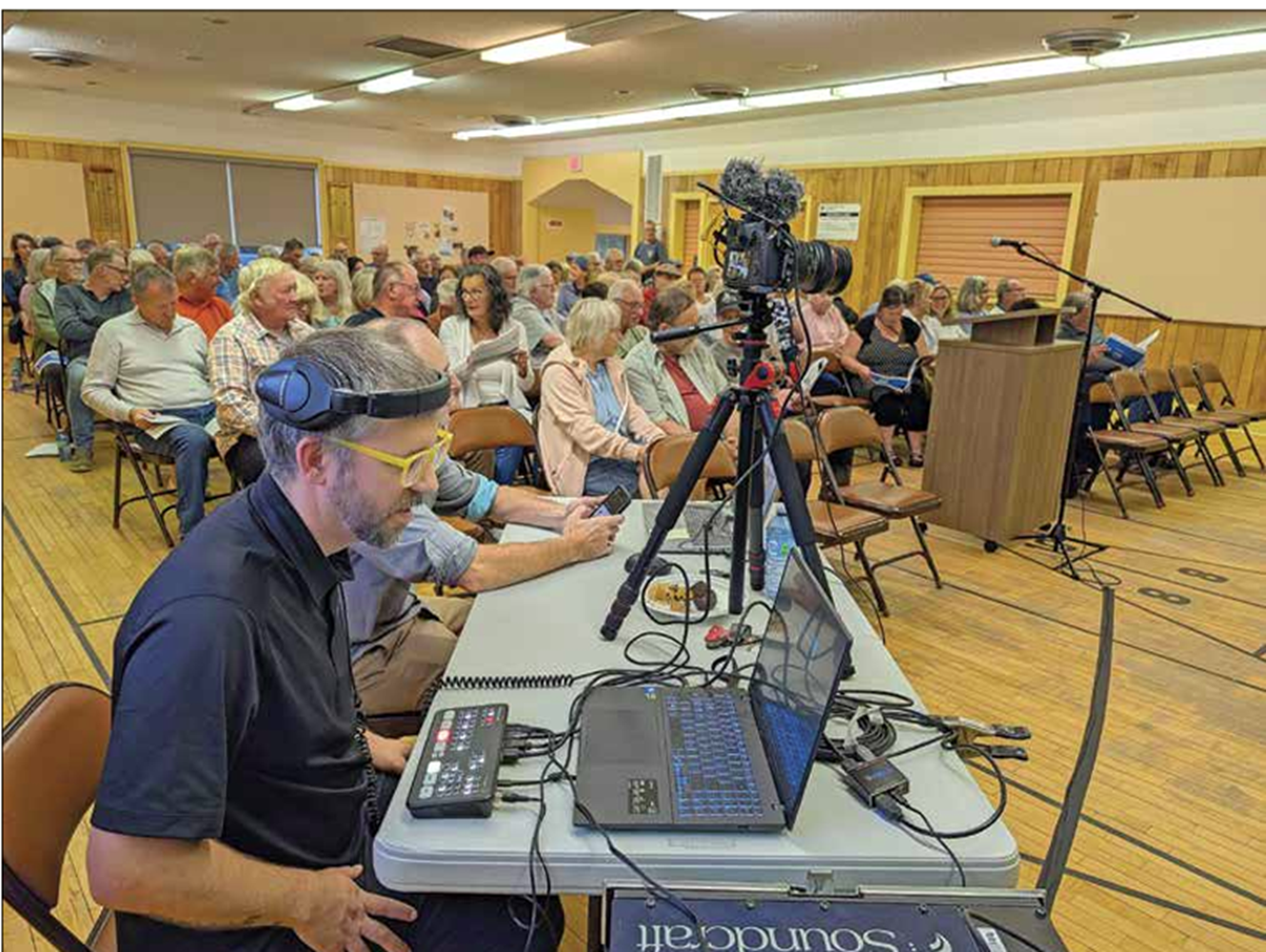
The deadline for a referendum on governance changes for this election has passed – with one for the 2030 election too far away, County of Haliburton CAO Gary Dyke told a public meeting in Haliburton Aug. 25.
He, and representatives of the Eastern Ontario Regional Network (EORN), brought the community-wide affordability and governance structure study on the road to the public, with additional meetings in Minden Aug. 26, Wilberforce Aug. 27 and Algonquin Highlands Aug. 31.
Dyke said in addition to missing the March 1 deadline, he thinks referendums are difficult, so they have opted for grassroots engagement.
“We would hope we’re getting the same kind of feedback you would get as part of a referendum.”
A former City of Kawartha Lakes resident, who only identified himself as ‘Steve,’ described the amalgamation process there as an “unmitigated disaster.” Twenty-six years later, he said promises had not been kept, staff had ballooned with many on the sunshine list, making $100,000 or more a year, and council had lost control over public input.
More detailed report expected in December
He said the County should think seriously before adopting a single-tier municipality, “because you will regret it down the road.”
But EORN’s Jim Pine said the CKL situation is different than what could happen in the Highlands. He noted the CKL amalgamation was legislated by the province, whereas, “this is a real community effort. There’s opportunity to do it differently here… the status quo for us is a concern. You know where it is going to go…” He added he had a good experience with the City of Quinte West.
Peter Oyler, who has gone through two amalgamations, said in his experience, “costs are more in the beginning, but do level out if the municipality is managed properly, and you elect the people to do the job for you.”
He said if establishing a working group, they should have staff and a community representative to help with transition.
“Contrary to what Steve has said, singletier is the way to go. We cannot afford 32 politicians any longer and spending the money we are on five different treasurers, etc. It can’t go on like this.”
Chris Lynd said with more work to be done, she wanted assurance residents would be involved in the process right up to the time of politicians making a decision. “This is a huge decision to make … I want to be involved.”
Dyke said public input would continue.
Donna McCallum asked if greater collaboration among municipalities had been ruled out. Pine said the service delivery review is now four years old and there had been limited work done to date. EORN didn’t think that was the way to go, but it was part of the status quo model, and ultimately up to councils.
Ted Atkinson said he suspected the service delivery review didn’t go well because it did not have champions.
“It’ll be rewarding when it’s done if it’s done properly and executed really well. And everybody in this room will see the benefit of that down the road. It won’t be tomorrow. It won’t necessarily be in two years, but in five to 10 years, you will start to really reap the benefits. If it doesn’t happen, you’ll start to see the County starting to fall more on its face.”
After a decision of council, Dyke said they would like to have changes implemented in 14-18 months.
Following the meetings, EORN will continue its work to drill down further on the four models it is suggesting the County choose from.