
Dysart et al council learned this week that it will be another two years before the proposed expansion of the Haliburton Wastewater Treatment Plant is complete, should it be approved by the Ontario government.
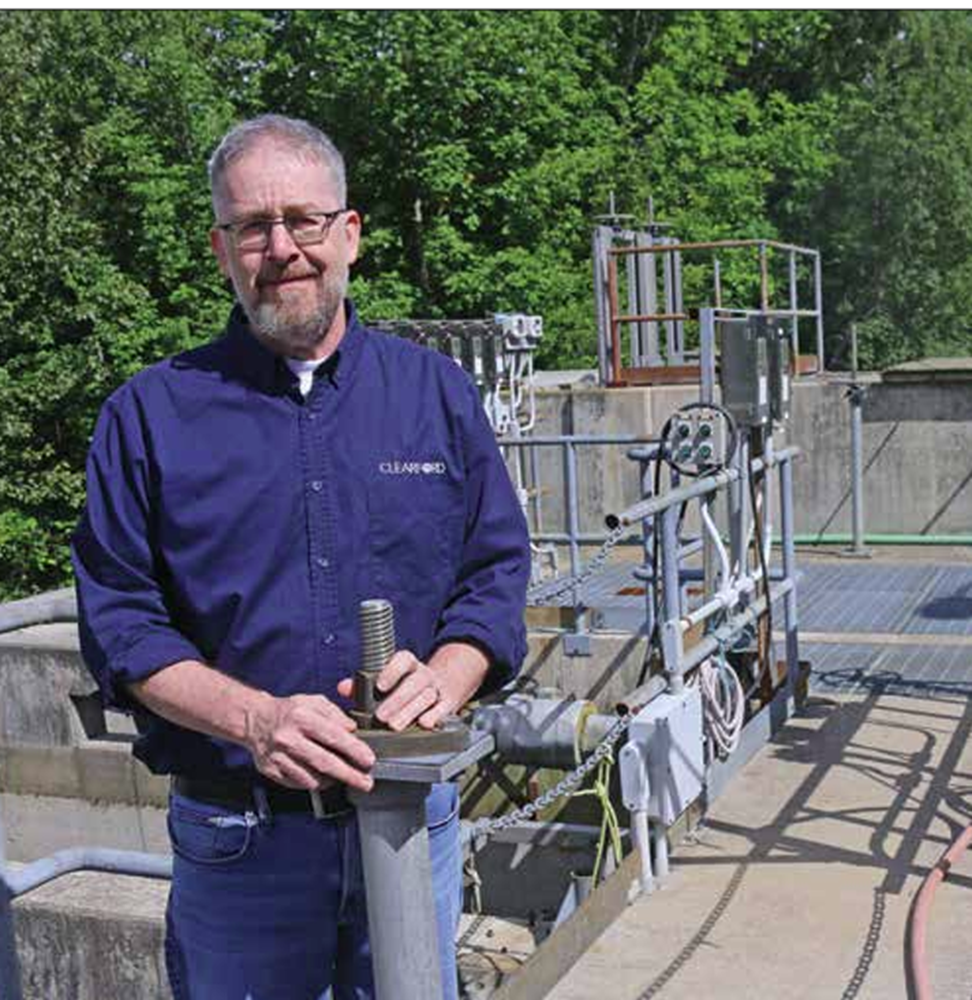
John Levie, vice president of engineering with Clearford Water Solutions – the firm that manages the plant for Dysart and was retained in January 2025 to oversee upgrades – told council June 23 that the project was still in the first of three planned phases, focusing on design and regulatory approval.
The project will increase capacity at the site, located between Grass and Head lakes in Haliburton village, by about 50 per cent. Levie said it will allow the township to provide sewer services to 800 additional properties. It’s expected to cost about $14 million.
The plant is now running at 89 per cent capacity, about seven per cent more than when the process began two years ago. Levie said reservations for a proposed long-term care build on the township’s 92-acre property on County Road 21 and some residential units in the downtown had almost maxed out available allocations at the plant.
He noted once a plant hits 80 per cent capacity, the Ministry of Environment, Conservation and Parks (MECP) require townships to start planning for expansion.
Over the past year, Levie said Clearford has completed all conceptual design work for the expansion. Equipment has been reviewed, with a wishlist of new materials established.
An application to increase the amount of treated water put back into the Lake Kashagawigamog chain will soon be submitted to the MECP for approval. Levie said he had hoped to get that in earlier, but he was delayed after a local group raised concerns over the project with the province.
John Puffer from the Lake Kashagawigamog Organization (LKO) said his group has worked with the Canning Lake Property Owners Association for the past few months to better understand the township’s plans. He said the two associations are opposed to the expansion as initially proposed in 1989.
Levie noted that, when the plant was upgraded in the 90s, it was done with future expansions in mind. He said he expects MECP to support the project based on that early approval, as well as recent regulatory changes at the provincial level.
Puffer said the groups’ primary aim is to prevent more phosphorous loading into the lake chain.
“We want to work with Dysart to ensure there is an overall plan to prevent more loading. This may require offering offsets including hooking up more lakefront properties to the plant,” Puffer said, noting the sewage plant is more effective at keeping phosphorous at bay than individual septic systems.
Levie contends the Haliburton plant is already one of the top performing, environmentally-sound plants in the province. He noted the treatment process removes 98 per cent of carbon, 98-99 per cent of nitrogen/ammonia, and 97-98 per cent of phosphorous from the water.
Staff tests water quality weekly, with Levie telling The Highlander last fall he hasn’t seen any major issues in his 21 years working at the site. Per the MECP, the environmental compliance approval for nitrogen/ammonia is 5 milligrams per litre, with phosphorous at 0.2 milligrams per litre.
Looking at annual data stretching back to 2021, Levie said the highest level of nitrogen/ammonia was recorded from January to August of 2024, at 0.06 mg/l, and the highest level of phosphorous in 2022 at 0.05 mg/l.
With the 50 per cent capacity increase, Levie said they’ll be able to drop the concentration limit of phosphorous to twothirds of what it is right now. Prod:
“This will provide additional assurances that lake water quality will be protected,” Levie said.
He hopes to have that pre-consultation with MECP this summer or fall. Once that’s completed, the formal application can be submitted. That will kickstart the technical review process, which can take up to a year. The second phase focuses on detailed engineering, another year-long process. Levie said he’s hoping to complete that work while the technical review is underway.
The third phase is constructing and commissioning of the new system, which Levie estimates will take another year.
The township will be seeking government grants to help with the final bill, Levie confirmed.
County Road 21
Plans are progressing at the 92-acre property on County Road 21, with council learning at a June 16 special meeting that the township can extend sewer lines to the entire property, potentially increasing the number of units that can be developed.
“By extending municipal sanitary services, we could fit up to 90 (single family home) lots here with sewage connections. The only constraints then would be water capacity, whether there’s enough water underground to service that many private wells,” said consultant Evan Sugden.
There was some talk last week about whether council wanted to leave space for a public park. There’s a requirement within the Municipal Act that says five per cent of a developable property needs to be reserved as parkland.
Currently, the 11.3 acres allocated as parkland equates to 12.2 per cent of the property. Coun. Pat Casey felt that was too much, wanting to see some of that land, fronting CR21, to be used for highway commercial development.
“I’m all about bringing in new businesses. We already have a big park in town. If we’re trying to maximize density and looking at dollars spent versus dollars earned, then that highway commercial component is important,” Casey said.
The township has committed to servicing the first phase of development at the site before selling to prospective builders. There will be more discussion on the project at a July 7 special meeting of council.