
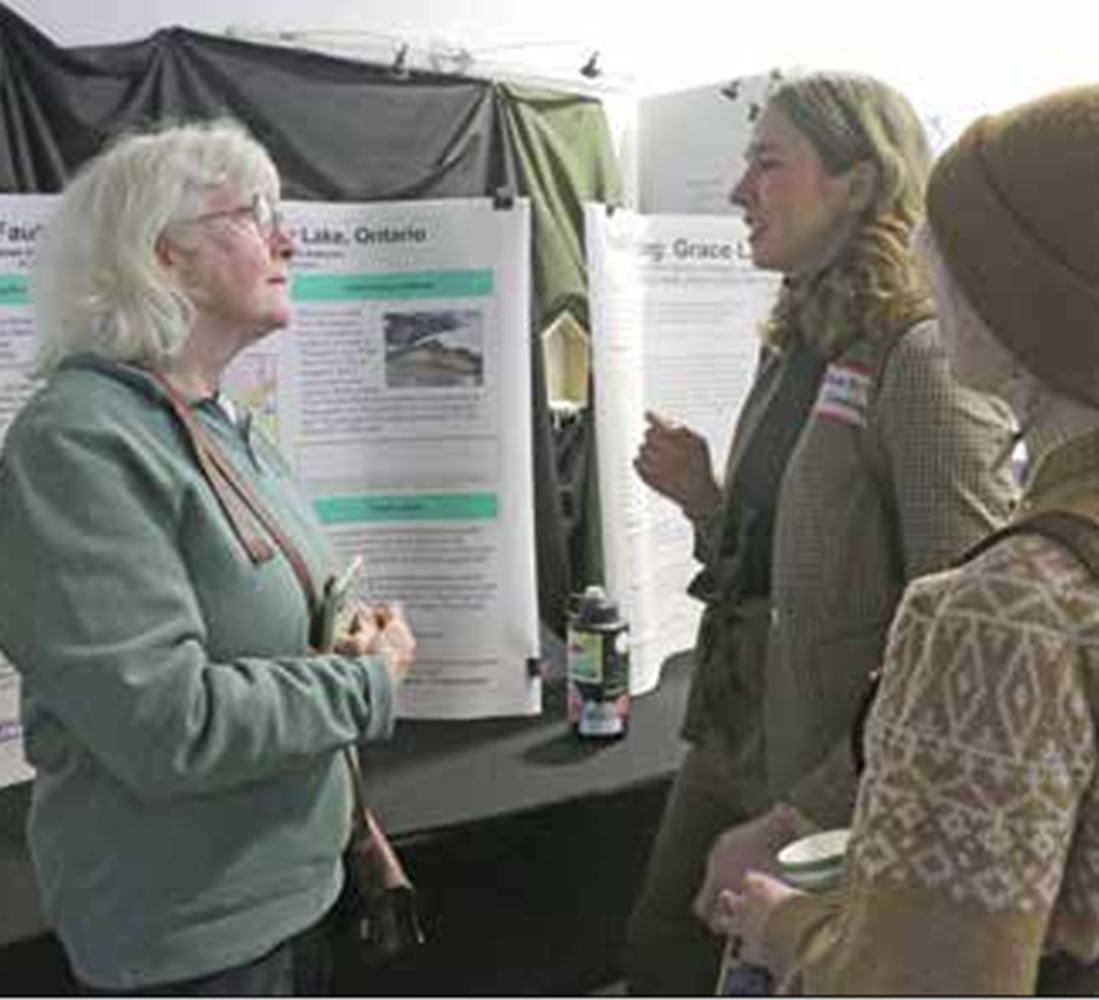
U-Links’ annual celebration of research returns to Haliburton March 28 and the non-profit’s program co-ordinator, Frank Figuli, said there will be updates on almost 50 student-led projects conducted in the Highlands over the past year.
Whether you’re interested in learning about soil quality at Abbey Gardens, the feasibility of bringing a municipal biodigester for organics to Haliburton County, or the benefits of artificial loon nesting platforms, Figuli said there’s a wide range of environmental, ecological and social issues on the agenda.
“We’re going to have eight in-person oral presentations and research posters encapsulating 38 projects – those are record high numbers for U-Links,” Figuli said.
He noted that, since September, U-Links has worked with 239 students from Trent and Guelph universities cultivating local studies.
Since 1999, the non-profit has partnered with more than 3,000 students on over 600 projects. It takes ideas submitted by community groups and residents and matches them with student researchers, who work in the field analyzing trends and compiling data.
“The students get a great dose of experiential education while conducting their research and U-Links community partners get their questions answered or problem solved,” Figuli said.
One of the key initiatives addresses the viability of artificial loon nesting platforms, with students Cate Crawford-Thompson and Ellise Morgan working on Halls and Hawk lakes to assess how they can operate on waterbodies with fluctuating water levels within the Trent Severn system.
“Some of the challenges with loons is they don’t have walking legs, so when the water levels go down too far it becomes quite difficult for them to reach their nests… then if the water levels go up too high, it can actually drown out the eggs they lay,” Figuli said, noting they’re presenting a model he feels could be fit for any lake in the County.
Trent’s Laura Scrivener will discuss underground greenhouses, looking at models for implementing geothermal technology to extend the growing season for select crops; Sam Winterbottom is presenting results on an assessment of carbon stocks for the Haliburton Highlands Land Trust; Tristan Tschinkel analyzes the impact of recreational trails on soils and vegetation in deciduous forests in the County; while Florence Bergeron and Lenore Reid unpack municipal digesters.
Figuli said they’re engineered systems that use bacteria to break down food waste and other organic materials.
“They investigated how biodigestion could divert waste from landfills, lower greenhouse gas emissions, generate renewable energy and, where possible, produce nutrientrich byproducts,” Figuli said, noting they’re used in many Ontario municipalities – including the City of Kawartha Lakes.
The event’s keynote speaker, Dr. Karen Thompson, will be talking about green care farms. Pioneered in Europe, the program offers hands-on respite care to people living with dementia. There will also be a panel discussion with Sue Tiffin, Godfrey Tyler and Jennifer Semach on programming offered by the County and at Waverly Brook farm and Walkabout Farm Therapeutic Riding Association.
Asked why people should attend, Figuli said the event is all about improving attendees’ information capital.
“I think all these projects put new perspectives on problems that people may not be thinking about,” he said.
The celebration is free to attend, with lunch provided. Register online at ulinks.ca.