

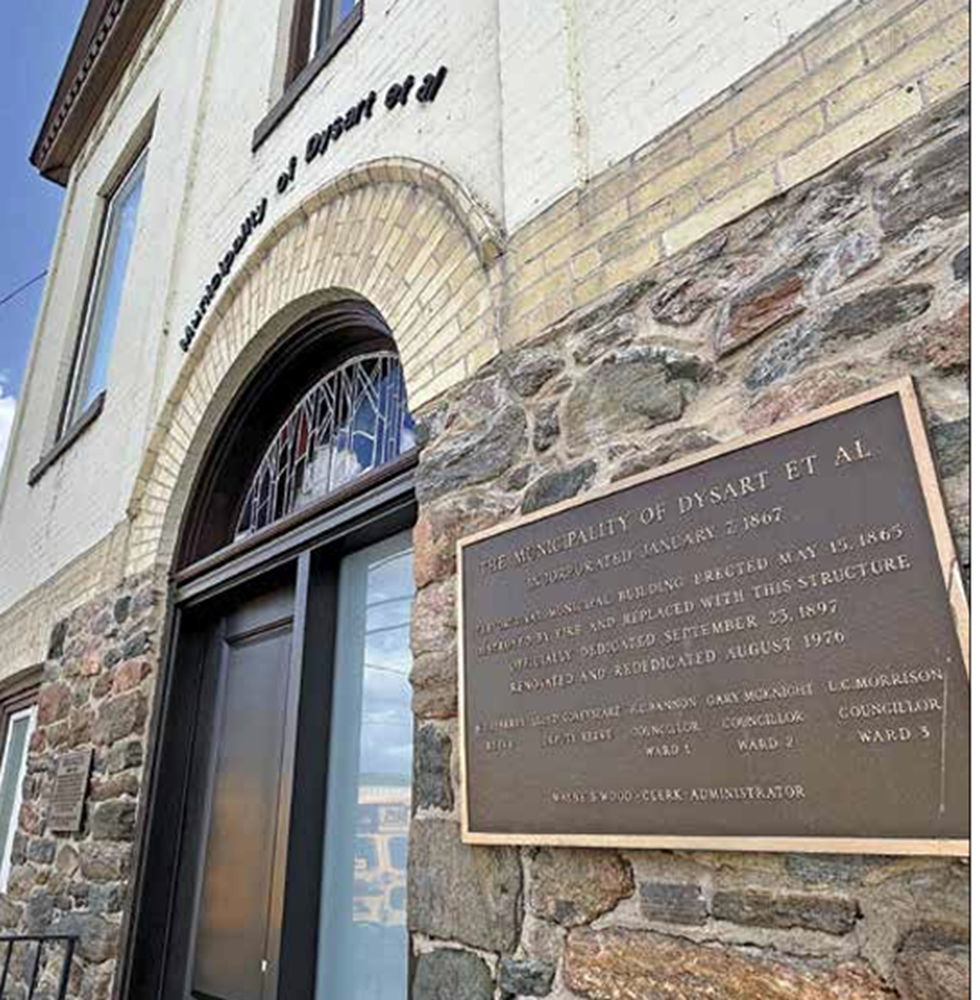
With Dysart et al processing around half the applications it was anticipating during the first full year of the County’s new shortterm rental bylaw, some councillors and staff are openly questioning whether the program is working.
At a Jan. 27 meeting, while delivering his monthly report on licensing uptake, the township’s chief building official (CBO), Karl Korpela, said 311 STRs had been identified in Dysart since October 2024, well short of the 500-plus initially projected.
Korpela said 56 applications were received between Oct. 1 and Dec. 31, 2024, with 54 approved and two denied. Last year, the township received 253 applications, approving 240 and denying 12. As of late January, the township had received two new applications this year.
With each application carrying a $500 charge, the township has brought in $153,500 through the program. According to Dysart et al treasurer Brayden Robinson, just over $52,400 of that went to Granicus, the U.S.-based company contracted to manage the program on behalf of the four townships in Haliburton County, in 2025, with another $52,600 going to the firm this year. A three-year contract signed in 2024 pegged Dysart’s costs at just over $130,000.
With the township also planning a public survey, to be managed by an outside consultant, mayor Murray Fearrey is worried the township will soon be “in the hole” on the STR file.
“I think we’re awful close. The cost of getting people in to do a survey is going to be pretty close to what our net revenues are,” Fearrey said.
Robinson noted the township has collected an additional $62,000 in MAT tax through the program, with $31,000 staying with Dysart and the rest going to the County.
“I should note as well, that 2026 will be the first year that the program is fully implemented, so the financial results from 2025 may not be reflective of what is expected moving forward,” Robinson said.
Korpela told the mayor the survey, intended to gather feedback on the program, is on hold with the township’s STR lead, Hailey Cole, away.
“I’m not sure when we’ll get around to finalizing the survey,” Korpela said.
Fearrey said bylaw staff have spent significant time getting the program up and running, noting their salaries should be factored into the cost.
“It’s part of regular staff time to review applications. The more we have, the more time we spend on it,” Korpela said. “The first year is going to be the hardest year because they’re brand-new applications. So we have to go through them with a fine tooth comb. But once that’s done and we’re just doing renewals, the process is much simpler.”
Appeals process ‘waste of time’
Coun. Carm Sawyer said he attended a recent STR appeals meeting in Minden in January that he said, “wasted a lot of time for a lot of people.”
At that meeting, Sawyer said the committee heard from two applicants seeking relief on demerit points that had been applied to their accounts due to infractions that have since been remedied. It was noted only the committee, not staff, could wipe demerit points.
“I think we need to redefine some stuff… give staff more leeway so that when a problem has been resolved it doesn’t have to go to an appeal,” Sawyer said. “All we did was [waive] the demerit points, which staff agreed with.”
Korpela said the township “doesn’t give demerit points lightly” and noted staff issue at least one warning before applying them. In most cases, people are given demerit points by refusing to take their STR off the market while they await a licence or rectify a problem, Korpela said.
The CBO feels the appeals committee plays a key role in ensuring people follow the rules. Demerit points stay on an account for three years unless wiped by the appeals committee, Korpela said. Accumulating three demerit points on a property leads to a licence suspension of at least six months.
Sawyer believes appeals should be heard in-house by respective councils instead.
“I don’t know why we need the appeals committee, I really don’t. For what we’ve done so far down there, I think it’s redundant. If it’s an issue in our township, we should be able to resolve it here,” Sawyer said.
Changes discussed
Korpela said he’d heard Minden Hills were planning changes to its STR bylaw process, saying that, perhaps, Dysart et al should follow suit.
“Maybe each municipality should go their own way with the STR bylaw and do their own thing,” Korpela said.
“We did tell people we would review the bylaw at the end of the [first] year… so maybe that’s what we have to do,” Fearrey retorted.
Minden Hills mayor Bob Carter said his council has had discussions recently about reviewing the bylaw. He said staff have been asked to speak to other townships to see what their experiences have been to see how the program can run more efficiently.
“We’re not planning a rejigging of anything right now. We’re just asking for a review and staff to make some recommendations,” Carter said. “We’re trying to determine what’s working and what’s not and go from there.”
The mayor said program uptake has been lower than expected in Minden too.
“We’re less than we anticipated, but if you look at places like Blue Mountain it took almost 10 years to get everybody to comply. It’s not an easy thing to do.
“The whole idea is this wasn’t supposed to cost the taxpayers anything, but you have to generate enough money to pay for the program… in the first year, that’s a difficult thing to do,” Carter said. “There’s work that needs to be done, absolutely, to get this running smoothly.”