

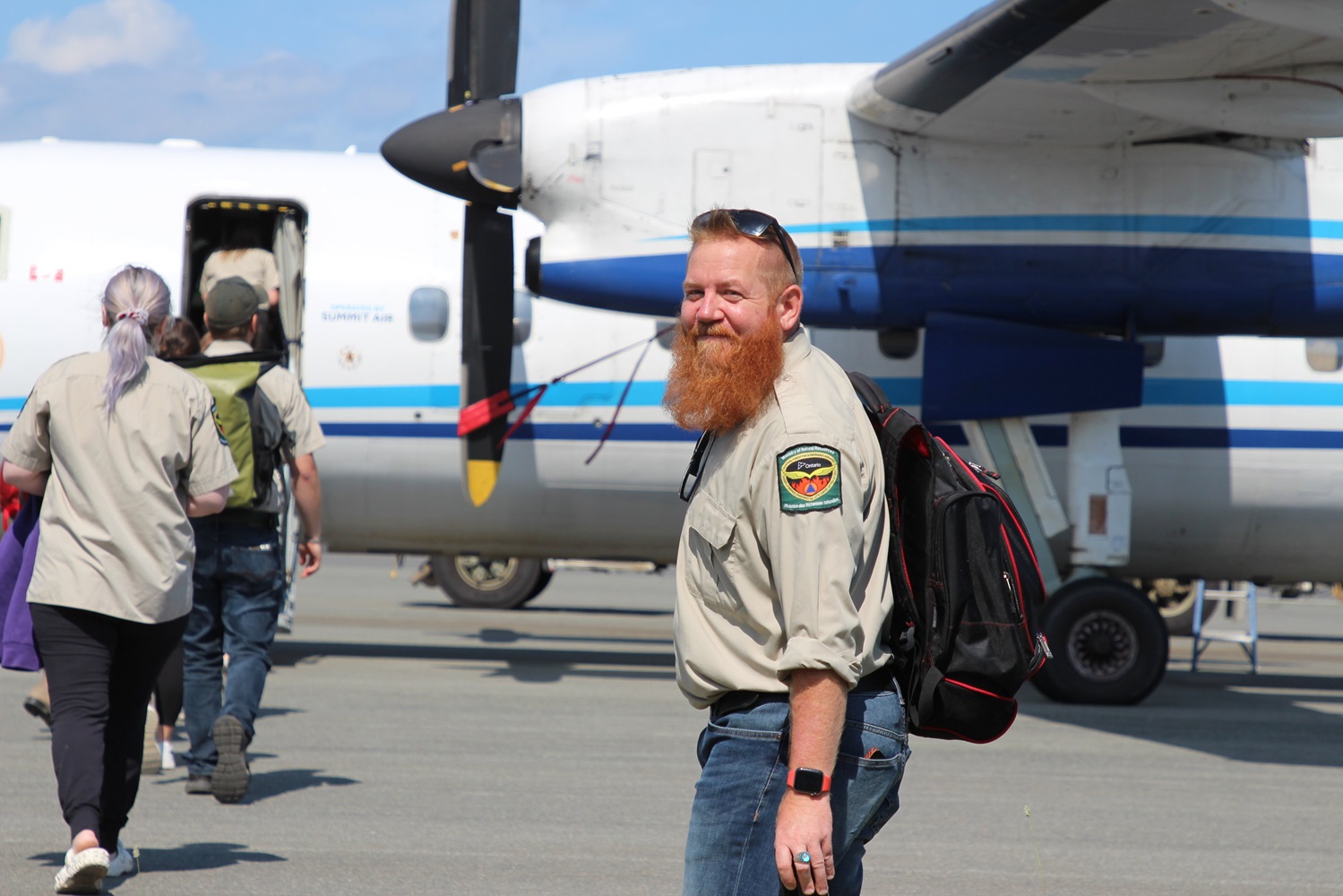
The Haliburton fire management headquarters is being kept busy, with crews deployed to Ontario’s northwest region, and British Columbia.
MNRF spokesperson, Isabelle Chenard, said five FireRanger crews have been sent outside of the fire management area. Each fire crew varies from four to six firefighters.
“Four of these fire crews are working on active fires in Ontario’s northwest region, in the Dryden and Red Lake fire management areas, and one has been deployed to British Columbia,” Chenard said.
She added that as of 12:30 p.m. Aug, 6, there were 59 active wildland fires in Ontario, of which 37 are in the northwest region (seven not under control, two being held, four under control, and 24 being observed), 22 in the northeast region (three not under control, two under control and 17 being observed).
“Ontario has deployed personnel to Alberta, British Columbia and Manitoba in the form of fire crews, incident management teams, and overhead staff. There are also northeast region fire crews deployed to the northwest region, as well as some overhead staff,” the spokesperson said.
“In terms of equipment, Ontario has provided 1,000 lengths of hose and 40 sprinkler kits to Manitoba. The deployment of these resources has occurred via resource sharing agreements with our partners, through the Canadian Interagency Forest Fire Centre and the Great Lakes Forest Fire Compact.”
Chenard said the current fire hazard in areas of the fire region located east and south of North Bay, Thorne and French River (which includes the entire Haliburton sector) is generally low to moderate, as precipitation continues.
Chenard added fire is a natural part of the ecosystem in the boreal forest. When naturally occurring, not threatening people, property or infrastructure, they are sometimes allowed to behave as they would in the natural environment – without human intervention – with the ultimate goal of allowing the natural benefits of fire to occur.
These include regeneration of habitat and forest growth. Some tree species need the extreme heat of wildland fires to reproduce, as is the case for Jack Pines that have cones sealed by resin (serotinous cones). The resin is melted from the heat of fires, ultimately releasing the seeds that had previously been locked inside. This is the same for lodgepole pine (mostly in Western Canada) and for other local tree species such as the black spruce (semi-serotinous). Other tree species have evolved to adapt to fire on the landscape, such as poplar and birch. They can sprout new trees from the root systems that survive forest fires. Some animal species prefer fire-affected landscapes, such as the black-backed woodpecker.
A fire that is ‘being observed’ is one that is being monitored to allow the natural ecological benefits of wildland fires to take place as they would in the natural environment without human intervention. If monitored fires pose any risks to people, property, or infrastructure, the MNRF would take action to mitigate risks.
Updates about active wildland fires in the province, as well as Ontario’s Interactive Fire Map, can be found at ontario.ca/ forestfire from April to October. To further stay up to date with the forest fire situation this season and to help you learn more FireSmart and fire prevention tips, you can follow them on X (the social media channel formerly known as Twitter), Facebook and Instagram @ONForestFires in English and @ONFeuDeForêt in French.