
By Adam Frisk Local Journalism Initiative Reporter
The federal government’s proposed income tax break for artists and creators is getting a mixed, wait-and-see reaction in Haliburton County.
Earlier this month, the Mark Carney government tabled its proposed budget, which included the Canada Creative Credit. The incentive would see Ottawa waive the first $45,000 of creative earnings. It would apply to net business income from original work that includes everything from painting and ceramics to writing, music, and photography.
The prime minister pitched it as part of a broader effort to help people in the arts industry to make a living off their work.
Jim Blake, who used to teach business at Fleming College’s Haliburton School of Art + Design, said he hadn’t seen the Canadian government pitch an arts tax break of this size before.
“This is an interesting and bold move by the government. What level of impact it has, I’m not sure, but it does make a statement from the government,” Blake said.
The long-time community arts champion went on to note that while “the devil’s in the details,” supporting artists matters for community life, especially in a town like Haliburton.
While the math on the proposed tax break hasn’t been ironed out, the tax credit is non-refundable. That means the perk only reduces federal tax owed down to zero. That means low-income artists who already owe nothing won’t get cash back in their pockets. It also only applies to the net business income, after all deductions like studio expenses.
Over at Rails End Gallery and Arts Centre in Haliburton village, curator and director, Laurie Jones, said she thinks the incentive could give a boost to artists who run their studios like a formal business. Hobbyists, however, not so much.
“There are other people who don’t declare the income, and I think that this is not going to be of any benefit to them whatsoever. They’re basically living tax-free on it anyway,” Jones said. “If you’re happy making cash on the side, which a lot of people are very happy to do, that’s fine; it’s a hobby. If you’re running a business and keeping records, this might be of interest.”
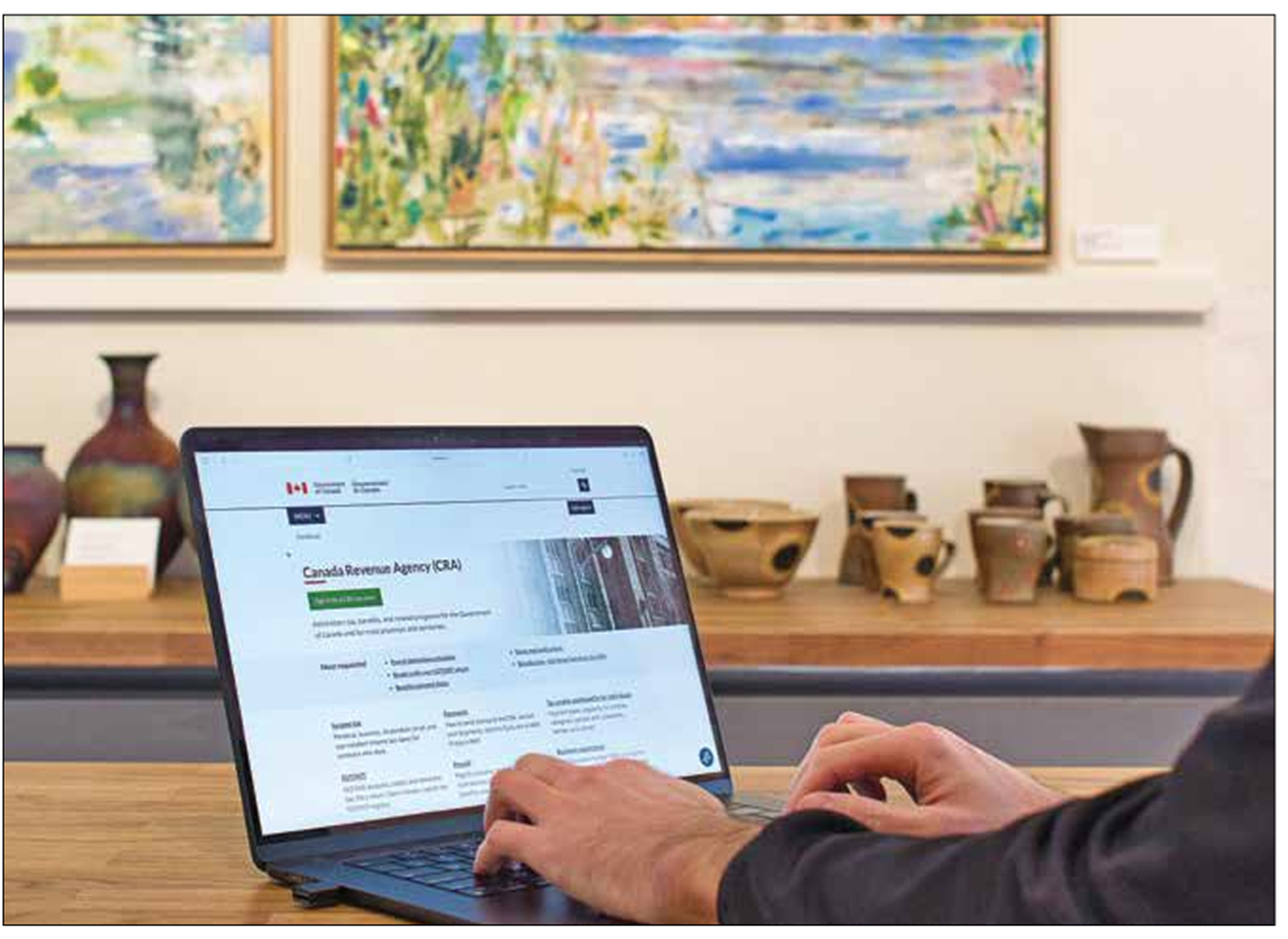
Jones said that while Haliburton County is home to a high population of makers and creators, few earn a fulltime living solely from their art. For artists who file sole proprietorship income tax with the Canada Revenue Agency, she suggested that the credit could encourage more consistent bookkeeping.
The federal government plans to consult the arts sector over the coming months, with final eligibility rules expected in the spring economic update. Groups like Canadian Artists’ Representation and Galeries Ontario will likely be at the table for discussions to help lay out where Ottawa draws the line between fine art and production craft.
“Certainly that whole idea of who is an artist is a longstanding question, and that’s going to be interesting to see how that’s defined,” Blake said.
The proposed budget also includes a pledge to update the Copyright Act with an Artist’s Resale Right, which would see an artist be paid a royalty whenever their work is resold at a later time. For Blake, the pledge is a “really big deal.
“When I was teaching business for artists, one of the things I always emphasized is that your copyright is your future,” he said. “You have to maintain the copyright of everything that you do because, eventually, it could turn into money.”
Until spring, artists will have to wait and see what the rules actually look like.
“It has to be totally worked out,” Jones said. “They’ve said this will be done in consultation with other people and other organizations, and everything else is up in the air.”