
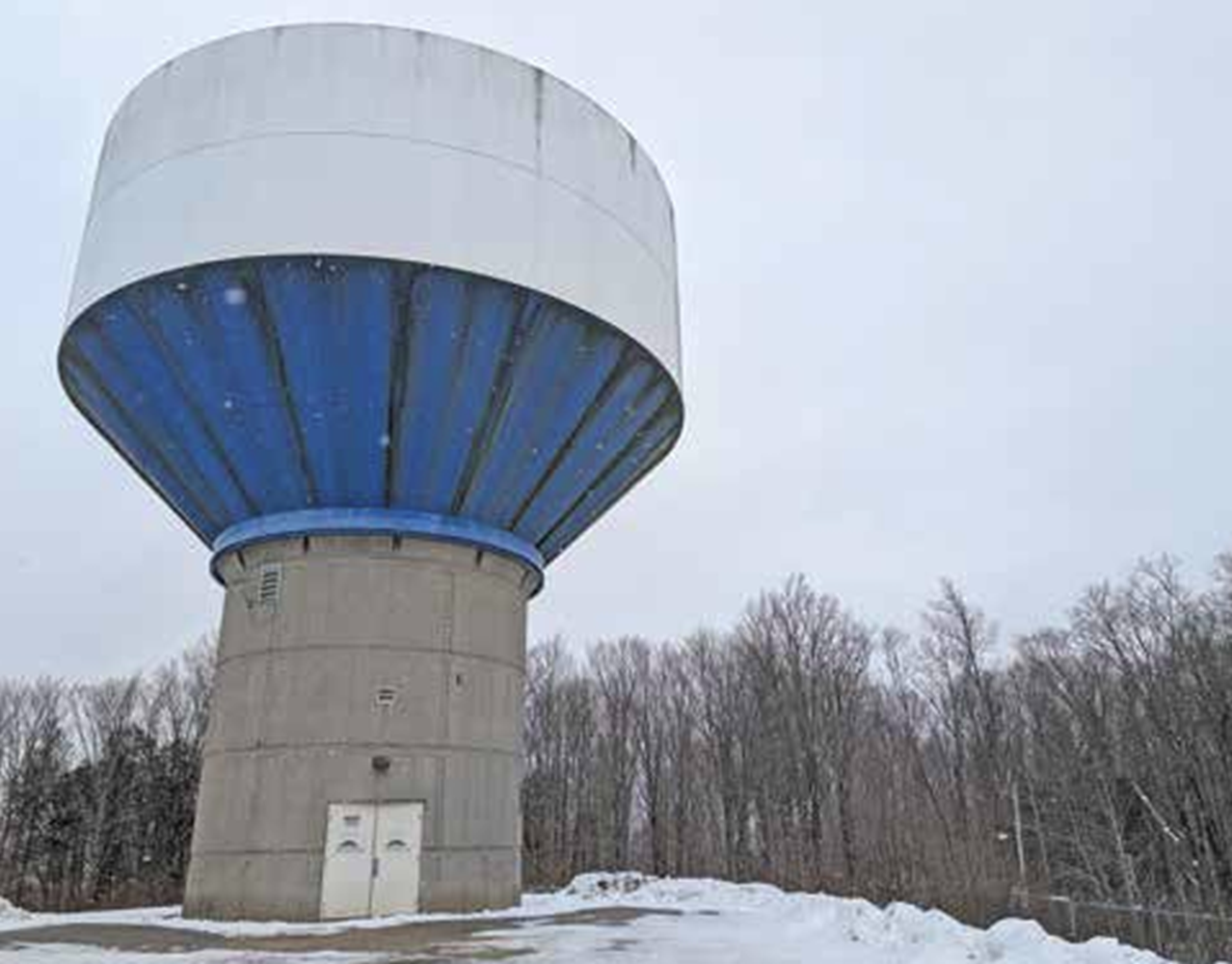
The Ontario Clean Water Agency (OCWA) has told Minden Hills council if the township’s population grows, it may have to expand its water and wastewater system within the next 25 years.
Jason Younker, in presenting a water and wastewater rate study Nov. 27, said “the growth potential in Minden is high.” He said if the town’s population booms, “expansion of the water and wastewater system will likely need to be done” by 2050.
Younker noted the population had increased over the past 25 years, with the rate of increase from 2016 to 2021 being 14.5 per cent – about 2.9 per cent per year.
He said any expansions would be “quite pricy” and OCWA did not include it in forecasted capital expenditures for the systems. He estimated “many tens of millions of dollars. That is something to keep in mind, but we are recommending ‘I and I’.”
‘I and I’ refers to managing inflow and infiltration. That means things such as preventing unwanted entry of stormwater, groundwater, or snowmelt into a sanitary sewer system. It also means eliminating surface water from sources such as downspouts or storm drains. Other examples are stopping pipe cracks, leaks, or faulty joints.
The rate study is about ensuring the municipality charges enough money to pay for services.
Younker said the township now provides water to about 628 customers and wastewater to about 593.
The current billing structure is a combination of flat fees billed quarterly and metered rates based on a single rate per cubic metre of treated water for every water and sewer connection.
He estimated revenue from water at more than $630,000-a-year, and wastewater at more than $718,000 annually. Water expenditures were at just under $500,000 and wastewater just over $1 million.
OCWA further estimated the township needs $4.6m for the water system and $3.9m for the wastewater system between 2025 to 2050.
Younker said the closing 2024 water reserve balance is $1,858,081, and rate increases of two per cent per year for the next 25 years will result in an increase to the reserve fund balance.
The closing 2024 wastewater reserve balance is $1,123,646 and rate increases of two per cent per year for the entirety of the planning period results in a consistent decrease in the wastewater reserve fund.
For the water system, he said the township is well within capacity. He said they could double the population and still have extra capacity.
However, that is not the case for wastewater. “In terms of dry weather flows, it seems to be fine.
In terms of the wet weather flows, experienced in the spring melt, there do seem to be times when the system might need bypassing.”
However, he said they are still below the 80 per cent average flow mark where a sewage capacity upgrade might be recommended.
OCWA offered a number of recommendations: such as increasing flat fees; shifting revenue to wastewater; rate increases; rate increases with yearly rate changes; or maintaining the existing rate structure.
They concluded: “The water and wastewater systems are presently in a satisfactory financial position, with rate structures that may benefit from changes to balance out future projected financial reserves. Action should continue to be taken to address wastewater capacities (I & I reduction), with consideration given to the implementation of a planning process for a plant expansion.”
Council took no action on the report but CAO Cynthia Fletcher said OCWA will be presenting further information based on the recent discussion with council at the Dec. 15 budget meeting.