Home Blog Page 9

Art on tour

0

There was a much different feel to this year’s 20th annual Tour de Forest, with the popular event gathering artists together at the Haliburton Legion for the first time.

Organizer Charlene McConnell said there was a strong turnout, with more than 600 people attending the three-day show, which opened Friday (July 31).

With 22 artists featured, McConnell said people liked the idea of seeing everyone together in one spot.

Previously, the tour was held in locations across the County, with artists welcoming the public into their home studios.

McConnell said she wasn’t sure which format will be used for the 21st tour in 2027.

“For some people, it can be pretty difficult moving their products and getting things set up. We’re going to have to get together, talk, see how this worked for everyone and then decide, collectively, what we want to do,” she said.

Player development taking shape at halfway stage

0

Now that Haliburton Grassroots Soccer has reached the middle of its season, our amazing volunteer coaches are noticing impressive progress with every passing week.

Players are forging deeper friendships while engaging in spirited, healthy competition during games. High spirits and cheerful chatter fill the air both on and off the field, as the kids fondly reminisce about their favourite plays and funniest accidental blunders.

For the parents and coaches watching, it is a joy to witness the personal development of these young athletes, who tackle each new skill and lesson with enthusiasm and grit. With another half of the season still to go, these determined players have already given everyone on the sidelines plenty to cheer about.

Clowning around with Minden Rotary

0

Organizers of RotaryFest 2026 in Minden have expanded to a two-day offering this year.

“RotaryFest is designed to present a fresh, new look while celebrating community spirit, partnerships, and volunteerism. Over two days, the event will combine live entertainment, family-focused activities, and opportunities to highlight the important work of not-for-profit organizations and local businesses,” the club said.

Saturday night (Aug. 15) will feature a concert and street dance at the outdoor parking area adjacent to the old fire hall from 6-9 p.m. Dubbed Brews Beats and Eats it will include live music by Jeff Moulton and Recycled Teenagers. Tickets available at Let’s Get Local, Minden Auto Care, Burnt Crust or at the event.

Sunday (Aug. 16) will be Sunday Funday, featuring not-for-profit partners, downtown merchants, and local vendors along Bobcaygeon Road, Prince Street, and part of the municipal parking area.

Planned attractions include: classic cars, motorcycles, off-road vehicles, a dunk tank, a kids’ zone operated by early childhood educators, artists, and a junk in your trunk sale. Rotary’s celebrity clowns will also be in town for the weekend.

“The township is deeply rooted in community service, and this event aims to encourage greater involvement in local service clubs while highlighting where support is most needed,” Minden Rotary said.

“Earlier this year, the response to local flooding showed just how strongly Minden residents come together in times of need. Neighbours supported one another, helped protect the town, and demonstrated the power of community action when a challenge is visible and urgent.

“RotaryFest also helps draw attention to less visible challenges across the township, including home heating insecurity, food insecurity, animal welfare concerns, family violence, and other ongoing social issues supported by local organizations. By bringing these needs into the spotlight, the event helps residents better understand where help is needed.”

Minden Hills coun. and Rotarian, Shirley Johannessen, spoke about the event at a July 23 council meeting.

“I would like to take a moment to recognize the vision behind RotaryFest This is much more than a festival or weekend of entertainment. There is an opportunity to bring our community together, showcase our local businesses, and shine a light on the many organizations that support residents throughout the year.

“What stands out to me is that this event is designed to connect people, not only through music, activities and family fun, but by introducing residents to the service clubs, and community organizations that make Minden Hills such a caring and resilient place.

“Following the challenges our community has faced this year, this event reminds us of what we can accomplish when we work together. I believe RotaryFest reflects the spirit of Minden Hils community partnerships and service.”

She thanked organizers and said the Rotary Club of Minden is looking forward to a successful event, not only for this year, but for years to come. See more at mindenrotary.ca

Tourism steady but visitors spending less

0

By Adam Frisk Local Journalism Initiative Reporter

As Haliburton County hits the summer halfway mark, tourism traffic is keeping pace with 2025 numbers, but local businesses said tightening consumer budgets, rising wholesale costs, and unpredictable weather, are hitting profits.

County of Haliburton tourism manager, Angelica Ingram, told The Highlander in a recent interview that welcome centre visits and regional traffic are on par compared to last year’s strong performance, despite a sluggish spring start across the region.

“Last year was a good summer, so if we can stay close to those numbers, we don’t even need to surpass them,” Ingram said.

While the tourism manager noted it’s still early in terms of data, June was down slightly in visitors, but July has made up for that. She pointed to key events such as the Haliburton Art and Craft Festival and the Highlands Summer Festival, where Anne of Green Gables sold more than 90 per cent of available tickets.

“I think where we’re at right now for summer visitors is making most of the businesses and the operators happy,” Ingram said. “If we can maintain the consistency, that’s great, and so far, we seem to be doing that.”

To help entice visitor traffic during the current economic outlook, the County focused on shorter getaway promotions to lure people from southern Ontario. Ingram explained the County distributed about 12,000 copies of its explore map through The Globe and Mail on July 1, which resulted in a spike of phone calls to the tourism department with people asking about two-to three-night road trips.

But, despite steady foot traffic, retail businesses noted that overall visitor spending has become somewhat conservative.

“There are a lot of challenges right now… there is price sensitivity and challenges with input costs into businesses,” Amanda Conn of the Haliburton Highlands Chamber of Commerce told The Highlander.

Mathew Renda, co-owner of Boshkung Brewing Co., said he’s seeing the economic shift play out firsthand. He said while there’s been higher foot traffic at Boshkung Social in Minden, overall transaction sizes are down.

Gas price and weather impacts

“We’re seeing more people, but they’re just spending less,” Renda said, adding the trend may partly be because of gas prices keeping cottagers closer to their properties. “Gas prices are kind of through the roof right now, and more people, I feel, are kind of hunkering down.”

The wild weather has also played a role for many businesses.

At Algonquin Outfitters in downtown Haliburton, Scott Swaga said overall revenue is up, mainly driven by seasonal cottagers purchasing big-ticket water sports gear. He noted recent wildfire smoke temporarily slowed mid-week foot traffic.

Down the street at Redmans Records, the wet weather has helped boost sales as visitors look for indoor activities when the rain keeps them out of the lake. But with rising wholesale costs and shipping fees from distributors, the store owner said it’s squeezing profit margins.

“Every single distributor has sent an email this year saying prices are being updated and going up,” Kelsey Redman said. “I am focusing more now on used vinyl, used equipment, used instruments, because it’s just not possible otherwise.”

Businesses on the main streets of Minden and Haliburton are also navigating seasonal construction and parking restrictions as well as foot traffic disruptions from sidewalk upgrades. In response, small business owners are relying on organic cross-promotions, social media sharing, and word-of-mouth recommendations to keep customers moving through nearby stores.

“I kind of like the idea of businesses helping each other,” Redman said. “It’s nothing on paper, but we do often tell each other to go to each other’s places, and I’ll have other store owners come over for coffee, and they’ll mention they send people here. And I’ll mention I send people there all the time, too.”

The County and business leaders are banking on shoulderseason events such as fall colour tours, the Studio Tour Haliburton Highlands, and Hike Haliburton to help sustain business momentum through the fall.

Casey to stand in as Dysart deputy

0

Shortly after Dysart et al council appointed Pat Casey deputy mayor until October’s municipal election, mayor Walt McKechnie criticized the mandated provincial process used to direct the township’s next steps following the death of previous council figurehead, Murray Fearrey.

Addressing council Tuesday (July 28), McKechnie said it had been a difficult few weeks for elected officials and municipal staff still reeling from Fearrey’s sudden death in May.

“I understand there’s a Municipal Act, that this process here is supposed to be fair… but we’re all still in shock and mourning of our dear friend,” McKechnie said. “To put this on council’s plate, to me, is unfair,” he added, referencing the choice members had to make this week between Casey and Ward 2 coun. Nancy Wood-Roberts, who also put her name forward.

McKechnie said he wasn’t a fan of the prolonged process, either. Since Fearrey’s death on May 28, council has convened four times, with each meeting bringing a different step in the process.

On June 16, the mayor’s seat was declared vacant. At council’s June 23 meeting, CAO Tamara Wilbee provided a brief update to say nominations were open. McKechnie was appointed at a July 9 special meeting, with the deputy mayor seat officially vacated. It was finally filled at this week’s meeting.

CAO Tamara Wilbee told council there are strict guidelines municipalities must follow when filling a seat vacated early in a term. Officials must first determine whether a seat is going to be filled through by-election or appointment, a process itself guided by timelines, and advertise publicly before proceeding.

Because of the length of time it’s taken to get to this point, Wilbee said there’s no need to fill the seventh seat on council. The Municipal Act states any vacancy declared within 90 days of election day does not need to be filled. Tuesday was exactly 90 days until election day Oct. 26.

After Casey and Wood-Roberts each staked a claim for the temporary deputy mayor position, McKechnie said he would have been more comfortable choosing names from a hat than registering a vote.

“All the councillors here have so much respect for both of you. We’ve been together now for four years. I know there’s not going to be any animosity, we all understand what we’re doing here representing the municipality of Dysart… but, to me, this whole thing could have been done differently,” McKechnie said.

Casey wins vote 4-2

With support from councillors Tammy Donaldson, Barry Boice and Carm Sawyer, Casey had a majority support. McKechnie backed Wood-Roberts.

After spending the past two County council meetings representing Dysart, Casey felt he was the right person to continue. He will contribute to upper-tier meetings Aug. 12, Sept. 9 and 23, and Oct. 14.

“I’m very passionate about everything that goes on here… deputy mayor is another stepping stone forward for me,” Casey said.

“I’m well-grounded, have a good practical knowledge of pretty much everything that goes on here, in business and in the public… I know I’ll do a good job, as I always have.”

Wood-Roberts, who has already confirmed she isn’t seeking re-election in October’s vote, felt she was the more appropriate choice to see the current term through as deputy mayor given Casey’s intent to run for mayor.

In a message to her fellow councillors before the vote, Wood-Roberts said, “I’m sure everyone has Dysart’s best interest in mind, but I feel a unanimous vote to move coun. Casey into the role could potentially lead the public, misinform them, or potentially have sway on the upcoming election and that wouldn’t be fair to the other candidates.”

Thus far there are two other people in the race with Casey – entrepreneur Andrew Nowell and former Ontario land surveyor Greg Bishop. The nomination deadline for candidates considering a run is Aug. 21.

County of Haliburton council meets in new chamber

0

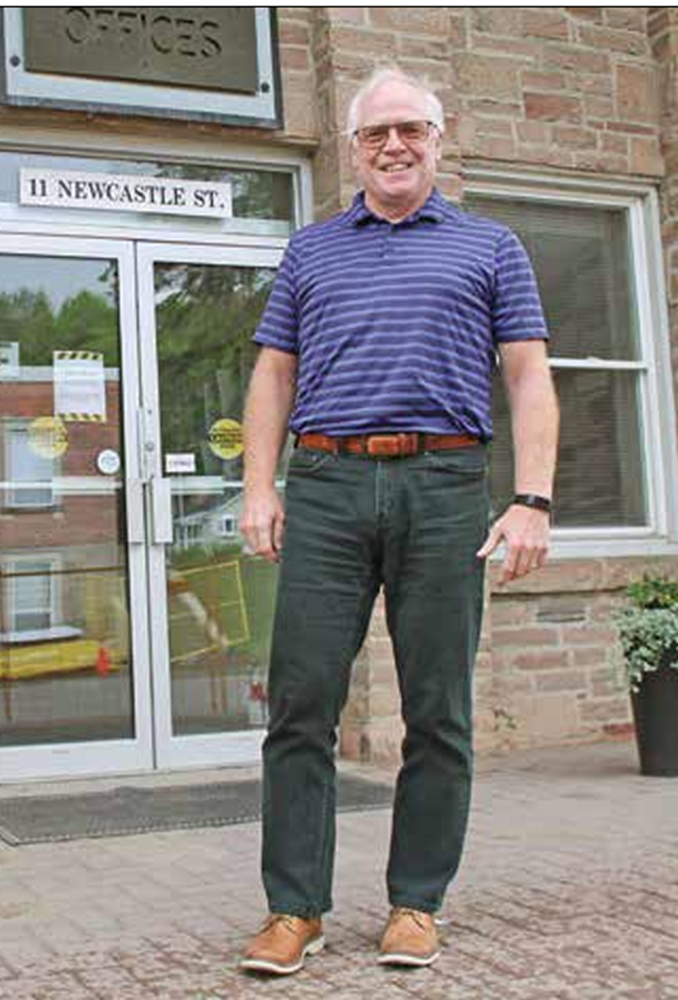
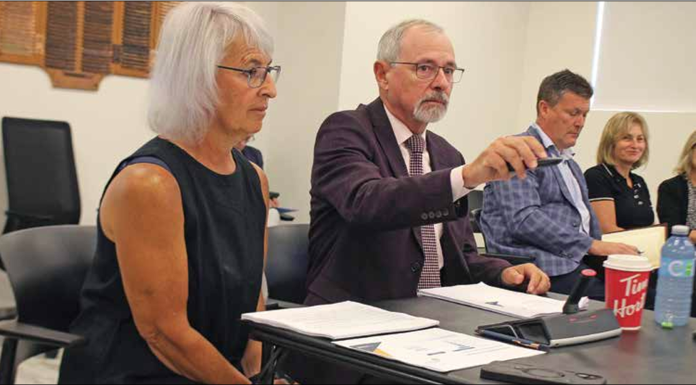
Warden Dave Burton had some opening remarks as County council met for the first time in its new council chambers at 12 Newcastle St. in Minden July 22.

“Wow, it’s certainly nice to be here today … as you may have noticed things look a little bit different from when we used to meet across the road (at 11 Newcastle St). I’m extremely pleased with the looks and aesthetics, everything in the building,” Burton said.

He added “thanks to the vision, and dedication, and hard work of our County CAO and staff, these new council chambers will now serve as home for our meetings, an important gathering place for discussion and decision-making, and collaboration.”

He noted there was a wide range of accessibility upgrades, making the space “more inviting, inclusive and welcoming to all.

“On behalf of County council, I would sincerely like to thank everybody who helped to bring this vision to life, and we’re grateful for the time, care and effort that went into creating this space that will benefit residents, staff, council, and our community partners.”

Burton said they would hold an official grand opening at a later date when all of the work is completed in the building.

Divided Minden Hills council defers strategic plan

0

Minden Hills council voted not to adopt the municipality’s five-year strategic plan when it met last Thursday (July 23).

The decision followed a lengthy debate, and recorded vote. Voting against adopting were: councillors Ivan Ingram, Shirely Johannessen, Tammy McKelvey, and Bob Sisson. Mayor Bob Carter, deputy mayor Lisa Schell and coun. Pam Sayne were in favour.

In presenting the five-year plan, spanning 2026-2031, CAO Cynthia Fletcher said it was built on “comprehensive community engagement” in 2024-25.

“The strategic plan sets the priority areas of focus that will guide decision-making to achieve the long-term vision for the community. The plan is intended to be future-focused or aspirational and includes a clear vision for the future of Minden Hills,” Fletcher said.

She added, “annual business and, or work plans and recommendations for resource investment will be built around the priority areas of focus and incorporate many of the ideas gathered through the engagement processes.”

The strategic planning process was led by Karen Jones Consulting Inc. and drafted after talking to council, staff, residents, local businesses, and community organizations.

She said it is centred on four key priority areas: responsible growth and community well-being; visionary leadership; quality infrastructure and service; and fiscal responsibility and sustainability. Jones added external pressures, economic vulnerability, momentum and confidence were identified as risks.

Asked to adopt the report, Johannessen said she thought a strategic plan would be more effective at the beginning of a council term.

“It sets priorities early. A newly-elected council can agree on its vision, goals, and key projects before budgets and major decisions are made,” she said. Johannessen added it provides accountability.

She thought adopting a strategic plan just months before October’s election could tie the hands of an incoming council that may have different priorities.

Fletcher said she would have liked to have had a strategic plan in place when she started with the municipality twoand-a-half years ago, but did not. She was concerned about the optics of deferring, saying a plan “had been long expected, with a lot of input from the community.”

Fletcher noted they would be reviewing the study early in the new council term, and annually, with a comprehensive review mid-term. She was further worried the new council would have a “huge” learning curve; and adopting a strategic plan “could be a bit daunting.”

McKelvey said best practice appeared to be undertaking a strategic planning process at the beginning of each council term. She wanted financial information updated as well. She was happy to accept the plan as information only, but refer it to the next council, which she hoped could adopt a plan in its first three months.

Sayne disagreed. “This is something that came from our community with a great deal of consultation, and with expertise doing the analysis and putting this together. If we talk about governance being slow, this is why governance is slow. We don’t make decisions.

“There’s some really good information and grounding information here that we can move forward with. (Staff) need some footing from us to say ‘this is where our community wants us to go’.”

Ingram responded, “I love the report. Everything in it, but I don’t think it’s our time to make the decision on this.”

Schell argued the community had input into the plan and “their seats aren’t changing come Oct. 26… The items listed are what our community wants to see. Regardless of who’s sitting here next, I would hope that they would follow the plan of what the community wants and not just go off on their own. I see this as a living document, a great roadmap for the new council to come in…” She did not see it as binding councillors.

Carter felt it was council’s responsibility to approve the plan, with the next council deciding how to execute it. He said it was something that had been worked on for years and “made no sense to push off.”

Irondale church fights for life

0

The clock is officially ticking on the Irondale church.

Eighteen years after the 19th century parish was deconsecrated, the volunteer group that initially saved the building from ruin has put out a warning to the community – new leadership needs to come forward by the end of September or risk seeing the space that was once the hamlet’s beating heart die forever.

Douglas Rodger, a member of Bark Lake Cultural Developments (BLCD), the residents’ group that owns the church site, said the situation really is that desperate. Meeting with The Highlander last week, Rodger confirmed the organization’s current president, Carol Simmons, is retiring from her position in September.

Because BLCD has charitable status through the Canada Revenue Agency, it must always maintain a three-person executive; someone filling the roles of secretary, treasurer and president. If an entity is unable to meet those requirements, they lose charitable status and are mandated to liquidate and donate all existing assets, Rodger said.

Simmons said she’s been president since 2008 and filling all three positions for much of 2026. She presented her resignation letter to the BLCD board last December, initially wanting to finish by May. She pushed her retirement back hoping to give the group more time to find replacements.

“If nobody steps up then I’ll formalize things on my end and the CRA will tell us we have to sell everything, liquidate – and that means the building, too. So we’d lose the church and then have to give the money away,” Simmons said, noting that was the commitment the group made when securing charitable status several years ago.

Background

The historic white building located at the corner of Irondale and Salerno Lake roads has fostered community connection since it was built in 1887. It was financed by a U.S. industrialist, Charles Pusey, who invested heavily in local iron mining. His wife, Ruth, was instrumental in forming the first congregation.

It officially became an Anglican Church in the early 1900s and remained so for almost a century, known as St. John’s. It was deconsecrated in 2008, with a final service held on Aug. 29, 2010.

Shortly after the church closed, the Toronto Diocese put the Irondale site on the market. Loathe to lose a building with so much history, a group of prominent families came together to buy the property. Simmons said the locals just finished paying off the $95,000 mortgage in April.

Simmons said it was her husband, Fred, born and raised in Irondale, who did a lot of the active boots-on-the-ground day-today work that needed doing. He died in February 2023.

“It’s been tough. I’ve just reached the end of my time [with the church]. A lot of times the stuff I do is something anybody can do. It just needs to be done,” Simmons said.

Asked about her favourite memories, Simmons chuckled when reminiscing about old wild game dinners held every July.

“Fred used to do all the hunting and cooking for those dinners – they were always a big deal. We’d get 200 people at least. He always managed the kitchen end, and I did the front of house. We always worked well together,” Simmons said, noting the longtime event didn’t survive the COVID-19 pandemic.

Help needed

It’s been a quiet few years at the church since. Rodger said they’re back to hosting informal non-denominational gatherings on Sundays that are open to anyone – even those who don’t have an active relationship with God.

“Religion doesn’t have the same hold over people today that it used to, but folks still need community and a place to gather. I think that’s what this place offers,” Rodger said.

Working in show business, Rodger said he’s lined up one potential final performance at the church Aug. 22. Folk trio Mystikana will play a set beginning at 7 p.m. It’s the latest in a long line of concerts Rodger has been responsible for organizing since 2015.

“We’ve had some great times here – performances from Albert Saxby, who is known to County residents. We had Russell DeCarle here, who was a Juno award winner; Stephen Fearing; Samantha Martin & Delta Sugar,” he said, noting the church can fit up to 100 people.

After spending a month in Spain last year and marveling at the 15th century Catedral de Sevilla, a core piece of the city’s history and identity, Rodger said he wants to do everything he can to ensure the Irondale Church lives to see 140. It will celebrate the milestone in 2027.

Turning 75 this year – and with many of the BLCD team now in their senior years, Rodger said it will be up to the next generation to lead the charge.

“We haven’t given up on community yet – even though we’re scattered across a vast area, we still need to find ways to come together, and the church gives us an opportunity to do that.”

Looking out towards the highway, Rodger, a cottager in the area since 1994, said he’s learned a lot about the history of Irondale – most of it through conversations sparked at the church.

“There used to be a livery stables just down the way, a hotel over there and another hotel out that way,” Rodger said, pointing in all directions. “This was a booming town back at the time the church was built. I think the community would be losing the heart of what Irondale is if the church was forced to close.”

He said the facility isn’t a financial burden, costing $6,000 to $7,000 per year to run, barring any major repairs – which have been few and far between in recent years. The issue is manpower.

“We’re hoping to fix that – you don’t need to live in Irondale, as long as you have a car, can drive and have an interest in history and community then we have a place for you,” Rodger said.

Interested candidates can email: rodger. douglasa@icloud.com.

Drag Lake group combats invasive plant

0

Taking his fishing boat out on Drag Lake recently, Haliburton resident Jim Miners said he had anything but a relaxing time on the water.

He was one of approximately 30 volunteers from the Drag and Spruce Lake Property Owners’ Association (DSLPOA) to work with four professional divers July 13-15 as mitigation efforts to limit the spread of Eurasian watermilfoil continued.

Residents on Drag Lake first noticed the invasive species in 2017. By 2020, volunteers had mobilized into an official corporation so they could get permission from the Ministry of Natural Resources and Forestry (MNRF) to target problematic outbreaks on the lake.

Initial analysis identified four locations with Eurasian watermilfoil (EWM), with three more popping up in 2021. This year, the group assessed 20 known sites, Miners said.

“It’s a plant that can spread very quickly… once it’s established, it self-seeds. When it flowers, it fragments, breaking off from the stem and floating to the surface,”

Miners said, noting pieces of the plant can spread, leading to other outbreaks. Miners said there haven’t been any new outbreaks since 2023. He’s crediting the program developed by former lake steward Bert Bicknell and Trent University professor Dr. Eric Sager six years ago for that.

A dive team was brought in twice in 2020 and once every year since to apply underwater decomposable matting to the EWM, blocking out sunlight. They were approved to lay mats at seven locations this year.

While scientists have debated EWM’s impact on aquatic life and lake health, Miners believes it poses a risk to humans.

“It can be very dense and imposing in the water, growing to be 10-15 feet or even longer. If someone happens to fall into a patch and doesn’t immediately get themselves out, they can become entangled… there are documented incidents where people have drowned,” Miners said.

While decomposing, EWM can reduce oxygen levels in lakes. It can also impact property values, Miners said. While its presence is concerning, he doubts it will ever become an epidemic on Drag Lake, with the plant covering only four per cent of the lakebed.

“I don’t think it’s ever going to get out of control… because Drag Lake is as big as it is and the shoreline is as rocky as it is, it tends to not be that attractive to EWM,” Miners said, noting only three of the outbreaks – near Bonham’s Bay, at Outlet Bay and one in the centre of the lake are considered serious.

Expensive work

Another volunteer, Bob Heyes, has had a property on Drag Lake for several years. Asked how bad he thought the problem would be if the lake association hadn’t starting tackling EWM, Heyes felt the situation would be much worse.

“I know 10 years ago there are people who say the sites where EWM is now the thickest didn’t have anything there – it was always a nice, clear, rocky bottom where people went to fish. It’s not such a pretty spot anymore,” Heyes said. “If we’d left this alone… we would have 20 really bad sites today, maybe more, instead of just three.”

While the team had planned to lay 21 mats, they only ended up placing 17 due to how dense some of the patches were. Miners said it was a difficult job for the dive team, who had to figure out how to pin down taller growths up to 10-15 feet tall.

With each day costing approximately $8,000-10,000, it’s not cheap work. Miners estimates next year’s efforts may need to be expanded from three days to four or five, just to keep pace with the growth at known EWM sites.

That will require an increase in funding. Miners said the group has invested between $170,000 and $180,000 over the past six years, with $20,000 already raised to support efforts in 2027.

The working group is focusing on controlling the EWM population rather than completely eradicating it, something Miners felt was an unrealistic goal.

“You might get rid of it in one place, but you’re never going to get rid of it forever in all locations on a lake once it’s taken hold,” he said.

County backs idea to streamline planning

0

The County of Haliburton wants to change the pre-consultation process for development applications across the Highlands, saying it will improve the experience for customers, reduce duplication, and shorten approval timelines.

County senior planner, Kim Bishop, presented a report to the July 22 meeting, seeking endorsement for the new approach.

Now, applicants have to complete a preconsultation with the local municipality for all development applications for which the County is the approval authority.

“This has the effect of doubling the efforts of applicants and staff for a single planning application,” Bishop said. “Applicants consistently advise that the process is time consuming, expensive, and confusing.”

She further noted that streamlining preconsultation processes was one of the recommendations of the service delivery review and has been discussed by area planners for several years.

She told councillors County staff are recommending a ‘one-window’ approach, where all proposals are directed to the County, and then circulated to local staff for comments. She added a single set of preconsultation comments would be provided that address provincial, County, and local policy requirements as the review and commenting during this phase would occur at the staff level.

“The proposed one-window approach would eliminate the requirement for local staff to prepare a recommendation report and present it to their local council; instead, they could provide comments to ensure that proposals conform to local official plan policies, and comply with other planning bylaws. The feedback would also include a list of required submission materials,” Bishop said.

Under the proposed new arrangement, endorsement of applications by local councils would shift to the complete application stage, where councils have all the information they require prior to making an endorsement.

“The intended effect would be to provide more timely, comprehensive pre-consultation comments, eliminate duplication of effort on the part of applicants and staff, and expedite the consent application review process,” Bishop said.

Fees would be adjusted once the program can be evaluated to determine what is required for cost-recovery; likely the municipal fee would be reduced in time provided municipal staff time involved is reduced.

Bishop noted that more recently, the Minden Hills’ development approval process review reaffirmed the recommendation by identifying streamlining the consent, commenting and endorsement process as an opportunity for improvement.

“It is the opinion of staff that the proposed process maintains meaningful local municipal involvement while better aligning pre-consultation with its intended purpose under the Planning Act. The recommended approach provides applicants with a single co-ordinated pre-consultation process, reduces duplication between the County and local municipalities, improves customer service, and allows local council endorsement, where desired, to occur at a point in the process when complete information is available to inform decisionmaking,” Bishop said.

Make it easy for the public

Councillors Liz Danielsen, Jennifer Dailloux, and Pat Casey expressed some concern about the input from ward councillors being lost, or any threat of local councils being cut of the process. However, Bishop said they were giving councils an opportunity to choose their level of involvement.

Casey said he thought they should keep the initial submissions local, “for a local refined feel,” with the ‘one window’ approach starting at the townships, then moving to the County for review. “I do feel it’s one or two steps removed from what the local municipality wants, or what the councillors may pick up from the people in their ward,” he said.

Director of planning, Elizabeth Purcell, however, noted the carriage and approval authority rests with the County, or its land division committee. “Having carriage through the local municipality puts a lot of work on municipal staff when they’re not the approval authority…” She added the proposed process still maintains direct input from local councils.

Coun. Lisa Schell said “one of the biggest frustrations we hear from the community is that this is difficult for the average person to navigate. I don’t feel, as a council member, I’m losing any kind of a say that I may have, or not have. I think we need to make this as easy for the pubic as possible.”