Home Blog Page 220

Sturgeon defeat Storm 4-1

0

On Saturday, Jan. 28, the Highland Storm U11 Rep Curry Motors team were seeking revenge against Sturgeon Lake.

Sturgeon came out strong again, however, scoring the first goal at the nine-minute mark of the first period.

The Storm’s Grayson Park quickly retaliated with an unassisted goal.

The Storm battled hard in the second, but couldn’t prevent Sturgeon from scoring two more goals.

The Storm kept playing hard throughout the third period, only allowing one goal on Kolby Hogg.

The final score was 4-1 for Sturgeon.

‘High probability’ ice racing is back on

0

Canadian Automobile Sport Club Ice Racing (CASC) director Brad Elkins jokes that when it comes to the weather, “my crystal ball is malfunctioning.” However, he hopes the annual event at the fairgrounds can launch its 2023 season this coming weekend.

They had hoped to kick things off Jan. 21-22, but Elkins said a lack of snow meant the snow banks that line the track are not high enough.

“We are still hoping to race Saturday and Sunday for the next five weekends,” he added, which would take the season to March 4-5.

The races were staged last winter – following a two-year pandemic hiatus – although there were still COVID-19 restrictions and competitors and fans had to social-distance.

“People were still nervous,” Elkins said. However, “this year, we are allowing passengers in the cars again. We are hoping for more entries. People are travelling more.”

The racing director added they are looking forward to the spectators returning too, to watch and enjoy what has become a winter tradition. “Hopefully, we will get a few who are interested enough to give it a try.”

Elkins said it’s not only important to have a good season for racers and fans, but the local economy as well, as, “I think this series has an economic impact on the area.”

He also gave a shout out to the Minden Kin Club for its involvement, saying that without them the races would not happen. “They play a huge part in the races.”

Personally, he said he is “looking forward to getting back out there soon.”

During the ice races, competitors drive cars outfitted with snow tires or spiked tires around a closed circuit. It requires precise handling and speed control.

Elkins has raced on ice on and off since 1978. He said he enjoys the camaraderie between competitors. “It’s a chance to get outside and do stuff in the winter time,” he added.

Andy Rickard, president of the Kin Club of Minden, said racers are “extremely keen to go racing.”

Rickard and other Kin Club members create the racetrack. It’s built on layers of ice lined by tall snowbanks, twisting and turning much like an asphalt race track.

Rickard agreed the return to racing also means a tourism boost for Minden. Drivers often eat at local restaurants and some stay overnight. “It brings a lot of money into the community,” he said.

Organizers hope ice racing can return to Minden on the Feb. 4-5 weekend.

Regehr wants to give voice to County’s issues

0

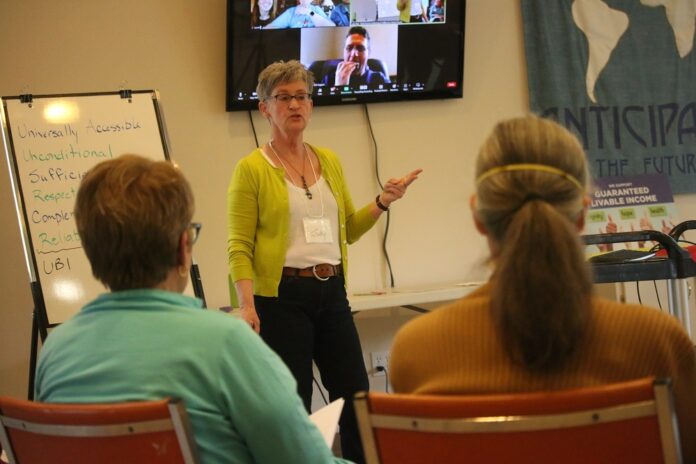
Tom Regehr is living proof that, with a little bit of self-love and outside care, anyone can turn their life around.

Recently hired by a small working group in Haliburton County committed to addressing issues surrounding homelessness, mental health, and substance abuse, Regehr has the kind of lived experience that enables him to connect with some of society’s most disenfranchised citizens. For 25 years, he has travelled across Ontario, positioning himself as a voice for the voiceless when it comes to understanding issues stemming from deep-routed trauma.

“I’ve had success because I’ve been in the exact same position,” Regehr told The Highlander in a recent interview. “A lot of times, people like me feel like they’ve been failed by the system. Left behind, with nowhere to turn… now I spend a lot of my time showing ‘us’ that there is a way back.”

After being exposed to multiple traumas during his childhood, Regehr turned to drugs and alcohol during his early adult life, seeking an escape from the memories that he said poisoned his mind. Based in Brampton, it wasn’t long before he found himself on the streets, where he lived for over six years.

“I was lost, but I didn’t know it at the time. I was so messed up, I went two years being completely street entrenched, meaning I didn’t see the inside of a building,” he said.

His salvation came in 1994 in the form of a stranger he struck up a random conversation with. He opened up about his struggles and was offered a place to stay for three months. It took some getting used to, and there were several setbacks, but Regehr eventually found his path to sobriety. He has been clean since 1995.

While adjusting to his new life, Regehr decided it wasn’t enough for him to simply find a job that helped him pay his way. He wanted to make a difference. In 1999, he was hired by a regional health organization serving Peel and Halton regions to run focus groups designed to “get the voice of the street” and help direct those with troubles towards supports.

While he’s honed his craft over the past two decades, the basis of Regehr’s work remains. He’s been working closely with people like Marg Cox in the Highlands to provide respite to some of the community’s most vulnerable people. That collaboration has led to the formation of Voice Haliburton, a new countywide support group designed to bring people of all backgrounds together in a supportive, non-judgmental setting to share their personal stories.

Voice will hold its inaugural meetings next week, Feb. 8 in Haliburton and Feb. 9 in Minden.

“When I was in early recovery, I had an opportunity like this to be with people who are also struggling and I think that experience has been one of the biggest factors in my success,” Regehr said. “Just being with other people, not being judged, not with huge, elaborate goals presented from the get-go. Usually there’s food available.

“The biggest thing is just showing people that, no matter what, they are not alone. They can find a sense of belonging,” he added.

He’s spent weeks in the community trying to connect with people, and tell them about Voice, but found Haliburton County is different from other communities he’s used to working with in the GTA.

Drug use rampant

“Drug use is rampant in the County. Class A substances, fentanyl and other opioids, they’re everywhere. The one thing that is unique in the County is the lack of a condensed geographical spot for the disenfranchised to gather, which can then give the impression that [homelessness and drug use] isn’t really a problem,” Regehr said.

He’s trying to gently push those that he has encountered towards his sessions and said others can do so by being realistic about what people should expect.

“One thing you don’t do is scare them with the idea of an easy, positive future, because there’s no such thing for people like me. Saying things like ‘just do this, you’ll be fine’ doesn’t work for us. It just alienates us further,” he said. “What you try to do is talk very broadly about what they want, what they’re working on… most people want to find that path back, sometimes they just don’t know it. They almost always have no idea how to do it.”

Following these introductory sessions, Regehr said he’s planning to run bi-weekly meetings in both of the County’s main urban areas. He wants to inspire change one person at a time.

The meeting in Haliburton is Feb. 8 at SIRCH from 6:30 to 9 p.m. and in Minden at the Lions Club from noon until 2:30. A virtual session has also been scheduled Feb. 13 via Zoom from 7 to 9 p.m. To learn more, visit voicehaliburton.weebly.com, or email voice@thecastprojects.ca.

Aquatic therapist says belief and persistence makes it all possible

0

Aquatic therapist Audrey Collins stands in a swimming pool, helping Juston Hutchinson into the salt water. He has left his wheelchair poolside and is getting out of a lift that has lowered him into the 92F water.

“Alright, are you ready Freddie?” Collins asks, with a French-Canadian accent.

She begins their 30-minute therapy session by warming up Hutchinson’s legs with gentle stretches. As the treatment continues, she loosens the muscles that his muscular dystrophy has tightened.

Near the end, she holds onto Hutchinson as he stands in the water. “Oh, you’re stepping out of your comfort zone,” she comments as the seconds tick on the clock on the wall.

“When’s the last time you stood that long?” she asks, and Hutchinson smiles. Finally, the strain gets to him and he has to lower but the accomplishment is not lost on the therapist or client.

“Wow, that was amazing. I’m going to say you stood for a whole minute. That was a super good session,” Collins comments.

The two met when Collins needed signage for Audrey’s Aquatic Therapy and Rehabilitation. Hutchinson runs Joe’s Custom Signs. She found out about his muscular dystrophy and despite him having a fear of water, encouraged him to try a free session. He’s been coming since.

Hutchinson said he was looking for more mobility, and finds his body is looser as a result of the sessions. There is obvious trust between the two. “She’s got a nice way about her, and always has a smile on her face, offering encouragement. She’s lovely and nice to work with,” he says while towelling off.

Collins said because she is in a swimming pool and at eye level with her clients, it is a great equalizer.

After some “hiccups” – including COVID19, a car accident which left her concussed, and the death of her mom – the business is fully up and running, with the therapist pretty much maxed out with clients.

The pool is on her and husband, John Collins’, expansive property just outside of Gelert. They met when Collins was working summers at Kilcoo camp and bought the property 11 years ago. They have three young children.

However, in all that time, Collins commuted to Lindsay and Peterborough to ply her speciality trade. She started working with motor vehicle accident victims in Lindsay, loved the modality, but realized she needed to learn more. She first went to the Canadian Aquafitness Leader Alliance, then Canadian Aquatic Rehab Instructors (CARI). She said CARI founder, Alison Bonnyman, told her she thought she was a “gem” and encouraged her to do the same training she had done at the Valence clinic in Switzerland. So, she did.

When she came back, she taught for CARI across Canada, did therapy in Lindsay and Peterborough, and made house calls. But COVID hit, shutting down the public pools where she practiced her trade.

“So, that’s when I said, ‘okay, it’s time now or never to put this together. And, so, I did it.”

She elaborates about the “hiccups.” COVID supply chain issues wreaked havoc with getting the materials she needed to build the pool and the building that houses it. The delays required, “patience, perseverance and persistence,” she says.

Then she suffered the concussion when she was rear-ended in her vehicle. She took about four months off of work. She came back and started seeing clients the first week of February 2022.

Through it all, she never let go of a dream.

“I always wanted a pool for my kids and we don’t live on the lake. Swimming is very fun and I’m a water baby myself. And so, I just thought, why not do it here? I felt I could see more people, cater more to the local people … because I told myself, I live here, I play here, I would love to work here.”

She visited other pools in her practise, so she knew what she wanted and did not want. She was the general contractor, with help from her husband and a team they assembled. They received the custom building in pieces and had to figure out the jigsaw puzzle.

As for clients, Collins said up to starting her own business, she worked mainly with motor vehicle accident victims. It’s shifted to more stroke victims.

She said the challenges, particularly her concussion, have given her a better understanding when working with clients who have had traumatic brain injuries.

“I want people to see that it’s still possible. If you believe. If you persist. It will happen. Right?

“It was a very long journey but I’m happy that I went through this journey because I grew a lot from that. And I’ve learned a lot from it. So, there’s a lot of positives coming out of it.”

Contact her at 705-457-6323.

HHHS NEWS

0

‘Significant’ deficit expected

Haliburton Highlands Health Services (HHHS) board chair of finance, Irene Odell, told the Jan. 26 meeting “we will definitely end the year (2022) with a significant deficit.”

She added, “It’s been a tough one. The board is aware and supporting our hospital leadership as they go through this very difficult time.

“The leadership and the staff continue to define and carry out both short and long-term mitigation strategies, but given provincial, and Canadian-wide shortages of professional staff, and the impact of COVID,” a deficit was unavoidable, she said.

In her CEO report, Carolyn Plummer added staffing pressures mean they are still using agency nurses resulting in added costs, both at the hospitals and LTC facilities.

“HHHS has reviewed alternate care models to reduce this cost pressure in the next few months,” she added.

Plummer said HHHS is experiencing cash flow challenges as it waits for funds to flow from the Ministry of Health. “HHHS is aware funds will continue to flow in January, which will provide needed cash to meet our current obligations. HHHS will continue to access its line of credit, scrutinize its payment terms to maximize its cash flow position, and communicate its ongoing deficit position and operating pressures to Ontario Health East.”

Foundation supports CT scan machine

HHHS Foundation executive-director Melanie Klodt Wong said the foundation was committed to raising funds for a CT scanner for the Highlands.

“We know how much the community wants this and needs this,” Klodt Wong added.

She said it would take the entire community to rise to the challenge but, “we can do this and we can do this together.”

As previously reported in The Highlander, HHHS has begun to explore whether a CT scan machine can be brought to the County. It’s doing a feasibility study to determine if it is possible to proceed now, rather than wait for the master planning process to be completed. If the study demonstrates that a CT scan machine is feasible for HHHS, a full application to the Ministry of Health will be required.

Staff changes in LTC

There have been some staffing changes at the two LTC homes, with Tina Amodeo accepting the permanent assistant director of care position for Highland Wood. Recruitment continues for a director of care/ administrator for the home. At Hyland Crest, Tracy Salvatori has accepted the assistant director of care position.

Additionally, HHHS thanked Dr. Tina Stephenson “for her incredible work” at Highland Wood over the past 22 years. Dr. Stephenson will be retiring as the medical director of the home in April. Dr. Michael Armstrong will be taking over as the interim medical director while a permanent replacement is recruited. Dr. Armstrong has been working with HHHS for more than 20 years and is also the medical director for Hyland Crest.

Short-term rentals headed to special council meeting

0

The new County of Haliburton council did not pass a short-term rental bylaw at its Jan. 26 meeting, but did indicate they would like to find some consistent rules and regulations at the County level, and then have the municipalities take over running the program.

Director of planning, Steve Stone, reminded councillors of the work that had been done to date.

He said the project was initiated in the summer of 2022 when consultants, J.L. Richards and Associates talked to community members and looked at what other townships are doing. They then presented two final draft bylaws to council. The first dealt with registering short-term rentals, “a fact-finding mission to see how many business operators wanted to register their short-term rental businesses with the County,” Stone said. He added while the consultant recommended three to four months for registration, a year made more sense for all-season rentals. The County would then transition to a licensing bylaw.

“If you have a short-term rental bylaw system, you’ll certainly have to have a lot of consistency with the area municipalities,” he added.

Coun. Murray Fearrey, speaking for the first time on his views of the bylaws, said, “I can definitely see the advantage of us as a County council developing a common theme that we bring back to the municipalities.

implement the bylaw…municipalities are already doing this. Why in the world would we want to do it from the County when we’ve got our feet on the ground right in the municipalities. We’re checking the number of bedrooms, we’re checking the sewage system, the building inspectors are in the area.” He added, “let’s keep it as simple and enforceable as we can.”

Coun. Bob Carter agreed with Fearrey that the, “ideal situation would be for us to agree to a set of rules, regulations, and then we adopt them in each one of our municipalities.”

Stone said they could look at a high-level licensing bylaw application administered by the County, but with the onus on shortterm rental operators to supply proof of compliance with things such as a certificate to say their rental complies with the building code, meets fire department requirements, and a letter from a septic hauler about regular pump-outs, for example. He added there could be a fee for service.

After a lengthy discussion, council opted to hold a special meeting on Feb. 27 to continue working on the file.

HE begins budget talks at two per cent hike

0

Highlands East began budget talks Jan. 31 with a first draft 2.05 per cent municipal tax rate increase.

Deputy CAO and treasurer, Brittany McCaw said it represented an overall increase from the 2022 budget of $183,932. The difference would be $10.54 per $100,000 of assessment.

“We knew this was going to be a difficult budget year just with rising costs, things that are out of our control, but I would like to say that staff have done an excellent job of looking at their accounts and looking at where they could trim but without cutting services,” McCaw said.

She added the township was on target to come in on budget for 2022.

Across the board, they are looking at a salary increase of 1.75 per cent, a group benefit jump of 6.1 per cent and a general insurance hike of 17.19 per cent. There’s more IT, cyber security and video surveillance costs.

Deputy mayor Cec Ryall said, “I’m unbelievably shocked at the fact we could get it (the levy increase) down to two per cent. You guys did an awesome job doing that. But with that in mind I want to make sure we’re covering off some of the things you’re going to do. I just want to make sure, at the end of the day, that our two per cent is a good number and where it needs to be.”

In presenting the budget, McCaw said they got $25,000 less in OMPF funding. She noted increased user fees and charges in 2023 should generate more revenue. Former gas tax funding, now called the Canada Community-Building Fund, is bringing in $110,633. They’ve also got some money in reserves from projects not done in 2023. This includes $25,000 for an architect for the municipal office design and build. “

A business case has been prepared and provided to council for consideration regarding the new municipal office build, as opposed to operating three, separate municipal offices,” McCaw said.

Some other big-ticket items are $100,000 for the design build for the municipal office; $50,000 for a corporate strategic plan; $25,000 for records management and $25,000 for climate change initiatives.

Policing costs are down 3.27 per cent, although Highlands East will still pay OPP $1,144,948 in 2023.

McCaw said they have not budgeted for the two summer students for the septic inspection program this year. She said it’s because their department is short-staffed and it would be unfair to expect two students to work without guidance. The department will instead deal with outstanding files to bring properties into compliance.

Ryall asked about vacancies of a building inspector and chief building official, as Laurie Devolin has left the township. McCaw said they had a plan they would share with council at a future date.

In public works, Abby Armstrong said roads, bridges and culverts to be worked on include: Inlet Bay Road, Gem Road, Upper Paudash Road, the Earles Road culvert, the Gooderham dam bridge, Hadlington bridge and Donroy culverts, McColls bridge, Buxton Road and Pioneer Road.

Water and wastewater users will face a four per cent user fee increase. More money is needed for recycling and household hazardous waste days. There’s $20,000 towards the service connections in Wilberforce.

Parks and recreation capital projects for 2023 include the Cardiff Pool change house, arena upgrades, Herlihey Park, Essonville Church repairs, and the trails master plan.

Economic development would see money for a part-time coordinator, one summer student for the information centre, and new units for geogaching.

Budget talks will continue.

New summer hours at AH landfills

0

Algonquin Highlands has rubber stamped a new summer schedule for its landfill sites at Oxtongue Lake, Dorset, Maple Lake, and Pine Springs.

Addressing council Jan. 19, environmental manager Melissa Murray said vehicle counts and general usage across the township’s four landfill sites had changed drastically in recent years. She said this was likely due to changing demographics and shifts in property usage, with a large influx of people transitioning from seasonal to permanent residents of the community during the pandemic.

“The traditional weekend cottager arriving Friday evening and departing Sunday evening is becoming less common. Site usage is being spread more evenly throughout the week now,” Murray stated.

Landfill hours have remained steady across the township since 2015, when operating hours in Dorset were adjusted. Murray noted staff had been tracking traffic patterns over the past two years while developing the new schedule.

The most underutilized hours appeared to be early mornings and evenings, Murray said.

She felt there was a benefit to creating a more consistent schedule across all sites.

“The greatest challenge we run into is people having difficulty knowing what the hours are. We’ve received a number of complaints in the past from people that have arrived at one of our dumps and found the gates closed,” Murray said. “We will never have hours that will please everyone, but we have to weigh [what people want] against what we can reasonably offer.”

There was some discussion surrounding the Oxtongue Lake site. Murray had initially proposed the landfill be closed on Mondays, citing poor traffic counts, but deputy mayor Jennifer Dailloux felt this would have a big impact on many residents. A compromise was reached to keep the site open for four hours on Mondays, down from the previous five.

Dailloux wondered if the township should consult with the public before moving ahead with changes, but CAO Angie Bird noted there was a bit of a “time crunch”. She said landfill cards are being renewed this year and will be mailed out with residents’ interim tax bills later this month. The landfill cards usually contain the hours of the township’s dump sites.

“I think we’ve looked at all the possible ways of balancing this… let’s treat this as a one-year trial period, observe over the summer, and then we can revisit next year if we have to,” said mayor Liz Danielsen.

Minden council says ‘no’ to arena snack bar

0

Users of the S.G. Nesbitt Memorial Arena and Community Centre in Minden won’t be getting a fully-stocked concession stand. Council made the decision at its Jan. 26 meeting.

Director of community services, Craig Belfry, said the township received only one bid on the project and it was over budget.

He said MVW Construction and Engineering quoted $423,544.51, whereas council had set a budget of $360,000,

Belfry was seeking approval to have further discussions with MVW, to reduce some of the components of the snack bar. He said $125,000 worth of equipment was being suggested, for example, two ventless fryers worth $40,000 each. A further $60,000 worth of electrical is needed, he said, because, “sufficient power load sourcing was not installed for this area during the initial construction.” Belfry said there was a possibility that cost could also be lowered.

However, a majority of councillors said “no.”

“I’m not happy,” mayor Bob Carter said. He said it was unfortunate the arena design was done in the way it was. He said had they done it then, they would have incurred more cost, but doing it now in isolation has resulted in insufficient power, and ceilings being too low. He said he did not want to give up and was prepared for Belfry to go back to the bidder.

Deputy mayor Lisa Schell said they had planned to spend $300,000 and, “hated to throw the baby out with the bath water. I don’t want to spend any more money on this but we can’t have an arena without a snack bar either, or some kind of option for food. I hear this all the time.”

Mulligan’s has been supplying some food at the arena. They are usually upstairs Friday afternoons and Saturdays and during Haliburton County Huskies games. The Huskies also manage vending machines.

Coun. Pam Sayne also thinks they need a snack bar but felt it was a lot of money. “It shouldn’t cost $300,000 to serve a hot dog.” She thought they could look at healthy food options, and eliminate fryers to save $80,000.

Ripping the Band-Aid off

However, Coun. Tammy McKelvey said even if they got the figure down to $300,000, an outside operator would run the snack bar and receive the proceeds. She added there was talk of borrowing money for the project.

“I’m prepared to rip the Band-Aid off here. We cannot afford a snack bar in an arena that’s already put us in a very difficult financial position. I don’t want to spend any more staff time.”

Some councillors suggested vending machines run by the township.

Coun. Ivan Ingram was prepared to leave it for a year, saying, “that’s a huge number to look at, considering all the other things we’ve put off the past few years. We’ve got way bigger fish to fry than feeding the snack bar people.”

Coun. Bob Sisson said better heating was more important than a concession stand. McKelvey said the sound system is also inadequate. McKelvey said $60,000 in deferred revenue, already set aside by council, could be used for upstairs improvements.

Coun. Shirley Johannessen commented they could get a fully-equipped food truck for $78,000 and also use it for Canada Day and other events, even rent it out.

“I like the idea of the food truck,” Ingram said. “You can move it to the back in summer for baseball. I don’t support spending that kind of money on the arena for a snack bar.”

County economy needs ‘new directions’

0

The consultant working on the County’s economic development strategy said the community is telling them there is too much talk about a lack of worker housing, but not enough action.

Tonya Kraan of Bridgenorth-based Stexer Harrop Consulting Group (SHCG) told council at its Jan. 25 meeting they want specific performance benchmarks in their final report, expected in the spring.

Kraan added, “while the County has had tremendous success developing and marketing tourism, the challenging realities of today’s economy call for new directions, ideas and approaches to enhance economic growth, attract investment and ensure that opportunity continues to be a significant part of the County’s quality of life.”

Their work will create a vision for economic development and set priorities and a five-year action plan.

To date, the consultant said they had looked into employment via a public and business survey, as well as stakeholder interviews. They are in the midst of community consultations and hope to come back to council Feb. 22. They would like to deliver their final economic development strategy report in April.

Transport, daycare, health workers needed

Some of their findings so far are that Haliburton County residents make below the average median income when compared to the District of Muskoka, City of Kawartha Lakes, Prince Edward County, Peterborough County and Hastings County. Median employment income here is $38,000 and household income $73,500, last among the six regions.

They’ve used provincial statistics to say there are 2,039 registered businesses in the County. Of those, 450 have one to four employees; 144 have five to nine employees; 73 have 10-19; 43 have 20-49; 14 have 50-99 and only six have 100-plus. A full 1,309 had an unknown number of workers.

The biggest wage earners were those working for utilities, bringing in an average wage of $78,134. At the other end of the spectrum, those in accommodation and food services were at $14,138.

Construction wages, health care, and social assistance reflected average wages when compared to tourism, necessitating the need for year-round wages, and good paying jobs, they said.

Many business owners spoke to the staffing crisis, with one saying “it’s not a challenge; it’s not possible. The labour force is just not here and nobody can relocate here because of housing shortages.”

Survey respondents told the consultants the number one priority was housing, including the need for apartments.

“So, what’s happening is, there’s a recent grad and there’s a job posting in Haliburton County and Peterborough County, and they go on their interviews, love the job in Haliburton County, ‘but I can’t find an apartment to live in. Guess what? I can find an apartment in Peterborough.’ That’s what’s happening,” Kraan said.

Other things mentioned were the need for things for families to do.

Families want a swimming pool

“Young families want activities for young families. Things like a swimming pool, Kraan said. “I know that’s a hot topic for any municipality but not every young family wants their children to play hockey. But every young family does want their children to learn how to swim and, right now, they have to drive an hour, or an hour-and-half, to find a pool to teach their children how to swim.”

Businesses told her there are too many hurdles and red tape in local government, with a desire for upper and lower-tiers to work better together. Some spoke of the need for progress and innovation, bridging the divide between those doing well and those struggling, as well as retaining youth.

One positive highlight was 28 businesses indicating they want to build and expand. Kraan said they just want “a bit of help” from economic development and planning departments. Only one to two indicated they wanted to close or downsize, while there is a lot of succession planning underway.

Other challenges include transportation, a lack of daycare, and the need for more healthcare workers.

Coun. Jennifer Dailloux commented, “I’m not sure how many more ways we can hear the need for housing. We really are hearing that from every angle and so it’s great to hear that we have our very own study confirming the dire need for housing.”

She added her takeaway from the recent ROMA conference is that everyone is struggling but, “there’s a lot of innovation out there.” She said some information is on township websites and County councillors and Kraan took contact details for others.

“My hope is that somehow we can attach into this final report some of those doors into the innovation that other counties and townships are looking for because they are there. I think we’ve got to start really putting them into our stride and learning from them.”

Coun. Walt McKechnie repeated a longstanding call for Sir Sandford Fleming College to add trades classes to its Haliburton campus. He said he didn’t understand when, “so many families here have a family tradition of doing construction and trades, why they’re not exploring that more for us.”