
Home Blog Page 182

Dysart shoreline plan coming in May

0

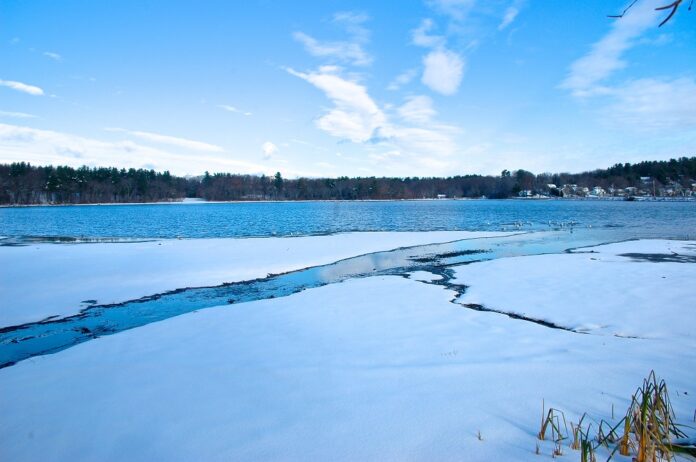
Dysart et al’s mayor and deputy mayor unveiled early details of their township’s shoreline preservation plan during an interview with The Highlander this week.

After declining to delegate authority to the County for its bylaw, Murray Fearrey and Walt McKechnie said council and staff have been working on a made-in-Dysart solution they hope to present to the public in May.

The two said they felt the County bylaw was overly complicated, and questioned whether it was needed, with an existing tree cutting bylaw they believe is underenforced. Fearrey added he could not find another upper-tier government in Ontario that has implemented a shoreline preservation bylaw. He does not believe it is economically feasible because of travel across the Highlands from a Minden base. He also doesn’t like that it’s complaint-driven.

“In the County bylaw, if you had a 1,000 sq. ft. cottage, and you tore it down and built a 4,000 sq. ft. cottage, and you cleared the shoreline in front and nobody complained, there’s no recourse,” Fearrey said.

The County can, and has, fined violators, as well as ordered restoration however it is after the fact.

Fearrey said they will primarily target new lots and teardowns, since they believe these are the most problematic areas. He said people will be required to get a demolition and building permit, and must file a site plan.

“We’re going to be on to you then, because we’re going to ask ‘what are you going to do?’ We’ll go out and take photographs of the trees. We’ll ask them about size, location, the septic, where the stormwater is going to go, where the roof drains are going to go. So, there will be some kind of control,” Fearrey said.

He added the township will offer a course, and invite landscapers, and perhaps environmental engineers, to teach, “the do’s and don’ts of shoreline restoration, so everybody will be on the same page.” He added it would be similar to education around the septic re-inspection program.

“I’m optimistic we’re going to catch way more people this way than we would the other way,” Fearrey said. “When we got boots on the ground, doing these inspections, it’s pretty easy.”

Fearrey said the “extensive education program” would include cottage associations and information with tax bills. He added they will also talk to real estate lawyers, who can, in turn, advise their clients about what is permissible and not.

McKechnie said another key for him is educating property owners who clear cut years ago. He said it “hasn’t ruined the lakes” but would like to see incentives for replanting, whether trees or shrubs. “This thing where we’re going to punish people, I don’t like that attitude.”

Coalition of Haliburton Property Owners’ Association (CHA) chair Paul MacInnes has stated publicly in the past couple of weeks that education is not enough, and legislation is required.

Asked if they have sufficient staff to take on the shoreline preservation plan, Fearrey said, “we’ve talked to the building department and they’re fine.”

The County has approved the hiring of one person for its bylaw.

McKechnie added, “we’ve had many meetings already with our building department and they’re extremely positive. They’re not scared of the workload and if they are, they are going to communicate with Murray and myself and the rest of council, and we’ll address it as we proceed.”

The deputy mayor added they thought long and hard before declining to join the County initiative, and “we’ve spent a lot of quality time with our chief building official and he’s very informed and he’s advising us and helping us with a lot.”

Fearrey said they will have something in place as quickly as the County does. “May we’ll have a draft at least. We’re not sitting on our hands here. We may have to change it, tweak it.”

McKechnie said the plan will also call for a ban on fertilizers within a certain distance of the shoreline.

“We, honest to goodness, are so conscientious about doing the right thing for this community. Our shoreline policy is not going to be perfect right out of the gate, maybe it will never be, but it won’t be because we won’t listen and try to amend or fix it.”

Housing project ‘monumental’ for County

0

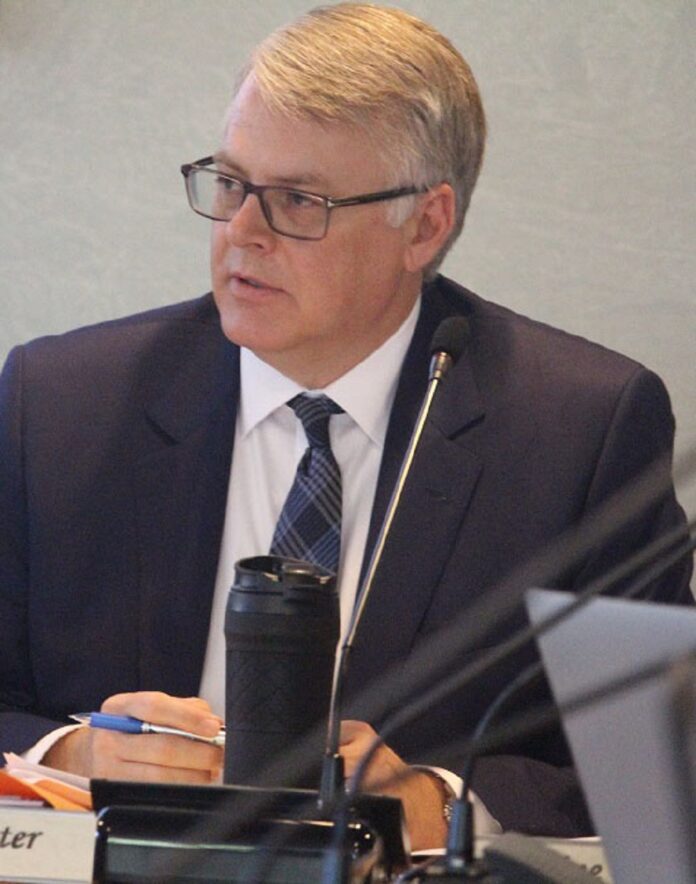
A new intra-regional housing initiative, aiming to bring almost 500 affordable rental units to the Highlands by 2031, has been labelled a “potential game changer” by County CAO Mike Rutter.

Representatives from the Eastern Ontario Wardens’ Caucus (EOWC) unveiled plans for its ‘Seven in Seven’ program to County council March 22. Peter Emon and Jim Pine, of the EOWC, said the project would construct 7,000 new affordable rental units across 13 counties in eastern Ontario over the next seven years, with a tab of at least $3.1 billion.

Units will range in size from bachelor, featuring a single-roomed living area, to three-bedroom apartments.

Pine noted that, through the plan, the County could expect to see 490 new units built by 2031, with a further 735 units constructed in neighbouring Kawartha Lakes. Estimates peg the cost of that construction at $496.2 million, though Pine noted this didn’t cover procurement or servicing of land.

Emon said the EOWC had been working with municipal partners on the plan for around a year.

“Tackling the lack of housing and accompanied homelessness issue is our primary priority,” Emon said. “There is a chronic and serious supply problem with [all forms of housing] across our region… while we have made some progress, it is not enough to solve the issue. That’s why we have come together to pool our collective resources and experiences into a bold, new regional solution.”

Rutter said the project would be “monumental” for the County if it were to proceed, especially following recent news from KLH Housing Corporation, the local community housing service provider, which announced in February that it was pausing development on three new builds, slated to add 100 affordable units to the regional portfolio, due to the current economic climate.

Possible 2024 start

As of Feb. 21, KLH reported having 2,198 households on the waitlist for community housing, including 438 in the County. The average wait time for new applicants is 10 to 14 years.

“This project would address our waitlist issues here entirely,” Rutter told The Highlander in a February interview. “I think one important thing to note is this shows we’re not alone. A lot of places are running into these same problems… coming together with an organization like EORN that has such a tremendous track record, it’s potentially game changing for the future of our community.”

Investment needed

To make the project viable, Pine noted the EOWC was looking to partner with private developers.

“A mixed model approach makes most sense. Evidence shows if we can [incentivize] one rent-geared-to-income unit to be built, the private sector will buy in and build three units of their own at market rate,” Pine said.

This could help bring an additional 21,000 units to eastern Ontario.

All three levels of government will need to invest, too. Pine said municipalities could assist with land procurement, with the province and feds contributing funds for construction. He pointed to a recent report published by Scotiabank’s Global Economics Group, which suggested investment in social housing is the best way to address Canada’s housing crisis.

“They say it’s the best solution to unlock greater supply, as more affordable units will relieve pressure across the wider housing continuum,” Pine said.

MPP Laurie Scott said she was open to the initiative and “looks forward to [hearing] more information” soon, while MP Jamie Schmale threw his backing behind it.

“I would support anything that will get housing built quickly and at an affordable level. This housing shortage has hurt the growth of Haliburton County and created great hardship for a lot of people. It’s past time we did something,” Schmale said. “But if we rely on government only to get this problem fixed, there will never be enough money. We do need the private sector to be involved.”

Emon noted the project would have an economic impact of around $9 billion.

“It’s a great way to build the economy up at the same time,” he said.

Local response

County warden and Algonquin Highlands mayor Liz Danielsen said the EOWC has an “exceptional” track record when it comes to tackling regional issues, pointing to the success of the Eastern Ontario Regional Network’s Cell Gap project, which it helped launch. That $300 million initiative will improve cell service for 99 per cent of rural residents in the region by 2025.

“They’ve shown they can bring big projects together,” Danielsen said.

Dysart mayor Murray Fearrey said one of the major hurdles would be manoeuvring the provincial policy statement, which he says makes it difficult to sever and service lots in rural Ontario.

Bob Carter, Minden Hills mayor, said his concerns were mostly financial. Sitting on the KLH and local Habitat for Humanity boards, he said development costs would likely be significantly more than the $440,000 per unit the EOWC is currently projecting.

“If we have to start adding water and sewer connections [to future lots], that increases costs substantially,” he said. “We need to keep that in mind and be prepared to fight for this on a lot of different fronts to make it work.”

Pine said the group has retained a consultant and is establishing a formal business plan. He said a pilot in one of the 13 counties to provide proof of concept will be launched in the fall. If all goes well, and there’s a commitment from all parties, he said construction could begin in 2024. That was music to Danielsen’s ears.

“It’s ambitious…but it’s in all our hearts that this is a successful project. We’ll do everything we can [at the County level]. On our own, it’s a struggle to see how we can make this work. But through a regional approach, there’s a lot of opportunity for success,” she said.

A bold, ambitious plan

0

There was a lot of excitement inside County council chambers last week after a delegation from the Eastern Ontario Wardens’ Caucus (EOWC) tabled what appears to be a solution to the community’s crippling housing crisis.

Peter Emon and Jim Pine were the proverbial knights in shining armour, briefing council on a seven-year EOWC plan to bring 7,000 new affordable rental units to eastern Ontario.

It’s bold and ambitious. And it’s exactly the kind of thing we need to reinvigorate our local housing inventory following years of neglect. The plan calls for 490 rent-geared-to-income units to be built in Haliburton County by 2031.

Given the waitlist for community housing, as KLH Housing Corporation says it is sitting at 438 households, this has the potential to be, as County CAO Mike Rutter put it, a massive game changer. The average wait time for new applicants is estimated at between 10 and 14 years. This project would wipe that out in one fell swoop.

But it’s important that we don’t get too carried away. This is still in its infancy. It’s going to take time to grow to where it needs to be.

If the EOWC receives the necessary buy-in from private developers and both the federal and provincial governments, Pine said construction could begin as early as summer/fall 2024. Right now, that’s a big if.

The best predictor of future behaviour is past behaviour, and neither upper-tier governments have the best track record when it comes to investing in housing. The same can be said for our municipalities, though this project, pegged at $3.1 billion, won’t live or die based on the level of their involvement.

The feds have distanced themselves from the community housing portfolio for over four decades. While there is potential for them to approve investments on a case-by-case basis, as has been done in pockets across the GTA and other urban centres in the eight years since Prime Minister Justin Trudeau took office, an outlay of this nature in rural Ontario would be a change in direction.

Even if Doug Ford told me straight to my face that he would personally sign off on funding this project, I’m not sure I’d believe him. This is the same government that’s struggling to maintain operational and COVID-related payments to our hospitals, with Haliburton Highlands Health Services in recent months being forced to use their line of credit to cover basic costs. MPP Laurie Scott was scant in her reply, too, when I asked if she would support and lobby for the housing project at Queen’s Park, choosing instead to take the ‘wait and see approach’.
There’s also the small notion of figuring out where these units will be built.

And private developers aren’t going to help fund this out of the kindness of their hearts. There must be a real business plan presented that proves the project’s feasibility and reassures investors they will see a return.

That’s why it’s a real plus that this is coming from the EOWC. Their track record with developing sizable, seemingly impossible projects is good. The much-lauded cell gap project, improving service and connectivity for 99 per cent of rural residents across eastern Ontario, which it helped launch, is well on its way to completion.

This is easily the most important project I’ve seen tabled since my arrival nearly three years ago. As well as the positives for those waiting for community housing, imagine what this will do for people further up the ladder. I’ve lost count of the number of working professionals, nurses, contractors, consultants, I’ve spoken to who are staying in motels, or sleeping on friend’s couches because they can’t find anywhere permanent to live.

Anything to move us away from that reality is a win in my books.

Further updates are expected later this year. Until then, consider reaching out to Scott (laurie.scottco@pc.ola.org) and MP Jamie Schmale (Jamie.schmale@parl.gc.ca) to make your feelings known.

The cost of silence

0

This is the second part of a column that began March 23.

It’s impossible to achieve action for change unless people are, first, informed, and second, confident their voices will be heard. The effort to silence climate scientists and others who demand an end to fossil fuels is considerable. However, the call for change is ever louder, as these success stories indicate.

SOLUTIONS:
In June 2021, a tiny hedge fund called Engine No. 1 successfully pushed the energy giant Exxon to reduce its carbon footprint. Supported by highly influential investors, Engine 1 argued that Exxon wasn’t making needed changes fast enough. This example of shareholder activism demonstrates that a mechanism exists for demanding companies’ environmental responsibility.

On Feb. 9, 2023, ClientEarth, a Shell shareholder, filed the world’s first such lawsuit against Shell’s board of directors for “failing to adopt and implement an energy transition strategy that aligns with the Paris Agreement.” ClientEarth is a non-profit organization that uses the law to initiate changes to protect Earth. They received unprecedented support from international investors.

In May 2021, a Dutch court ordered Royal Dutch Shell oil company to reduce its CO2 emissions 45 per cent by 2030, from 2019 levels. This win for environmental group Milieudefensie, the Dutch wing of Friends of the Earth, reflects a court’s willingness to dictate what a large business must do globally to protect the climate.

This month at the UN 2023 Water Conference in New York, UN delegates reached an historic agreement called the High Seas Treaty, reflecting two decades of efforts by non-governmental organizations, civil society, academic institutions, and scientists. The treaty will protect marine biodiversity in international waters (two thirds of the ocean), considered crucial in addressing climate change, biodiversity loss and pollution.

Scientist Rebellion is an international scientists’ group campaigning for degrowth, climate justice and reducing climate change damage. In April 2022, more than 1,000 scientists from 25 countries participated in demonstrations following the IPCC report’s release. In Los Angeles, four scientists chained themselves to the doors of JP Morgan Chase & Co., a bank with huge investments in fossil fuels. The protestors called for the bank’s divestment from coal, oil, and gas. While arrested, the event was livestreamed on Facebook. In a press briefing afterwards, António Guterres, the UN secretary general said, “climate activists are sometimes depicted as dangerous radicals, but the truly dangerous radicals are the countries that are increasing the production of fossil fuels.”

Last week, after the UN released the 2023 IPCC report, the “Rocking Chair Rebellion” blockaded banks in 100 locations across the U.S. One group sang songs in the lobby of a Chase Bank in Washington before being arrested. The author and environmentalist, Bill McKibben, helped launch a campaign, called Third Act, successfully organizing Americans older than 60 for climate action.

Although significant numbers of climate defenders are imprisoned, many cases of environmentalists charged with public mischief are successfully acquitted, when allowed to present their actions as a reasonable response to the climate crisis. In 2021, activist Rowan Tilly was convicted for obstruction of a highway during an Extinction Rebellion protest, but the judge referenced the civil rights, anti-apartheid and suffragette movements and gave her an absolute discharge.

In a landmark case going to trial this June, 16 young people are suing the state of Montana. They argue Montana’s extensive support for fossil fuels is unconstitutional because the resulting pollution is dangerously heating the planet and has robbed them of a healthy environment.

In February 2023, six members of Greenpeace International climbed a Shell oil and gas platform for Greenpeace’s longest ever occupation of a moving platform. Threatened with fines and imprisonment, they were not deterred, and ultimately none of the activists was arrested.

Remembering Mabel

0

Since moving to the County to become editor of The Highlander, I’d been acquainted with Mabel Hewitt (Brannigan).

I’d seen her at Legion functions, including the annual Remembrance Day commemorations. I’d waved as I drove by when she was using her walker to go down to get her mail from the post office in Minden, or to the grocery store for milk and bread.

But it wasn’t until 2020 that I actually got to know Mabel. It started with an email. The 96-year-old Second World War veteran wanted to write about County soldiers who’d served in the war. Many had died in the intervening years. In fact, when she was interviewed for The Highlander’s Veterans of Haliburton County video series just before I arrived, she commented on how she had no friends of her own age left.

As a veteran herself, she believed strongly that she was the one left to tell their stories, and to do so before she, herself, passed away.
I was intrigued by the idea and wanted to sit down and have a cup of tea with a lady prepared to embark on such an ambitious project as she neared her 97th year.

Needless to say, that cup of tea turned into many cups of tea.

By the time I showed up in her kitchen, Mabel had already hand-written about half of her stories. As I began to decipher her handwriting, I realized she indeed had tales to tell. We struck an arrangement. She would continue to hand-write her stories, since she did not type them on a computer, and it was my job to start making digital copies. I took the first eight then and there and got down to work. Then, once she had compiled a few others, I would drop in for a visit.

She had a sharp memory. She had a superb knowledge of Canadian history. She was up on her current events. We both shared a love of storytelling and writing, so we had plenty of things to chat about. I soon realized what had begun as a bit of work shifted to something more. I enjoyed our visits. I looked forward to them. This became clear when, in March 2020, I could no longer go in-person to collect her stories. Instead, she started mailing her instalments. In addition to typing them, I edited, but found few mistakes. The most time-consuming part involved finding archival photos from places such as the National Archives, to accompany her tales.

And it was only at the very end that the anecdotes she had shared over cups of tea came hand-written in the mail…her story of her time during war, from Yorkton, Saskatchewan to Ottawa.

What stuck me, as her obituary rightly states, is Mabel was a pioneer for independent women her entire life, even as a wife, mother, and grandmother. She worked, she volunteered in the war effort, she changed paternalistic thinking by going from having membership denied at the Haliburton Legion, to becoming its president. She then brought The Mabel Brannigan Royal Canadian Legion Branch 636 to Minden.

I was not surprised to learn only this week that she went back to school in her 80s, taking university courses, and got her driver’s licence back at 91.

One of our last e-mail exchanges was when COVID was still dragging on about a year ago. Never one to complain, she said she was doing alright. She’d been through a war after all. Pandemic hardships paled in comparison. I thought of all she’d seen since being born in 1924 – very nearly 100 years ago – and all that she’d done. It has indeed been a life well lived.

The cost of silence

0

PROBLEM:
“We are on a highway to climate hell with our foot on the accelerator. We can sign a climate solidarity pact, or a collective suicide pact,” said Antonio Guterres, Secretary General of the United Nations in November 2022.

Continuing the status quo of extracting Earth’s resources ultimately costs everyone everything, yet silencing the voices screaming for climate justice has always been the pattern.

“I was arrested for civil disobedience … I turned 82 in jail!”, says actor and activist Jane Fonda, urging bold action. “There’s no time to wait. This planet is all we’ve got. Defend it.”

Fonda and others go to jail – some for years – for the “crime” of shouting alarm in defence of the planet. Worse, more than 1,700 environmental activists have been murdered in the past decade; four people are killed each week trying to protect land and environment (Global Witness, Decade of defiance, September 2022). Reporters say these are underestimates because of growing restrictions on journalists and civic freedoms.

Violence against Indigenous environmental defenders is reported worldwide. Murders in the Global South involve organized crime and government groups. In Europe and North America, police and judges are responsible for silencing environmental defenders. In England, police now use section 35 dispersal orders, designed for “anti-social behaviour, crime, or disorder” to criminalize protesters. Climate scientists are locked up for peaceful climate protests. In British courts, environmental protesters are not allowed to defend their motivations to juries, despite a charge of “causing a public nuisance,” carrying a potential maximum sentence of life imprisonment.

In January, 26-year-old Manuel Esteban Paez Terán was the first reported environmental activist to be killed by police in United States history. Terán was killed when police raided an encampment of people trying to stop the cutting of a forest near Atlanta, Georgia where a massive police training complex (Cop City) is being built. In 2021, protests over the Line 3 pipeline in Minnesota prompted the pipeline company to spend millions of dollars to finance local police forces who allegedly intimidated and attacked activists.

Everyone is ultimately a victim of silencing, but suffering is not equal. The majority of the murdered environment defenders are from the Global South. Another disproportionately affected group are the world’s young people, who have contributed the least to the climate crisis but are the most affected. Thirty-nine per cent of respondents in a recent study of Canadian youth ages 16 to 25 report hesitation about having children, and 78 per cent said climate change affects their mental health (The Journal of Climate Change and Health, January 2023). The authors advise it is essential to recognize that young people are experiencing distress because of the failure of adults, decision-makers and governments to adequately talk about and address the climate crisis.

A further cost of silence is lack of knowledge and preparedness. A 2021 report from CSIS, that was allegedly kept quiet until now, acknowledges that, “climate change poses a profound, ongoing threat to Canada’s national security and prosperity.” The analysis says rising sea levels – including the possible loss of parts of British Columbia, the Atlantic provinces and the Arctic – will put serious pressures on coastal and border security as well as food and water supplies (The Canadian Press, March 2023).

Planning for climate change means talking about it, anticipating floods, building robust infrastructure such as bridges, communication, and transportation networks ahead of time, rather than responding after a catastrophic event. Discussion in the CSIS report includes anticipated unprecedented volumes of climate refugees, the migration to Canada from uninhabitable parts of the world.

Bring civility back to the rink

0

I was covering a Highland Storm Minor Hockey Association game this past Saturday in Haliburton when the referee took exception to one of the visiting team’s spectators.

It was the first period of the U13 game between Haliburton and Mariposa. A Mariposa player got called for a penalty and someone from the visiting stands yelled at the referee that there would not have been a penalty had he not called a previous offside.

A visibly agitated ref kept looking into the stands. He eventually tossed the spectator out of the bleachers and right out of the A.J. LaRue Arena. I have covered a lot of hockey games, for the Storm and the Huskies, and never seen a fan hurled.

However, I can understand how Hockey Eastern Ontario refs, who are paid the princely sum of $25-$34 a game, or linesman, at $21 to $27 a match, are probably sick and tired of the off-ice shenanigans near the end of a long hockey season.

I mean, we are talking U13s here, and no one is going to the National Hockey League. Was the penalty or possible offside call that big of a deal? No.

There have been two other incidents during this hockey season that I would like to address.

I will preface by saying I did not eyewitness either but was told by reliable sources what went on.

In one case, during a minor hockey game in Minden, a parent got upset about ice time and slapped a cell phone out of the hands of an arena attendant. And hundreds could talk about the Haliburton County Huskies game on March 25, when fights broke out all over the ice, insults were hurled at the on-ice officials, and some fans, particularly young fans, exhibited some pretty questionable behaviour. While some might say it is about sticking up for the team, the truth is it is embarrassing and unnecessary. Why in the world would anyone put their hand up to be an underpaid and underappreciated OJHL ref?

Further, what kind of example does behaviour such as that displayed at the Huskies game show our youth? One of the most worrisome photos we took at the game – and chose not to run – was young kids hurling abuse at the opposing team’s players. Not a proud moment for Haliburton County.

Back to Saturday’s Storm game, and we can see how an increase in bad behaviour from people sitting in the stands at youth hockey games is causing some referees to quit.

None of this is new. A 2015 Angus Reid Institute Report said the majority who attend youth hockey games have seen young players or referees verbally abused. The key findings? Six in 10 survey respondents had witnessed angry parents berating referees at least once in the previous two years and half had seen kids on the receiving end. Nine of 10 said they had seen adults using inappropriate language and yelling at kids or referees. They deemed it a serious issue.

Based on the three incidents we have seen, or heard about this year, it appears civility is under risk once again, this time at our hockey arenas, and it has to stop.

MPP and MP should take part

0

On Friday, March 24, members of Places for People and their allies will descend on Head Lake Park to sleep in their vehicles, tents, or even on couches, to raise money for the non-profit. They also hope to have some conversations around the fire about what affordable housing means.

I’m acquainted with the event, having taken part in the inaugural 2019 Sleeping in Cars. Back then, a handful of us parked in the Minden Hills township lot and tried to get some sleep during a late winter-early spring evening.

We had a fire and Eric Casper of North of Seven came to play some tunes. People, including some Minden Hills councillors, wandered by to encourage those who were sleeping out.

The next morning, Marilynne Lesperance and Joanne Barnes from the Minden Community Food Centre, came to the township office with coffee and breakfast. I don’t remember everyone who stuck it out for the night, but P4P’s Fay Martin and Rev. Max Ward were there, as was then Minden Hills mayor Brent Devolin.

Others gathered that night in 2019 in Wilberforce and Haliburton.

While sleeping in one’s car for a single night is hardly equivalent to those actually sleeping in vehicles or tents for protracted periods of time in the Highlands, it did give us some insight, and some empathy.

Since then, there have been different iterations of the event, but this month’s returns to its roots.

Much has changed since 2019. COVID-19 has altered the housing landscape forever, as our population has grown by 14 per cent, and some people have been pushed out of their homes by rising rents or landlords capitalizing on a hot real estate market and selling. We have also seen a proliferation of housing converted to short-term rentals and the cost of living has only exacerbated an already difficult situation for many Haliburton County residents.

The very definition of affordable housing has changed here. It used to be about vulnerable people who could be thrown off course by circumstances. Now, even full-time workers being paid below a living wage are dealing with homelessness issues and using food banks for the first time.

The issue of housing was discussed widely in the last municipal, provincial and federal election. Many pledges were made to tackle it. With that in mind, this time around, more than ever, we challenge MP Jamie Schmale, MPP Laurie Scott and our municipal politicians to sleep out in their vehicles in the Head Lake Park parking lot March 24. If they truly want to hear about the issue and how it is impacting their constituents, they need to gather around that fire and sleep in their vehicles on a cold winter’s night. Otherwise, we can only assume they have been paying lip service to the issue and don’t really care.

In particular, we feel it is time for Scott and Schmale to come to town for something other than a glorified photo opportunity. It isn’t so much that they both make very good money, and have homes in their ridings as well as in Toronto and Ottawa respectively. It’s about walking the walk, even if it is only for one night.

Getting away and bringing it all

0

The Highlands sure is getting bigger. As we’ve reported, our County has the fastest-growing population in Ontario and fourth fastest in Canada.

Whether it’s people retiring to the family cottage, buying a second home or purchasing a property to rent to others for August weekends, this place is booming.

There’s certainly an allure in getting away from it all. This was highlighted by the pandemic, when being locked down in your city home must have felt like jail. But it’s a trend that’s gone on for decades: we want to escape our lives to somewhere in nature, in the peace and quiet.
Technology is now allowing us to do that without leaving our jobs, greatly expanding the number of people who can move here.

But here’s the big irony: many of those trying to get away from it all are bringing all of it here.

TV shows and magazines lavish hours and ink on the lakefront lifestyle, claiming you can live in a cabin in the woods, if you hire the right designers and buy the best gadgets.

So, people’s desires to escape the ‘keeping up with the Joneses’ lifestyle of the city end up importing that very lifestyle to the Highlands.
The traditional values of cottagers who respected this place and engaged with the community are getting overwhelmed.

Deep down, we know all this doesn’t make us truly happy.

Perhaps we don’t realize it, but when we ache for the lake, we’re actually aching for distance from a society that is detrimental to human flourishing.

Escaping to the Highlands is never going to work if people bring the GTA here.

And what’s more, if we don’t stand up for ourselves, we’re going to be flattened by the values this wealth brings. We’ve never been a place to judge people by the size of their house or make of their car; that doesn’t mean we won’t become that.

Perhaps they don’t articulate it, but our local governments’ moves on shorelines and short-term rental bylaws are aimed at combating this shift to selfishness.

What’s missing is leadership: the voice standing up for our smallness, for the values of being a modest place that puts people before money.
Live here long enough and you know it. The energy of Haliburton is in our service clubs and non-profits. It’s in the random encounters with friends and acquaintances at the grocery or hardware store, in the waves exchanged between passing trucks. It’s in knowing each other and in a community that treats every member as important and worthy.

It’s about place and it’s about people.

As we look at the future and plot our economic development strategy, maybe we need to think about who we are and what makes us happy.
I’ve never met a Highlander who wanted an Airbnb or monster cottage next door to them. But I’ve met plenty who care deeply about this place and the people in it.

Maybe that’s a clue as to where we should be heading next.

Zoomed out is a new column that looks at the stories behind the stories.

From oil to renewable energies

0

Editor’s note: This is the third in a series.

WHAT YOU CAN DO
“Less is more” is the guiding principle to reduce greenhouse gases. Less travel, less flying, less buying, less consuming, less wasting.
My parents were non-consumers. I grew up in a house made from a log barn. Our furniture was pre-used or homemade (my bed was a foam mattress on plywood and cement blocks). Clothes were homemade or refurbished. My mother made laundry soap from lye and pig fat. At mealtime it was common to hear her say, “everything on this table is from our land.” She dug food waste back into the garden to compost. My father switched his gas-burning Volvo to run on fuel alcohol.

These were lifestyle choices; my father earned a good living in the 1970s and 80s. In the 90s, a solar panel contributed to my parents’ household energy, limiting vacuuming to sunny days.

Our behaviours today decide the health of our planet tomorrow. Our homes, use of power, travel, transportation, what we eat, how much we throw away all contribute to greenhouse gas emissions. So does our consumption of clothing, electronics, and plastics.

Some people worry there won’t be enough energy to maintain our existing consumer society as we transition from fossil fuels to renewable energies. But planet Earth’s climate stabilizing systems are collapsing at an accelerating rate, dictating our behaviour, like it or not. The wealthiest bear the greatest responsibility; the richest one per cent of the global population accounts for more greenhouse gas emissions than the poorest 50 per cent.

Each one of us is a participant in this journey.

• Choose items without packaging. Email manufacturers and stores; request less wrapping.
• Growing food locally saves transport and improves nutrition. Join community gardens (contact Minden Community Food Centre).
• Adjust your thermostat. Reduce heat/AC when not at home. Close doors to unused rooms.
• Install a water efficient shower head. Shorten showers.
• Fix drafty doors, windows, chimneys, floors. Home improvements can be eligible for government funding (Environment and Climate Change Canada).
• Wind, solar and other renewables minimize greenhouse gases and pollutants. Are you eligible for Ontario’s Solar Panels Program? Geothermal? Heat pumps are encouraged for new builds and retrofits.
• Don’t throw it out. Refurbish. Use SIRCH’s Thrift Warehouse Haliburton and the Repair Café.
• Be responsible for your waste using the Haliburton County Waste Wizard App.
• If it is garbage, send it to the right place. Drop old or non-usable clothing at Dysart’s landfill textile recycling program. Food waste that isn’t leftovers? Investigate Haliburton County’s FoodCycler program and composters.
• As electric vehicle battery sizes and car dependency decrease, lithium demands will drop (up to 66 per cent). Plug in to one of the County’s EV charging stations.
• Review the Community Climate Action Guide on Haliburton County’s website to reduce your carbon footprint.
• Research and reduce “vampire energy” drains in your home.
• Consider internet use. Google’s energy consumption reached 15.4 terawatt hours in 2020, prompting higher efficiency servers, advanced cooling, and AI.
• Refer to Canopyplanet.org to reduce fossil fuel uses in fashion, food, beauty care products.
• Become politically active. My father would say, “enough baby fingers can move the elephant.” Contact Environment Haliburton (EH!) and make our voices louder.
• Join thousands endorsing the Fossil Fuel Non-Proliferation Treaty.
• United Nations Climate Change website has a “Race to Zero” page.
• Check out The Energy Transition Show, a podcast about transitioning from fossil fuels.
• Look at your investments; eliminate funds investing in fossil fuels.
• Bitcoin remains moderately coal-heavy, prompting organizations within the mining industry to launch the Crypto Climate Accord.
• Follow 440Megatonnes.ca to track Canada’s progress toward net zero by 2050. Canada committed to cut greenhouse gas emissions to 440 megatonnes in 2030.