
By Adam Frisk Local Journalism Initiative Reporter
The Haliburton Highlands Land Trust (HHLT) is expanding its public trail network by adding 17 kilometres of new hiking routes across roughly 900 acres of protected nature reserves, while continuing to acquire new land.
The expansion will see a handful of new properties added to the land trust’s inventory and expand public access across the Highlands, with several new trail systems anticipated to open as soon as the ground thaws in the spring and summer of 2027.
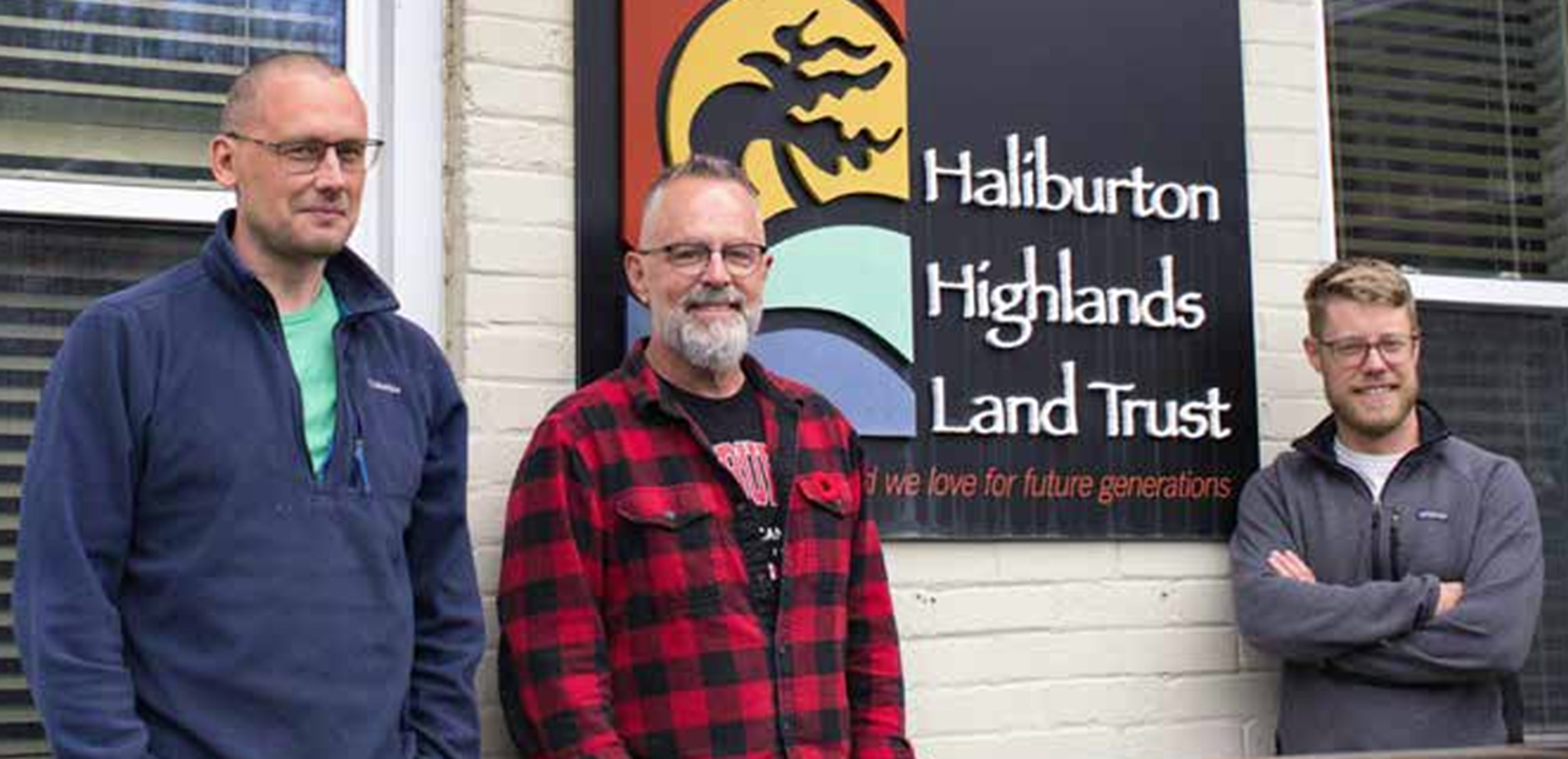
HHLT’s executive director, Dave Newnham, who took on the leadership role this past summer, told The Highlander that the rapid growth reflects a bigger demographic shift and growing interest in long-term land conservation.
“The pace of growth is really an interesting thing to think through,” Newnham said. “We’re moving from six to 11 properties, and right now a lot of it is managing what we’ve got, completing acquisitions, and opening those trails.”
The expanded inventory covers a mix of hiking systems, backcountry conservation reserves, and sensitive habitats across Haliburton County.
Among the recent acquisitions is Salamander Ponds, a parcel of land donated by Nan Shuttleworth and Bill Switzer near Lake Kashagawigamog. The property features upland forests, homestead ruins, and a wetland. The land trust is preparing to host a public dedication on Nov. 20.
Generational wealth being transferred
HHLT’s Adrian Martin noted that the property holds a unique ecological history, having previously served as a field study location for university research on amphibian genetics.
“They were finding that the survivability and the health of the population was affected because salamanders hybridize there, and the hybridized versions in some populations don’t have as good survivability,” he explained, pointing to research comparing Jefferson and blue-spotted salamanders.
“The family had a personal connection to that, and they call their foundation the Salamander Fund, and they enjoyed going out to the wetlands there and just seeing the salamander migration in the spring.”
At Beaver Creek Wildlands, acquired in part through Parks Canada funding support, work has wrapped on a new bog boardwalk that connects to a floating wetland trail stretching along a granite ridge.
Newnham said the HHLT is also finalizing plans for a pending 335-acre acquisition in Glamorgan. The property will include about four kilometres of public trails.
Further north, HHLT is working with the Ontario Conservation Accelerator to secure a 1,100-acre backcountry parcel of land located northeast of Drag Lake near Algonquin Park.
“And we were calling that one Drag River Headwaters Nature Reserve,” Newnham said. “This is kind of an interesting piece of land and is about 800 acres. And there’s another piece of land about 300 acres beside it. So together it’s a 1,100-acre parcel of land owned by a family who are being a little bit more behind the scenes in their acknowledgement.”
Newnham sees the surge in local land gifts as part of an ongoing generational wealth transfer across the County, with long-time families deciding how to pass down land held for decades.
“So there might be the idea of making it an ecological gift in two ways for them,” he said. “They can leave a legacy that matters to them. It’s not purely a taxation kind of situation, but there is a benefit.”
Through the federal Ecological Gifts Program, donors can access tax benefits such as capital gains relief. But Newnham explained that acquiring “free” land still carries significant costs for the organization.
Establishing a new nature reserve involves legal transfers, parking lots, trailhead signage, and baseline ecological inventories that are led by project biologist, Paul Heaven. These startup costs typically run between $50,000 and $75,000 per site, Newnham said.
HHLT must also set aside 10 to 20 per cent of each property’s value in a stewardship endowment fund for ongoing upkeep and invasive species control.
To help offset some of the costs, the HHLT launched its annual Holiday Auction for Trails campaign. With more than 110 donated items valued at nearly $19,000, organizers hope to reach $25,000 this season.
“Whether people come out to hike and get the mental health benefits of nature, or connect with us through our holiday auction, the land trust is a community asset,” Newnham said. “If there’s one thing we can agree on here in Haliburton, it’s the importance of the environment.”