
By Adam Frisk Local Journalism Initiative Reporter
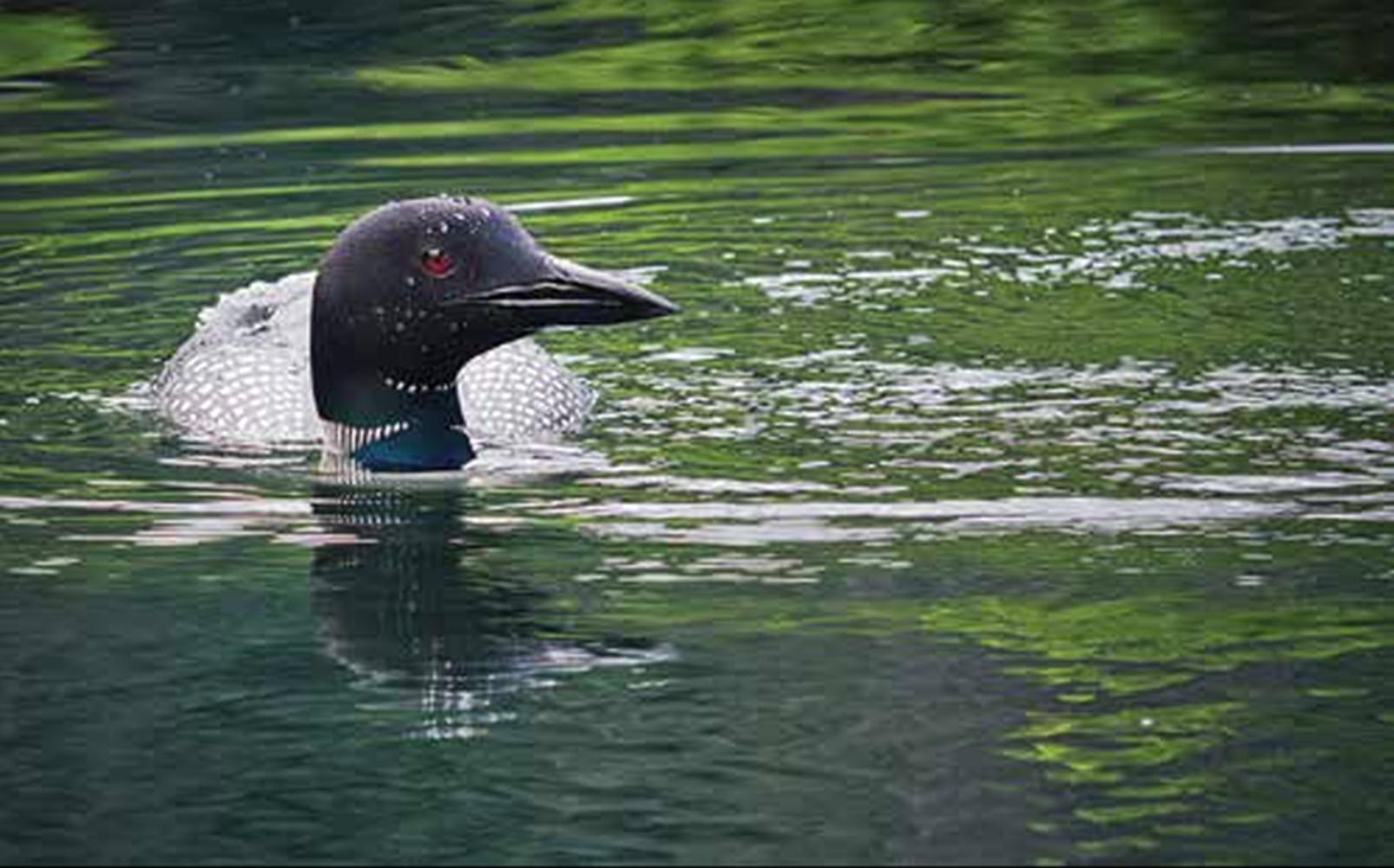
A silent, heavy threat is sitting at the bottom of Haliburton County’s lakes. After the deaths of at least two common loons from lead poisoning, advocates are urging anglers to clean out their tackle boxes.
The deaths reignited a growing push by lake associations across the region to eradicate bodies of water of toxic lead fishing gear.
“Lead poisoning is a slow, painful death,” explained Suzanne Montgomery, who leads the ‘Let’s Get the Lead Out’ campaign for the Drag and Spruce Lakes Property Owners Association (DSLPOA). “It affects the nervous system. As you see in affected wildlife, they lose their ability to swallow and preen, which keeps them alive. Loons will pull to shore to die. Because they are elusive and we have so many lakes and shorelines that aren’t watched, I don’t think we fully understand the complete scope of it.”
The local push is part of a larger campaign by Fish Lead Free, a grassroots initiative launched in 2022 by Margie Manthey and Donna Garland through the Wolfe Lake Association.
“When we launched in 2022, I just hoped to use my platform to raise awareness,” Manthey told The Highlander. “Once you get into the science of it, it bowls you over. Every year it gets bigger and stronger, taking off like a match to dry grass.”
According to the campaign, it’s estimated that 545 metric tons of lost lead sinkers and jigs accumulate in Canadian waters every year. That’s equivalent to 20,000 car batteries or 44 dump truck loads of lead fishing tackle, Montgomery said.
While loons are the most visible casualty, lead ingestion threatens a wide range of wildlife, including herons, ospreys, eagles, and swans.
Manthey noted that decades-long research out of Tufts University in Massachusetts and the Loon Preservation Committee, shows that lead tackle accounts for more than one-third of all adult loon deaths.
The initiative coincides with a study published in FACETS journal at the end of October. According to the study, Ontario’s common loon breeding productivity has been slipping by roughly one per cent every year for more than 40 years. While climate change, development, and shifting water clarity make it harder for loons to hunt, advocates stress that lead poisoning is completely preventable.
Community action is yielding some tangible results, Montgomery said. Through targeted swap events, the DSLPOA has collected nearly six kilograms of lead tackle. They also built four multi-message stewardship kiosks at boat launches, backed by a grant from the Haliburton County Development Corporation (HCDC) alongside material support from Emmerson Lumber.
But confusion remains. Manthey explained that many anglers just assume lead tackle has long since been banned while others might purchase cheap imports labelled “ecofriendly,” only to find they actually contain hazardous metal composites like cadmium.
She suggested testing gear with inexpensive lead-test swabs or switching entirely to certified non-toxic alternatives like tungsten, steel, tin, or bismuth.
Looking forward, Montgomery wants to scale the movement across Haliburton County’s roughly 500 lakes. She floated the idea of a voluntary fish lead free zone, backed by all four municipalities. At the same time, the campaign is gathering signatures for a provincial petition urging Ontario to ban the sale and use of small lead sinkers and jigs under 50 grams.
“The single most important thing they can do before fishing opens next season is simple,” Montgomery said. “Don’t fish with lead. Target the one-ounce-and-under weights and small jig heads, that is the very best place to start.”
Residents looking for more details or a way to sign the petition can visit fishleadfree.ca.