
Haliburton Highlands Land Trust’s (HHLT) Nick Weissflog believes Abbey Gardens is one of Canada’s greatest examples of ecological restoration done right.
Speaking at a seed collection event organized by Environment Haliburton! and held at the Haliburton site Oct. 6, Weissflog said the land has seen a remarkable turnaround over the past 20 years. Once a gravel pit, the 380-acre Abbey Gardens property has been transformed from a space that drew from the area’s natural resources to one that replenishes them.
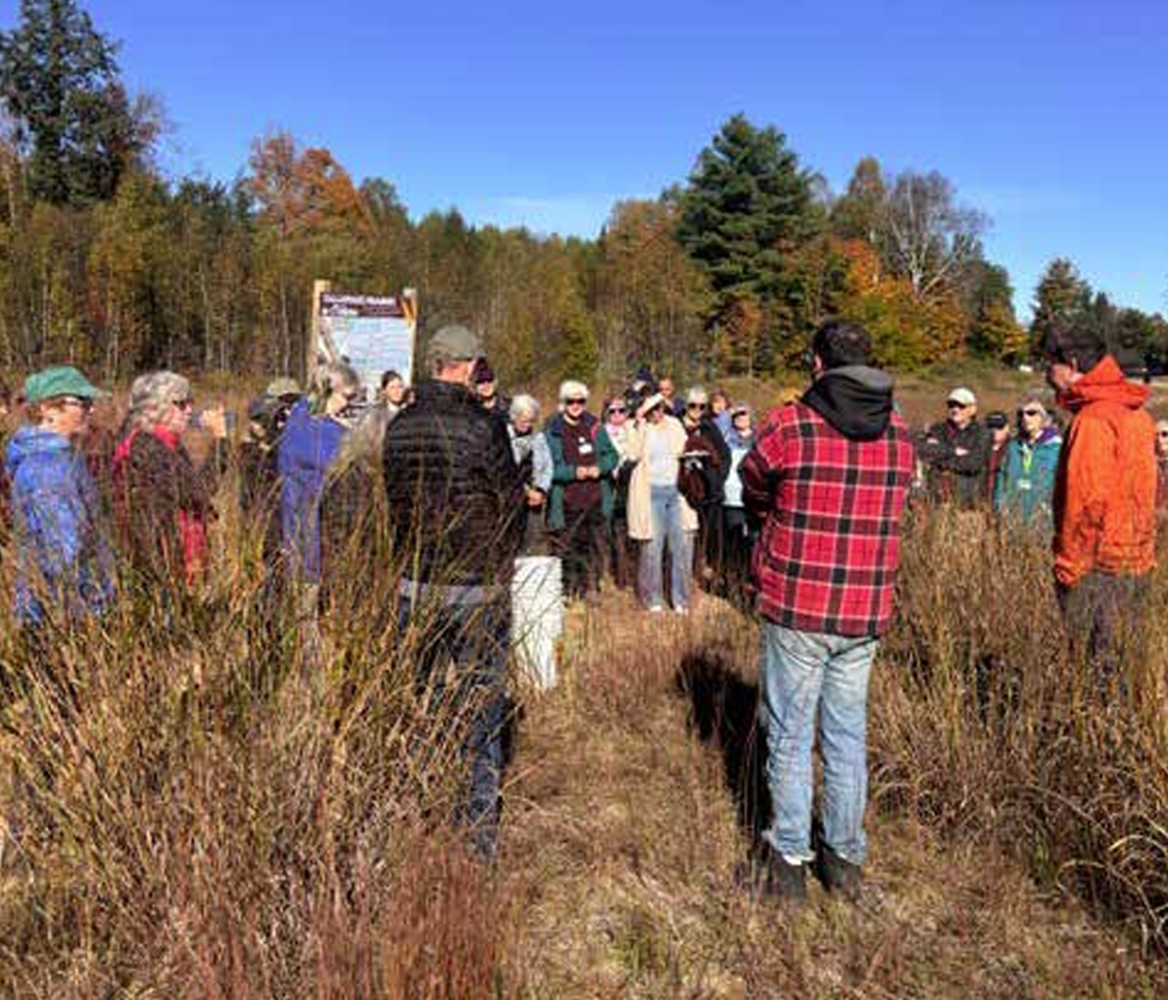
Weissflog was one of three speakers at the event, which included a tour of Abbey Gardens’ vegetable and pollinator gardens, as well as its “flourishing” tallgrass prairie habitat.
“That ecosystem wasn’t found in Haliburton County prior to European colonization – but it’s one that needs a lot of help. With the changing climate and all the sand we have up here, it is a suite of species that does quite well restoring an old sand pit,” Weisslog said.
Cara Steele, an ecologist who tends to the land at Abbey Gardens, said the tallgrass prairie project began in 2017. It focuses on a five-acre plot now known as the ‘Little Pit Prairie’.
“Tallgrass prairie is one of North America’s most endangered ecosystems, with an estimated one per cent remaining,” Steele said, noting the habitat loss has threatened dozens of species, including birds. “Our primary goal is to create more grassland habitat and showcase progressive and innovative reclamation techniques for aggregate pits.”
It can take several years for some grasses to stick and take hold – Steele said the only way to develop a new habitat is seeding and planting by hand. The program has become a focal point of the EcoExplorers program for children aged six to 11, with Steele teaching the process from start to finish.
“Each year, the kids help plant approximately 500-600 grasses,” Steele said.
During last week’s event, Steele said she discovered two new species growing in the prairie that she hadn’t seen before – the cylindrical blazing star and round-headed bush clover. The former is a rare plant she had sewn in with a restoration mix several years ago, but had yet to see it spring.
About 40 people attended the event, with each learning how to foster prairie habitats at home said Haliburton Micromeadows’ Baz Conlin, who also spoke at the event.
“People were concerned about grassland conservation and asked how they could help. They were also interested in establishing their own micro prairies. Attendees were passionate about collecting seed and keen to start their own native grasses,” Conlin said.
“The site at Abbey Gardens is an example of grassroots restoration and rewilding that can be done on any scale, from five acres to 200 sq. ft. When you get native plants back on the landscape, great things happen,” he added.
Conlin was also collecting little bluestem seed for the Ontario Kirtland’s Warbler Restoration Initiative, which restores grassland habitat for at-risk birds at the Featherstone Nature Reserve near Port Hope.
Susan Hay, Environment Haliburton! president, said the event was an important one as it showcased to people how easy it can be renaturalizing barren land. She promoted hands-on learning as an effective way of getting people started.
“We like to try to have outdoor events when the weather is suitable,” Hay said.