
Algonquin Highlands council has officially adopted its new five-year asset management plan, with the preparing consultant giving the township rave reviews for its recent long-term financial planning.
Benjamin Koczwarski, from London-based consultant UrbanRe, said the municipality owns assets worth approximately $76.7 million. With the township boasting an eight-figure portfolio, Koczwarski said an asset management plan will play a key role as council and municipal staffers prioritize facility, equipment and infrastructure repairs and replacement over the next decade. The plan provides an outlook through 2035.
“The asset management plan is not a budget – it is a planning document intended to inform the regular budgeting and project planning processes for the township.” Koczwarski said. “It’s not intended to be an immediate plan the township must follow, but something that gives you the information and perspective you need so that when you’re going into budget time, you can look at what the needs are yearover-year and make sure you’re covering all the bases.”
Koczwarski noted Algonquin Highlands is growing at a faster rate than the provincial average.
“That typically means there’s a growing need for additional investment in public assets. Generally, you need to increase the type of, or number of assets, or improve assets for that growing population,” he said.
Since 2020, the township has invested $3.52 million annually through its capital budget, with Koczwarski saying that needs to be slightly increased to reach the $3.61 million he’s recommending council dedicate each year until 2035.
Broken down by department, to replace all existing municipal assets the township would need to spend $34.47 million on its road network (44.92 per cent of the spend), $11.8 million on facilities (15.37 per cent), $10.73 million on bridges and culverts (13.98 per cent), $9.05 million on its fleet (11.79 per cent), $6.66 million on land improvements (8.67 per cent), and $4.04 million on machinery and equipment (5.27 per cent).
Koczwarski said the township’s roads are in “fairly good condition.” He anticipates the township will need to allocate $618,000 to maintain about 110 kilometres of the network in 2026. He credited council for prioritizing two recent major rehabilitation projects on North Shore Road and Big Hawk Lake Road, with both expected to begin next year.
The township owns “a fantastic diversity of facilities” Koczwarski said, with three fire halls, three community halls, the township office, public works garage and municipal airport.
He said he met with staff in October to discuss priority projects at municipal buildings, with eight buildings identified as problems. On top of the $1 million roof replacement of the airport hangars and $250,000 HVAC upgrades at the Dorset Recreation Centre, approved for next year, Koczwarski said there are accessibility improvements required at the Stanhope and Oxtongue Lake community centres.
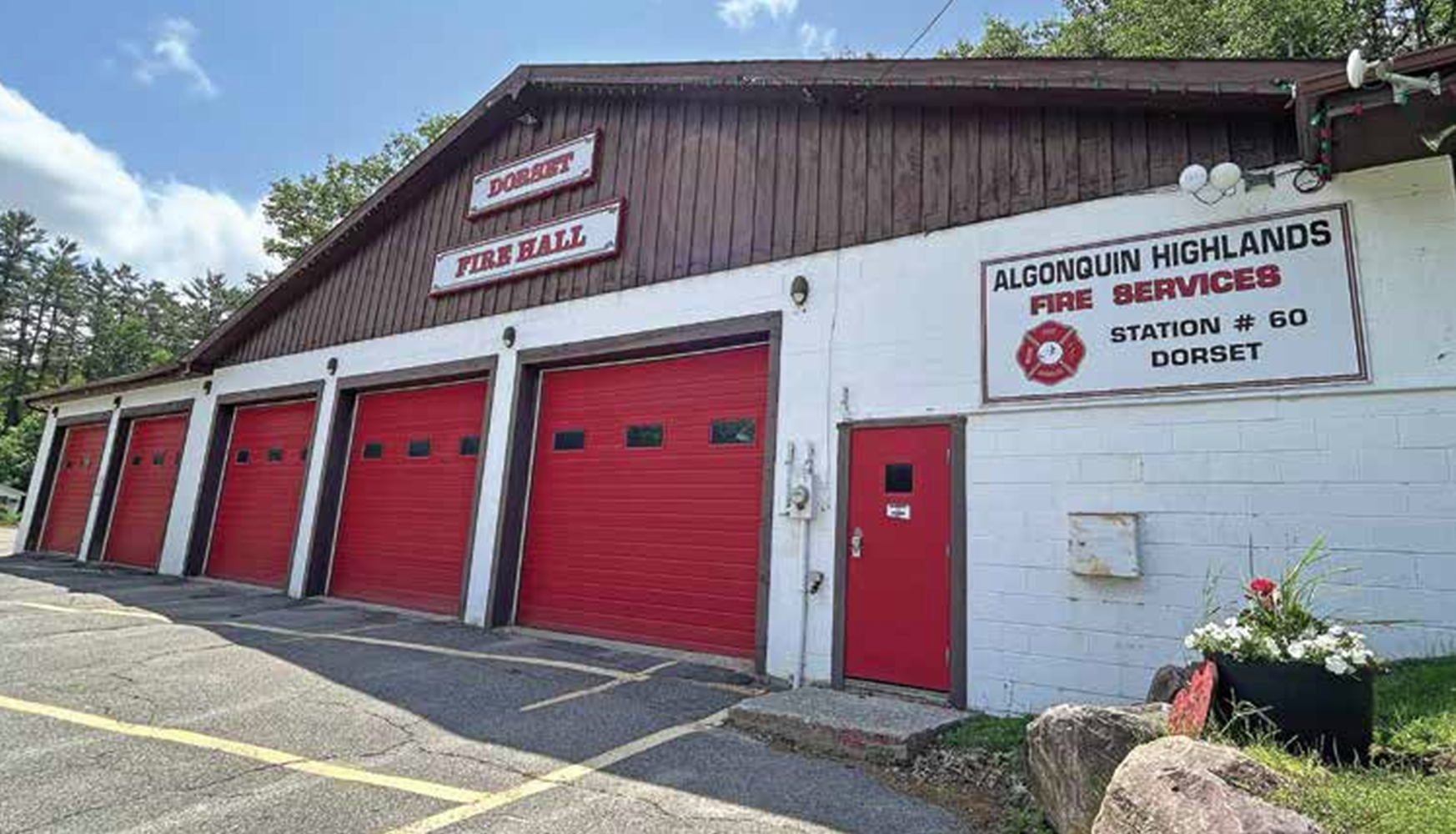
The Dorset Fire Hall, also known as Station 60, needs replacing by 2030 at an estimated cost of $6 million.
“That facility is reaching the end of its useful life. To maintain a healthy and safe work environment for fire department staff, to uphold the equipment and fleet housed in the fire hall, it’s time for you to start thinking about potential replacements,” Koczwarski said.
The consultant said the township owns five bridges and culverts, which are all in good-to-very-good condition. Koczwarski recommended investing $80,000 in 2026 and building in an additional $107,000 each year to help with expensive replacements down the road.
Priorities under land improvements include new parking lots, upgrades at landfills and the Stanhope Municipal Airport, a rebuild of the log chute, and expanding the municipality’s docks and landings.
About 25 per cent of the municipal fleet is past its expected useful life, Koczwarski said. He recommended the township invest almost $590,000 upgrading its vehicles in 2026, with another $5.2 million required by 2035.
It was a similar story with equipment – about 30 per cent of the tools staffers utilize are past their expected useful life. He recommended council invest about $3.8 million addressing the shortfall over the next decade.
Koczwarski said the past two terms of council have done a good job investing in the municipality’s future.
“Over the past five years, you have been spending very close to the amount you should on capital projects, which is a very good sign,” he said. “The township also has reserve funds totalling $7.28 million, which is another good sign you have the resources needed to carry out these projects.”
Council officially adopted the asset management plan Nov. 20 – a key detail, Koczwarski notes as some federal and provincial revenue streams only accept grant applications from township’s with formal long-term outlooks.