
Home Blog Page 7

Moorelands Kids camp expands reach

0

By Adam Frisk Local Journalism Initiative Reporter

For more than a century, Moorelands has helped thousands of children navigate the challenges of poverty, and the historic charity has set its sights on the “hidden pockets” of Haliburton County.

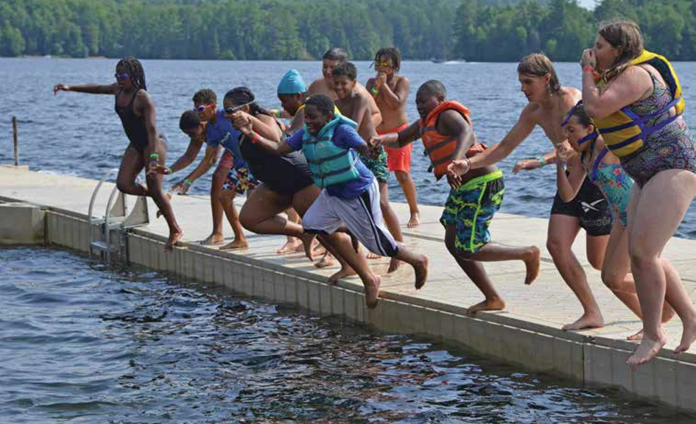
What began as a Toronto-based charity in 1912, serving low-income families, has since evolved into a youth-based leadership program. Since 1972, the organization has operated its flagship summer camp on the shores of Kawagama Lake in Dorset, and a new strategic plan is bridge-building across the corridor from Toronto to the County, to help ensure local families aren’t left behind.

“We recognize that poverty is on the move,” Colette Halferty, Moorelands Kids’ director of development and communications, told The Highlander. “There are isolated rural communities that aren’t getting served. We’ve really endeavoured to invest in more partnerships and outreach so we can reach families in need that aren’t necessarily from the GTA.”

Halferty explained that while the camp looks like any other classic Canadian summer retreat with archery, canoeing, and campfires, the fun is just the “icing on the cake.

“The curriculum is the foundational base of every activity and is the guiding principle for our staff mentors at camp to be able to make sure that our kids continue and they’re having fun,” she said.

The core of the Moorelands Kids camp leadership program is to equip the youth with the soft skills, emotional intelligence, resilience, and accountability that the school system often misses for children in highstress environments, Halferty said.

“It’s not like sitting in a classroom,” she said. “If you’re in a canoe, that’s teamwork. If you’re in a kayak, that’s individual leadership. We define leadership not by a paycheque or status, but by being a person of positive influence.”

Moorelands serves families on the Low-Income Cut-Off scale and helps to remove financial barriers through a subsidy program. Halferty explained that while it costs the charity about $1,780 to host one child for a week, covering transportation, food, lodging, and professional staffing, some families pay as little as $50 or $100 to send their child to camp for a week.

Putting the financial aspect aside, Moorelands helps address some of the specific hurdles faced by low-income youth. Halferty said frontline staff at the camp are certified in mental health training to support kids dealing with anxiety and depression. The camp also provides consistent, communal meals and has a 2-to-1 youth-tocounsellor ratio.

“Because we want to make sure that this journey and this experience for them is positive, that they can build up that sense of confidence themselves,” Halferty said. “They know that someone has their back.”

Last year, approximately 35 children from the County attended the camp. Through partnerships with the Haliburton County Development Corporation and the school board, Moorelands hopes to grow that number significantly.

“There is no cap on local kids,” Halferty said. “It’s first-come, first-served for families who meet the low-income criteria. We want more people to know this resource is accessible to them.”

As the charity looks to the future, it is seeking both families who could benefit from the program and local philanthropists interested in supporting the organization. Those interested in learning more about Moorelands Kids camp or applying for financial assistance can visit moorelands.ca.
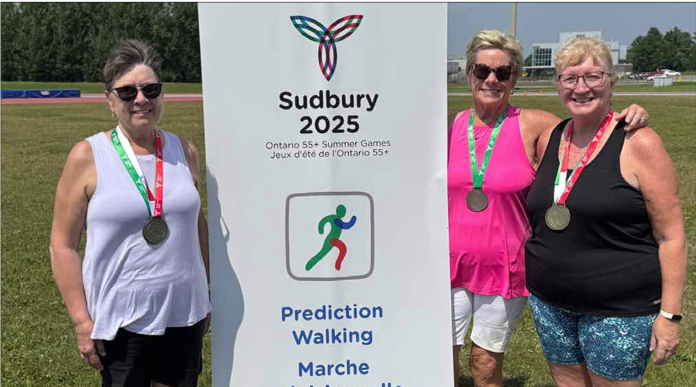
Walking into senior games with purpose

0

County resident Sharon Ferris said she found a new lease on life after deciding to join the Ontario Summer Games as an athlete back in 2015.

She was familiar with the annual event through her late husband, Frank, who competed across several sports for more than two decades. After years as a cheerleader in the stands, Ferris has become a key presence in walking and golf competition – locally here in the Highlands and on the provincial and national scene.

“I just love these games, they’re always a wonderful opportunity to meet new people, expand your social circle and maintain a healthy, active lifestyle,” Ferris said.

The games, open to anyone age 55 and older across Ontario, is celebrating its 40th anniversary this year and Ferris said there are lots of opportunities for Highlanders to get involved.

For those who enjoy more of a slow-pace, there’s euchre, bid euchre, cribbage, darts, five-pin bowling and shuffleboard. For more active seniors, there’s golf, pickleball, tennis and walking. Registration opened April 8, with some events getting underway this week.

Haliburton County falls within the Ontario Senior Games Association’s (OSGA) district 11, with winners from local competition having the chance to compete provincially and nationally every other year.

Ferris said the next chance for upper-level competition is 2027, but getting involved now gives athletes a year to get up to speed.

“We have people who qualify for provincials and nationals every time they’re open – I myself have been to every provincial competition for the past 11 years and have been to three national events, in Kamloops, B.C., Saint John, New Brunswick and Quebec,” Ferris said.

The games have helped Ferris establish and build relationships with like-minded people across the country, while she’s used prior national events to serve as a springboard for bigger getaways.

“When we went out to Saint John, we carried on and toured all through Newfoundland and Prince Edward Island, so it’s a great way to see other parts of the country,” she said.

To participate, people need an active OSGA membership, available online for $15, and then pay an additional $10 to enter district competition. One buy-in grants access to all senior games events, Ferris confirmed. Though there are additional fees for sports like golf, to cover round fees.

District 11 usually attracts more than 100 competitors, Ferris said. Numbers used to be higher pre-COVID, but the County resident said OSGA members are actively trying to boost interest.

While there’s a huge social element to the events, and chances to work together as a team, Ferris said she really enjoys the individual competitiveness of walking. There are two distances used, either oneand-a-half kilometres or a three-kilometre route, with groups for those age 55-69 and 70-plus.

“It’s prediction walking, so people have to guess how long it’s going to take them to walk their route. And you have to do it twice,” Ferris said. “I’ve walked with people before who have been a second or two off. There’s a lot of preparation involved. I practice regularly – we’re in it to win it.”

Anyone interested in playing must register at least 24 hours before their chosen event. For more information, visit district11. osga55plus.ca or contact Jennifer Coates at 705-749-3787 or jennifercoates148@gmail. com.

Five-pin bowling May 26, 1 p.m. at Minden Fast Lane Bowling

Bid euchre: closed

Cribbage May 25, 1 p.m. at Gravenhurst Seniors Centre May 28, 1 p.m. at Kinmount Legion.

Darts May 16, 10 a.m. at Gravenhurst Seniors Centre

Euchre May 11, 1 p.m. at Minden Curling Club May 14, 1 p.m. at Gravenhurst Seniors Centre

Golf June 3, 8:30 a.m. at Blairhampton Golf Course in Minden

Pickleball June 9, 9 a.m. at S.G. Nesbitt Memorial Arena in Minden

Shuffleboard June 4, 10 a.m. at Gravenhurst Seniors Centre

Tennis June 16, 8 a.m. at Kerr Park in Bracebridge

Walking May 29, 9 a.m. at Head Lake Park in Haliburton

Drug program ‘to protect our community’

0

With 15 opioid-related deaths in Haliburton County between 2019-2023, it’s hoped a new County of Haliburton program can reduce overdose harms across the Highlands.

The County has secured a nearly $1.2 million federal government grant to offer outreach to vulnerable populations.

Haliburton County Paramedic Service director, Michael Slatter, and director of community outreach, Sue Tiffin, spoke about the successful federal grant application at an April 22 County council meeting.

It’s for a substance use and addictions program emergency treatment fund (ETF).

They said $1,176,390 has been approved towards eligible expenditures, including an outreach van, safety equipment, medical supplies, and staffing support and training, during the fiscal year 2026-2027. The start is backdated to April 1.

Sustainability of the program from April 1, 2027 and onward will rely on budgetary approval by County council.

Slatter said Haliburton County currently has a collaborative community mobile outreach program “within which this project can build on.”

Tiffin added that, according to Lakelands Public Health, the region has experienced a higher hospitalization rate for drug poisoning than the provincial average, with fentanyl involved in 86 per cent of opioid-related deaths in 2023.

Mobile outreach programs are essential in filling service gaps’

“Although Haliburton County reported fewer deaths in 2024 compared to previous years, the unpredictability and toxicity of the unregulated drug supply continue to pose a significant threat to community health.” She mentioned the 15 opioid-related deaths in the County from 2019-2023, according to Lakelands Public Health, in a joint written report with Slatter.

Slatter said the crisis is compounded by geographic isolation, limited access to health care services, and social stigma, all discouraging people from seeking help and making it difficult to deliver timely interventions.

In 2022, the County relied on a single addictions’ worker. Since June 2023, it’s built a larger outreach program with numerous partners offering on-site support with community paramedicine services, harm reduction services, income tax, heat and hydro programs, housing and homelessness services, literacy and employment programs, support with food insecurity, and mental health and addiction services.

Slatter said, “the idea is we’ll still continue with the clinics that are run regularly throughout the County, but add a mobile component. The idea is to reach vulnerable populations throughout the County as a whole, seven days a week.

“The idea is to attend in locations where people who use drugs might congregate. The team would be available to follow up with people who have had an event whether they go to the hospital or not. The goal is to bring services to them and provide care and support in their environment.”

Acute need

Tiffin said research from the Wellington Guelph drug strategy highlights that mobile outreach programs are essential in filling service gaps, especially in remote areas. She added these programs provide low-barrier access to harm reduction supplies, health services, and peer support, often reaching individuals who are disconnected from traditional health-care systems.

By deploying a unit in all weather, Haliburton County Paramedic Services, “will be able to reach individuals of all ages where they are, provide culturally-safe and trauma-informed care, and reduce overdose-related harms in a timely and effective manner,” Tiffin said.

They’ll draw on the experience of other municipalities running a similar service. Tiffin and Slatter said they’ll get help from the University of Western Ontario Centre for Education Research & Innovation (CERI). The centre has experience in doing research on outreach programs, including the Supportive Outreach Services (SOS) program operated by Grey County. That program offers a range of life-saving interventions, such as overdose reversal, mental health support, addiction support services, distribution of naloxone and other harm reduction items.

Naloxone is a fast-acting, life-saving medication used to temporarily reverse opioid overdoses. It works within minutes, restoring breathing, and is available as a nasal spray or injection, often without a prescription.

CAO Gary Dyke said it was a significant achievement for the County and its partner municipalities. Slatter said they were one of 10 successful applicants from 400.

Coun. Bob Carter said he hoped funding can be secured as the program continues past the grant period. However, he said for now they were addressing an “unmet need both with drugs and mental health. This is going to be money well spent, and money that needs to be spent to protect our community.”

Hospital CEO comes home

0

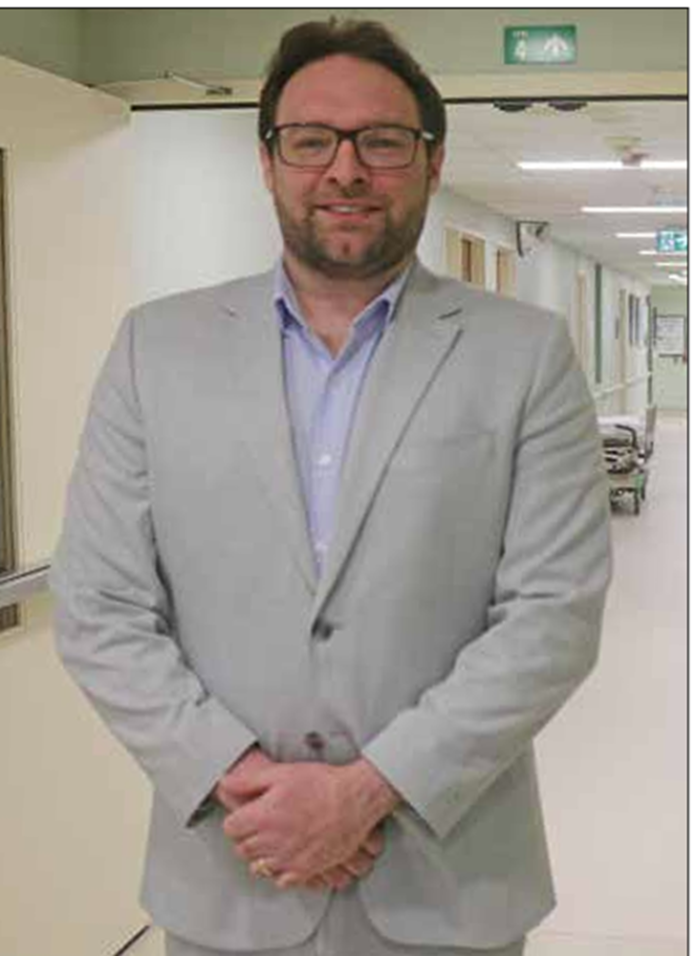
The new figurehead at Haliburton Highlands Health Services (HHHS), Jack Hutchison, said he intends to lean on the community to help identify pressing needs and future enhancements to local health care.

He started with the organization as president and CEO March 30. The past month has been spent getting up to speed with HHHS operations and refamiliarizing himself with a community he loves. Hutchison was raised in Minden and graduated from Hal High.

“This is very much a homecoming. My mom grew up here, our family moved to Minden when I was six, so this is where most of my earliest childhood memories were made,” Hutchison said. “I didn’t know when we’d be back, but we knew we wanted to return home someday.”

His wife also grew up in Haliburton County. In 2019, despite working in Ontario’s far north on the shores of James Bay, the couple bought a cottage in the area and have been returning for visits ever since. They were here last fall on vacation when Hutchison saw the posting for his new job.

Hutchison returns to the Highlands with more than a decade’s experience in the health-care sector. He first joined the Weeneebayko Area Health Authority (WAHA) in 2014 as a human resources staffer, moving up the ranks to HR manager and vice president of HR and organizational development before landing the vice president of people, performance and clinical support role.

In 2022, he spent nine months with Headwaters Health Care Centre in Orangeville as its vice president of people and culture but returned to WAHA as its chief operating officer in January 2023.

Over the past three years he’s had to navigate complex logistical challenges – of the six communities he was responsible for, four of them were fly-in only. One of those was located about 400 kilometres away from the WAHA main office.

“It taught me how important it is to be adaptable, to think on your feet and be innovative when you work in rural health care. One of the biggest pieces for me was ensuring that, no matter where someone is, that access to quality health care is the same for everyone. That’s something I’ll strive to maintain every day at HHHS,” Hutchison said.

Doing more

With the Haliburton site seeing major investment over the past couple of years, after the addition of CT and mammography and expansion of X-ray services, Hutchison said he doesn’t have a specific focus regarding new services just yet.

HHHS is still awaiting a decision from the province on plans to consolidate long-term care services in Minden, with an application to add 98 beds to Hyland Crest still pending. If approved, that would allow HHHS to repurpose Highland Wood long-term care in Haliburton.

“That area would be expanded for more acute care services for the County. We hope to add more beds… investigate what specialty services we could bring in on different days,” Hutchison said.

Haliburton County is one of the poorest regions in Ontario and Hutchison said he also wanted to boost HHHS’ social programs.

“We’re a big geography, which provides challenges to some people. We work closely with our foundation to make sure people are fed, we have folks getting 12 free meals per month funded through HHHSF. We have patient transport so people can get from their home to appointments and group sessions. We have a big impact in the community that way and it’s something I’d like to do more of.”

Hutchison said there are plans for community town halls later this year to provide updates on HHHS’ master planning process and to hear concerns from the public. He confirmed HHHS will have its annual general meeting in Minden June 25.

“I think anything we do [in terms of future improvements] has to be thoughtful and purposeful, really driven by the community and ensuring they meet the needs of our patients,” he said.

New doc starting

0

The County of Haliburton, in partnership with Haliburton Highlands Family Health Organization (HHFHO) physicians practice, and Haliburton Highlands Health Services (HHHS), said Dr. Jeet George will be joining the HHFHO, as a primary health care provider, and HHHS, as of May 1.

Dr. George has broad expertise in general practice, emergency medicine, and procedural anaesthesia. He practiced medicine in the UK for eight years before relocating to Australia. He has been practicing a combination of family, emergency and GP anesthesia in Australia for the past 17 years.

Dr. George will be rostering 700 new patients in Haliburton County and has committed to providing medical services to the Highlands for six years.

Dr. George contacted staff in February 2025 in response to a job posting on the British Medical Journal website. He and his family travelled from Australia to visit Haliburton County and did a tour of medical facilities in August 2025.

‘’My family and I are beyond excited for this big move. This started from a response to a job advertisement a bit more than a year ago. Looking at the stunning area and surroundings, we had to visit; we were captivated and bowled over when we did. The steadfast support, provided by recruitment coordinator, Wendy Welch, and the local physicians and administration staff, was instrumental in making this happen. We are finally ready and look forward to being a part of this wonderful community,” Dr. George said.

Community in mourning for ‘spirit of Kinmount’

0

The Kinmount community is still reeling following the recent loss of one of its greatest champions.

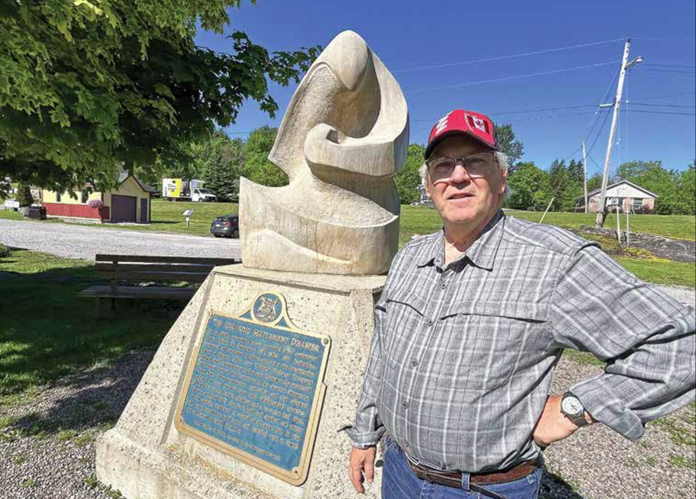
Longtime teacher and historian, Guy Scott, died April 15 at age 70. The son of Betty and Bill Scott, Guy was the fifth generation of Scotts in Kinmount, along with his sister, Haliburton-Kawartha Lakes-Brock MPP Laurie Scott.

Laurie Scott told The Highlander during an April 27 interview that her brother had numerous health challenges over the past five years, but it was a recent sickness, that developed over about six weeks, that took him.

“Guy was Guy right until the end. I saw him about 12 hours before he passed, we had dinner together and he was still talking about his next project,” Laurie said. “He was still uncovering new things he didn’t know about the history of the area. He just loved that stuff. He never stopped, right up to his last day.”

Seven years her elder, Laurie said Guy was always a great influence during her childhood. They spent a lot of time together on a family farm on Crystal Lake Road. As a teen, he coached her baseball team and was always quick to teach her about the family’s rich history in the area.

As he got older, Guy’s ties to Kinmount only strengthened. He had a lifelong love affair with the Kinmount Fair, where he was a two-time president. He also served as the provincial president of the Ontario Association of Agricultural Societies. Laurie said Guy, who was known as ‘the spirit of Kinmount’, inherited his enthusiasm for the fair from their father, seeing it as the ultimate celebration of community.

He served as editor of the Kinmount Gazette for many years and volunteered his time with the Trent Lakes Historical Society, Kinmount Artisans Guild, Haliburton Highlands Genealogical Group and the Kinmount Masonic Lodge. Guy also spent 10 years as a municipal councillor in the old Galway-Cavendish township that later amalgamated into Trent Lakes.

Not content to simply talk history, Guy made every effort to record it too. He wrote several books, including The History of Kinmount: A Community on the Fringe, The Story of the Kinmount Fair, and Where Duty Leads: The 109th Battalion in WWI that detailed his grandfather’s experiences fighting in Europe.

Guy fought to preserve the community’s railway station, which now serves as a museum, and has helped shed light on Kinmount’s historic ties with Iceland. Through his research, Guy learned about a large group of new Canadians who arrived from Iceland in September 1874, to work on the Victoria railway line. The immigrants established Hayford, a ghost town along the Burnt River that Guy discovered and took many groups of Icelandic descendants to see after he wrote about it in his history of Kinmount.

Janice Stange, chair of the Trent Lakes Historical Society, said Guy’s death has been a shock to everyone.

“He was our enthusiastic go-to for any stories and information from the past. Even in these days of technology, he was our link to classic north country history,” Stange said. “We’ll never be able to say enough about his contributions to the area and its history. It’s a different world without him.”

Laurie said her brother was a family man at heart – devoted to his wife, Lori, and their children. He’ll also be remembered as a pioneer in digital education after serving for many years as a history and civics teacher with the Virtual Learning Centre.

It will be his many contributions to Kinmount that Guy will be most remembered for, Laurie said.

“He believed in this community – he used to say if you love the place you live enough, it becomes the centre of your universe. That describes how Guy felt about Kinmount,” Laurie said. “I’ll miss being able to pick up the phone and call him, because he usually had the answer to any question I had.”

A celebration of life will be held at the Kinmount Fairgrounds Arena May 9, with visitation from noon and ceremony at 1:30 p.m.

Drug alert for Haliburton County

0

Lakelands Public Health issued an alert April 29 due to a high number of suspected drug poisonings related to paramedic service calls in Haliburton County.

The substance of concern is suspected to be opioids. Multiple doses of Naloxone may be required.

“It is important to be aware that the unregulated drug supply may be contaminated with other substances. Naloxone should be used in all suspected drug overdoses, due to the possibility of opioid contamination or poisoning. Free Naloxone kits are available at all Lakelands Public Health offices, participating local pharmacies, and other local agencies,” the health unit said.

Signs of an opioid overdose may include:
• very small pupils
• slow or no breathing
• cold and clammy skin
• blue or purple fingernails or lips
• snoring or gurgling sounds
• heavy sedation, difficulty being woken up

Anyone who sees a person experiencing a drug poisoning is urged to intervene. Call 9-1-1, give the person Naloxone, and start rescue breathing and, or chest compressions. The Good Samaritan Act protects anyone trying to help in an emergency from possible legal repercussions. The Good Samaritan Drug Overdose Act also helps protect people on the scene of an overdose from being charged for using or possessing drugs for personal use.

Lakelands Public Health recommends the following harm reduction practices:
• Keep multiple Naloxone kits on hand.
• Test a small amount of the drug before you use it.
• Use new supplies and access needle disposal bins to reduce harms associated with substance use.
• Don’t use alone – Call the National Overdose Response Service (NORS), virtual safe consumption, at 1-888-668-NORS (6677) or use a buddy system and call a friend.
• Call 9-1-1 if an overdose is suspected.

Support:
• Call or text 9-8-8 Suicide Crisis Helpline, a 24/7 suicide or emotional distress hotline if needed.
• Substance use counselling and treatments are offered through:
Rapid Access Addiction Medicine (RAAM) Clinics https://www.lakelandsph.ca/…/harm-reduction-supplies…/ or
Four Counties Addiction Services Team (Fourcast)
https://www.fourcast.ca/

For more information on opioids and naloxone visit LakelandsPH.ca/naloxone 

Dysart to fix air quality at health centre

0

Dysart et al council has approved a near$26,000 spend to fix airflow issues at the Haliburton Family Medical Centre, though staff have warned that may not completely solve the odour issues that have plagued the facility in recent months.

CAO Tamara Wilbee told council April 28 that engineering firm Pinchin investigated the site in March and found a shortfall in outdoor air ventilation supply to some units within the building. While mould wasn’t a concern, Pinchin discovered elevated levels of carbon dioxide (CO2) in 13 of 27 tested locations on the first floor – with some three times the standard amount. On the second floor, three of nine locations exhibited elevated levels of CO2.

In its report, Pinchin stated the building’s airflow system was likely contributing to the issue. When temperatures within units reach their set amounts, airflow is reduced meaning less outdoor air is brought into the building, which increases CO2 levels.

The township hired Walker’s Heating and Cooling to complete an air audit of the facility. Council approved the firm installing new HRV heating systems in the Haliburton Vision Care, Hill Chiropractic and Physiotherapy and LifeLabs space and the downstairs hallway for $23,913. Another $2,000 will be spent on electrical work.

While the project wasn’t included in the 2026 budget, treasurer Brayden Robinson said it could be pulled from the $45,000 council committed to putting into a medical centre reserve fund this year.

Most businesses at the centre have remained open, but LifeLabs has been closed since March 25. Wilbee said LifeLabs has written a letter to the township asking for updates.

“They want to know what we’re doing to fix these problems,” Wilbee said.

Mayor Murray Fearrey said he’s heard from many Haliburton residents who are upset about the closure, forcing them to leave town for bloodwork. With the work still expected to take a couple of weeks to complete, the mayor asked if there was any other local facility LifeLabs could use in the interim. Councillors Nancy Wood-Roberts and Pat Casey suggested the legion.

“They need an area to do blood collection… they would need a chair, a fridge to put samples and that’s about it. It doesn’t have to be rocket science for a short-term stay,” Wood-Roberts said.

Wilbee said a trailer could also be brought into the medical centre parking lot, though noted LifeLabs has not made any request.

The CAO also suggested council put out an RFP to complete a full excavation of three sides of the building to re-waterproof it. She said pooling groundwater, which has entered the rear of the building before, is contributing to the bad odour.

Casey said that would likely be an expensive fix and could take up to a month to complete. A full report on costing and project timelines will be presented at council’s May 26 meeting.

First responders day

0

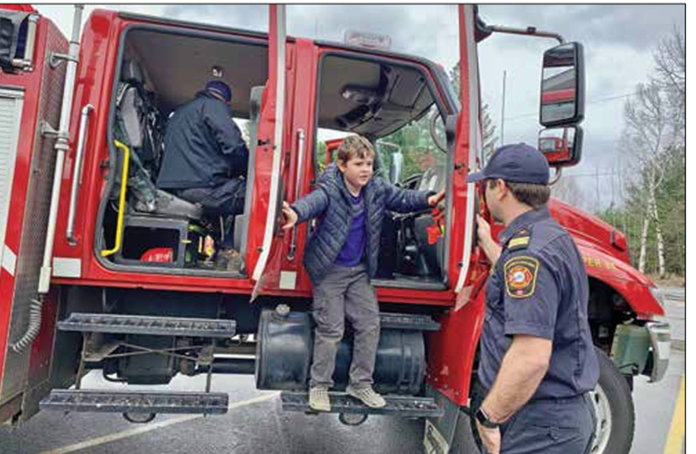
Members of Haliburton County Paramedic Service, municipal fire departments, and the Haliburton Highlands Ontario Provincial Police have collectively come together to invite the public to a free Haliburton County community open house to learn more about the critical role professional and volunteer emergency responders have in keeping our communities safe.

Residents of all ages are invited to visit bases, halls, and stations throughout Haliburton County on May 1 from 3-7 p.m. for a variety of activities. Bring your kids, your grandkids, your neighbour, or stop by yourself.

Members of the public will be able to meet local and visiting emergency personnel, learn about available programs and services, hear about volunteer and career opportunities, understand how to prepare for emergencies, and get an up-close look at emergency equipment and vehicles. Activities will vary at each location.

The event happens rain or shine.

Locations:

Highlands East

• Station 4, 2259 Loop Rd., Wilberforce

Algonquin Highlands

• Station 60, 1060 Main St., Dorset

• Station 70, Oxtongue Lake, 3979 ON-60, Dwight

• Station 80, 1123 North Shore Rd., Stanhope

Dysart et al

• Dysart fire department and EMS base, South Street (behind the arena), Haliburton

Minden Hills

• Minden paramedic base and fire department, 12418 Hwy. 35, Minden

School’s Cool returns

0

After initially facing cancellation for 2026, SIRCH Community Services says its long-running School’s Cool program will go ahead this summer – thanks to the generosity of community donors and partners.

SIRCH said support from CIBC, the County of Haliburton, and individual donors has made it possible to bring the program back.

For more than 25 years, School’s Cool has supported children in Haliburton County who may need a little extra help before entering Junior Kindergarten. This year’s program will take place at Stuart Baker Elementary School, where a kindergarten classroom has been generously made available.

Up to 21 children will be accepted, with a focus on four-year-olds entering JK this fall who may be experiencing developmental delays or challenges with speech and language, difficulty with social interaction, or low confidence in group settings.

Delivered over six weeks in a small, structured classroom environment, the program focuses on building language, early literacy and numeracy, social skills, emotional regulation, and independence.

“Just as importantly, it helps children feel comfortable, capable, and excited about going to school,” SIRCH said.

The organization added participants typically gain close to a full year of developmental growth—a shift that can change not only how they start school, but how they experience learning moving forward.

Families who are accepted will be contacted by program coordinator Paula White, a retired principal with years of kindergarten experience, who will guide them through the next steps.

SIRCH is also hiring one lead instructor and two additional instructors with backgrounds in teaching, early childhood education, or educational assistance.

Applications are now open. The program will run from July 6 to August 13. The parent fee is $5 per day.