
Home Blog Page 16

Haliburton hospital gets advanced X-ray

0

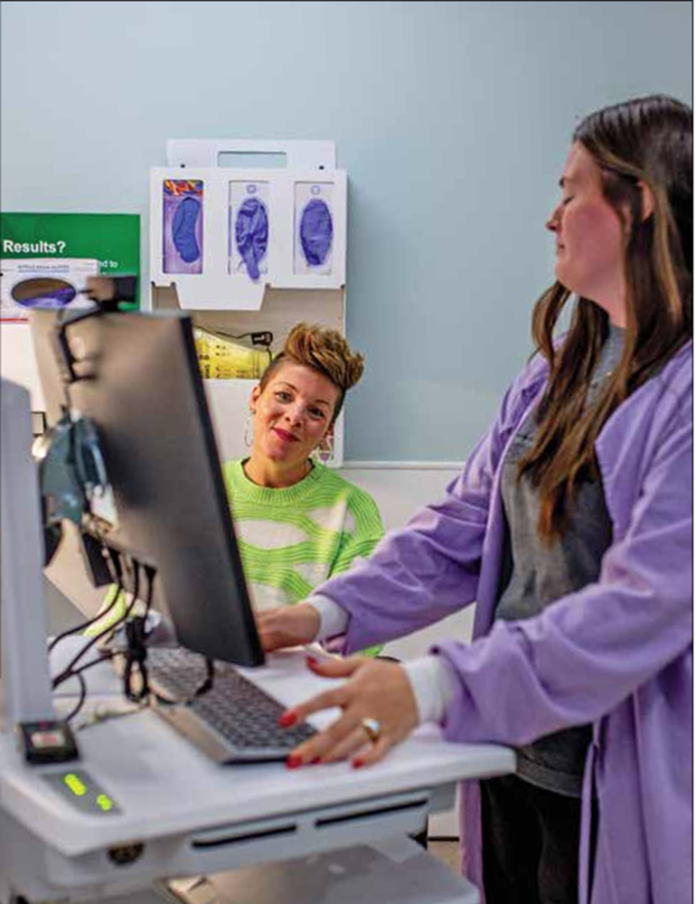
Haliburton Highlands Health Services (HHHS) has installed a new, fully-community funded, state-of-the-art, X-ray system in its diagnostic imaging wing.

The health services announced the news March 11. HHHS said the installation of the Siemens Ysio X.pree marks a significant upgrade to the hospital’s X-ray system, that had served the diagnostic imaging department since 2014.

They added one of the system’s key advantages is advanced automation, which simplifies positioning by allowing the X-ray tube and detector to move automatically into preset exam positions, enabling technologists to set up exams quickly and consistently.

The system MaxTouch touchscreen interface on the tube head allows technologists to adjust settings, verify patient information, and review images directly at the patient’s side, eliminating the need to return to the main console, helping streamline exams while improving the patient experience.

The system also introduces Virtual Ortho, an advanced imaging application that creates long-length orthopedic images; such as full spine or lower-limb studies by seamlessly stitching together multiple X-ray exposures into a single high-quality image for accurate measurement, diagnosis, and pre-operative planning.

Previously, patients requiring this specialized imaging were often referred to Ross Memorial Hospital in Lindsay or Peterborough Regional Health Centre. HHHS said with this capability now available locally, patients can access the important diagnostic service closer to home, reducing the need for travel.

HHHS’s integrated director of diagnostics, Gail Kennedy, said “the evolution of imaging technology over the past decade has been remarkable. The Ysio X.pree allows us to provide faster exams, enhanced image quality, and improved patient safety, all while supporting the ergonomic health of our technologists. This investment ensures our community continues to receive highquality diagnostic care close to home.”

Executive director of the HHHS Foundation, Melanie Klodt Wong, added “our community continues to show what’s possible when people come together. Thanks to the generosity of donors through the Here for You in the Highlands campaign, this new X-ray machine will help ensure patients can access the care they need when they need it.”

HHHS said the new X-ray space has been thoughtfully designed to be ergonomically supportive for staff and more spacious and comfortable for patients.

“HHHS extends its sincere gratitude to the community for making this investment in local health care possible. Together, we are strengthening diagnostic services, embracing innovation, and continuing our commitment to delivering exceptional care in the Haliburton Highlands,” the health services said.

Since 2024, the service has spent $6 million on a CT scanner, mammography service and now X-ray.

HHHS added that, beginning March 16, changes will also be implemented in the emergency department (ED) to support improved workflow and better serve the community.

Ernst said, “we are making changes in the ED to improve patient flow, and converting the room previously used for X-ray into a mental health room to support community members and families when they need a private space, and more.”

CT cuts ambulance trips

The director of the Haliburton County Ambulance Service said there has been a significant decrease in the call volume for inter-facility transfers since the CT scanner began operating in July 2024.

In the past, the local service was taking people to hospitals in Lindsay, Peterborough and Bracebridge.

Michael Slatter said from 2020 to 2023, the number of inter-facility transfers had been steadily increasing year over year. He added the 2024 numbers were trending on par with 2023 until a noted decrease in July, with a significant difference from August to December of 2024.

“With a full year of data, 2025 shows that the downward trend of inter-facility transfers continued with a 67 per cent decrease from the 2023 peak,” he said.

Slatter said a single inter-facility transfer takes an average of four to six hours out of a 12-hour shift – but they’d reduced the average of three transfers per day in 2023 to one per day in 2025. He said that equates to a greater ability to maintain paramedic coverage throughout Haliburton County without the need to immediately add additional ambulances.

Slatter noted a positive impact on vehicle mileage and fuel costs. From 2020-2023, there was a 32 per cent increase in yearly mileage from 345,815 total kilometres to 478,669 total kilometres. From 2023-2025 there was a 19 per cent decrease in yearly mileage from 478,669 total kilometres to 395,553 total kilometres. He said the savings on fuel is a little more difficult due to the market, however, from 2023-2025 there has been a 27 per cent decrease in fuel expenses.


New smiling faces at food bank

0

Tracey Gilbert feels like she’s getting back to her roots after taking over as manager of the Minden Community Food Centre (MCFC).

Replacing the recently-retired Jean Munroe, Gilbert has spent the past couple of weeks learning just how big a role MCFC plays in the community. She started her new position March 9. A new assistant manager, Stephanie Butchart, started March 16, replacing the also-retired Lynette Gray.

It’s a return to frontline service for Gilbert, who has spent the past 15 years working in publishing, with Patient News in Haliburton. Before that, she was a PSW supporting the elderly in homes across the County.

“Helping people has been part of my plan right from the get-go. That’s my passion and what I enjoy,” she said. “Because I had kids, I needed more of a 9-5 job… but now that they’re grown, I’m really excited to take on this challenge and do whatever needs to be done to help people in our community.”

MCFC isn’t completely foreign to Gilbert – she assisted with social media promotion last summer and has volunteered with the holiday hamper program for years. At the community level, she’s one of the helpers involved with the annual Canada Day fishing derby in Minden.

Gilbert said she already feels the weight of her new job. Since 2019, MCFC has seen demand for service soar, with the food bank more than doubling its clientele over the past six years. With the current economic uncertainty, demand is only climbing, she said.

“At minimum, we’re seeing between five to 10 new clients per month, which really adds up over the course of a year. Through January and February, we served an average of 420 people each month,” Gilbert said. As of April 2025, MCFC was serving an average of 352 people per month.

Responding to the increased need, MCFC has upped the amount of food it gives out to people. For years, they provided four days’ worth of food every month. That was then changed to four days of food every three weeks but now, Gilbert said they’re handing out seven days of food every three weeks.

As a result, the organization’s budget for 2026 has spiked – up to $356,000 from $313,000, a 14 per cent increase. Since MCFC doesn’t receive any form of steady funding from municipal, provincial or federal governments, the bulk of that is sourced from the community.

Dollo’s Foodland, Easton’s Valu-Mart and Coneybeare’s butcher shop regularly donate food, with money brought in through annual fundraisers such as Jump in the Lake, which Gilbert confirmed will return this spring.

Olympian event

A new fundraiser has been scheduled next month, April 11, at the Minden Curling Club. It features a three-course meal prepared by Aaron Walker, co-owner of McKeck’s Restaurant, and a conversation with Canadian sports broadcaster Scott Russell and Olympic figure skating bronze medalist Tracy Wilson. There will be a silent auction, raffle and 50/50 draw. There’s seating for 70 people with tickets $125 per person. Gilbert said there are only 20 tickets left. She’s hoping it brings in $8,000 to $10,000.

Gilbert said she wants to establish a partnership with Archie Stouffer Elementary School to ensure all students have access to nutritious lunches.

For anyone in need of assistance, Gilbert says people will always be welcome at MCFC.

“There is no income threshold for service – we’re not turning anyone away. We’re here to support, not to judge. We are here to give our clients the most warm, welcoming experience possible so they can feed themselves and their families,” she said.

To register, people need to present photo ID, disclose their address and how many people live within their household. For more information, visit www.mindencommunityfoodcentre.ca.

Highlands East ‘wizardry’ reduces tax hike

0

By Adam Frisk Local Journalism Initiative Reporter

The Municipality of Highlands East approved its 2026 budget March 10, finalizing a 4.71 per cent tax rate increase.

The approval of the financial document followed an effort by staff to pare down the initial tax hit, which was originally projected to be nearly six per cent last month.

CAO/treasurer Brittany McCaw said that the initial proposed increase discussed during last month’s special meeting of council was 5.96 per cent. However, during the final reviews and assessment adjustments, staff managed to lower that figure by more than a full percentage point.

“I think you’ve been, what I’m going to call it, a wizard getting stuff pared down and getting the things in order on he budget,” mayor Dave Burton said. “I’m extremely pleased with our rate that you’ve come up with.”

The final version of the budget included what McCaw described as a “minor change” following an equipment breakdown in the public works department.

Rather than putting $70,000 into a reserve fund for a future grader purchase, council agreed to reallocate those funds into the capital account to purchase and install a new transmission for an existing grader. McCaw noted that the reallocation of funds had “no impact to the budget” or the overall levy, but was essential because “otherwise, the grader would have been out of service.”

What that means for local taxpayers is that the 4.71 per cent municipal increase translates to an additional $27.98 per $100,000 of assessed property value for the municipal portion alone. When the County of Haliburton and education rates are factored in, the total tax bill increase rises to $42.52 per $100,000, the treasurer explained. S

he went on to describe how local tax dollars are distributed with 59 per cent remaining within Highlands East, 27 per cent to the County of Haliburton and 14 per cent for education.

As for the budget itself, roads account for nearly half of the municipal spending at 44.83 per cent, while policing and general government represent 15.59 per cent and 17.18 per cent respectively.

While deputy mayor Cecil Ryall made a lighthearted critique of the accessibility of the budget report, noting that he “needed a magnifying glass to read it,” the elected official was happy with the numbers. “You’ve done a wonderful job.”

School’s Cool may get County lifeline

0

A decision by the County of Haliburton – on whether or not to partially fund SIRCH’s School’s Cool program – will officially be made April 8 after the March 11 council meeting was cancelled due to weather conditions.

Director of community outreach, Sue Tiffin, is recommending that a request for funding be approved.

Tiffin said the County has a community health and well-being levy to support funding of non-jurisdictional, but essential, community needs, as they arise.

The School’s Cool program organized by SIRCH Community Services did not receive federal funding this year, and executive director Gena Robertson told The Highlander earlier this month she thought it would not run in 2026.

But Tiffin said SIRCH staff had worked to raise partial funding from donors for the program to continue, but require up to $7,500 to be fully-funded. It’s estimated a single six-week program for 20 children costs $30,000.

“Funding for the School’s Cool program would be provided from the community health and well-being fund included in the community safety and well-being department’s operational budget,” Tiffin said.

The County of Haliburton developed the 0.5 per cent levy in the 2026 budget. Tiffin said it is to enable the County to set aside contingency funds within the levy, ensuring the community can remain resilient in the face of external health crises or non-jurisdictional challenges.

Tiffin said, “by setting aside funds specifically for programs and supports, the reserve improves fiscal stability, enables timely responses to emerging social determinants of health and well-being, and reduces the need for ad hoc reallocations or emergency measures.”

She stressed that under the new program, the County does not transition into a program provider, but facilitates and supports initiatives by other service providers and groups.

“Potential program supports and initiatives will vary by year and in duration. Levy funds can support expanding existing programs, supplement programs, and respond to urgent community or organization and agency needs.”

SIRCH Community Services has run the School’s Cool program in Haliburton County for the past 25 years. It was designed to address a school readiness gap and prepare children for school before kindergarten begins. The program helps children build language fluency; practical emotional regulation; strengthen peer interaction; develop independence, and engage in structured, outcome-linked play.

Families pay $120 in fees.

The program is annually subsidized by the federal Community Action Program for Children (CAPC) grant; however, in 2026, while the CAPC funding received by SIRCH was approved, it no longer funds early learning.

Since announcing the program won’t run, SIRCH has looked for alternative sources of funding for the program and are now just $7,500 shy, Tiffin said.

Robertson told The Highlander that in 2025, CIBC pledged a corporate donation for this year earmarked for children, so they were able to direct it to School’s Cool. The donors raised half of the funds needed, and the County is expected to approve the $7,500 next month.

Tiffin said “should County council approve funding the remaining financial gap for the School’s Cool program, SIRCH Community Services would commit to reporting back to the County’s community safety and well-being committee on the program’s outcomes.”

Quicker process putting smiles on faces

0

It’s been a year since the federal government improved access to needed dental procedures for low-income Canadians and County denturist Steve Kerr said his Minden practice has never been busier.

Last March, the Canadian Dental Care Plan (CDCP) was expanded to people with a household net income under $90,000 – subsidizing treatments including cleanings, fillings, extractions and dentures. According to Health Canada, around 5.2 million people are eligible for support through the program.

“It’s gotten to the point now where more than half of my patients [qualify]. We’ve seen a big, big increase in demand, a lot more people coming through the door,” Kerr told The Highlander.

While the program was initially rolled out for seniors aged 70 and above, it’s now open to all adults, Kerr said.

One common misconception, he noted, is that people consider dentures to be cosmetic but Kerr said they can play a vital role in helping those with missing teeth chew, speak and smile more confidently. They can also prevent remaining teeth from shifting and are considered less invasive than dental implants.

Without CDCP assistance, Kerr said a set of full dentures – both top and bottom – costs around $3,100. Now, those who qualify for support pay significantly less, at $200-250 per denture.

“It’s not a free program – patients do still have to co-pay, but it’s nothing like it was before,” Kerr said. “In our area there are a lot of people living on fixed incomes… so it makes a huge difference.

“I’m seeing a lot of patients come in who have dentures that are 30 or 40 years old. Talking to them, they never thought replacing was something they could afford. So, instead of being something that’s completely out of reach, the cost is doable now for most,” he added.

Kerr said his office can run direct billing with Sun Life Canada – the insurance firm that administers CDCP. “From the patients’ perspective, it’s just like they’ve got pretty good dental benefits now.”

He estimates his business has seen a 30 per cent increase in patients over the past year. Open three days a week, Kerr said he typically sees 15-20 patients per day.

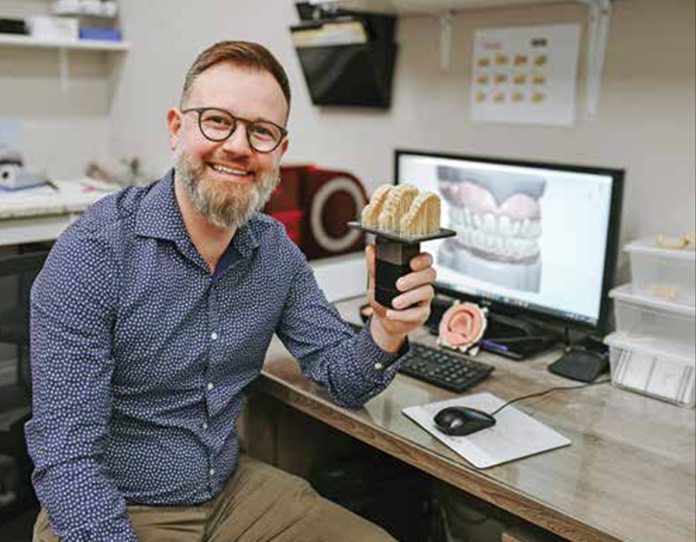
To keep up with increased demand, Kerr has invested in new technology to make the process for making dentures easier and quicker for patients.

In 2021, he transitioned from sculpting denture molds by hand, using wax, to doing them through a computer and 3D printer. That enabled patients to take test versions of their dentures home to try out.

“With the wax version, people got to try them for a few minutes, but if they tried to eat anything they would get destroyed instantly. Now I tell patients they have the chance to test drive before they buy,” Kerr said.

Last year, he upgraded his digital scanner that he said takes thousands of pictures to help enhance design. He says that investment has paid off – both for him and his patients.

“I’ve decreased the amount of time it takes to create each denture by more than 50 per cent. That frees me up to see more people and also means fewer appointments per patient.

“Doing it the old school way, people would be in my chair for a minimum of five appointments, sometimes as many as seven. Now, we’re cutting three appointments off on average,” Kerr said. “The quality of the product is just as good, if not better, and it can all be done much more efficiently.”

Ecopassages saving Highlands’ turtles

0

By Adam Frisk Local Journalism Initiative Reporter

For turtles that call Haliburton Highlands home, survival is a numbers game with increasingly deadly odds.

According to researchers with the Turtle Guardians, a program of The Land Between charity, a single snapping turtle may have to cross a roadway up to 16 times in a single migration season.

“You can’t redirect a turtle,” Leora Berman, founder and chief operating officer of The Land Between and Turtle Guardians, said in an interview last week. “This is the problem. It’s an enormous problem for turtles. And for drivers, but really for turtles.”

The organization has been quietly mapping and studying turtle habitats since 2010, and has recently reached a major milestone by completing what is believed to be the longest road study of its kind in North America, Berman said.

“We’re beginning to use that data to look at hot spots, like where are the worst spots for turtles,” she said.

The Turtle Guardians identified 970 potential crossing sites on rural routes across the Highlands, 97 of those in Haliburton County alone. However, identifying a problem site is easier than fixing it, Berman said. After accounting for driveways and technical constraints, researchers found that only five per cent of these sites are currently feasible for highpriority infrastructure.

“There are no turtles left in the cities because of roads and habitat loss,” she said. “Here, we are working our butts off to make sure our great-great-grandchildren can still see them.”

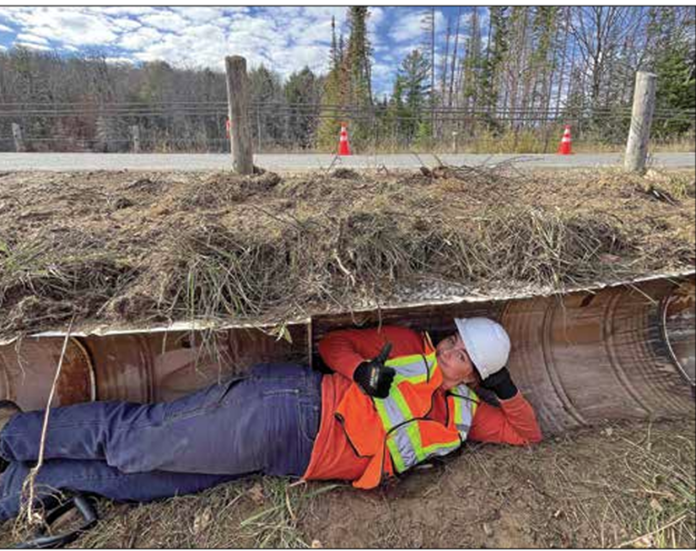
The organization has been testing a “pioneering” ecopassage fencing system at four priority locations. Berman explained that while past industrial attempts, like those on

Hwy. 69, have faced failures due to frost heave and maintenance issues, this new local design focuses on durability and simplicity. “Hwy. 69 is a classic example where millions of dollars were spent on this fencing system with areas where animals could get off the road,” she said. “But there were so many failures in it that now there are hardly any animals left in that whole zone.”

The design uses repurposed materials like heavy-duty steel barrels and a “skateboard ramp” concept that can be entirely backfilled, ensuring small animals like snakes and frogs don’t get trapped on the road. Another design concept features a folding fence system for steep areas that can be deployed in the spring and removed for the winter.

The project is awaiting $10,000 in engineering testing and patent approval. Once it gets the green light, the design could one day be adopted as a standard by the Ministry of Transportation and municipal road departments.

Berman noted that long-time residents report a total absence of the massive snapping turtles that once dominated the waterways.

“Mortality is going up, not down,” she said. “If you lose 20 per cent of the turtles in your area, they’ll be extinct within 20 years.”

As the summer season approaches, Turtle Guardians is seeking volunteers for road patrols and support for the excavation and incubation program, now the largest in Ontario. Residents are also encouraged to call the hotline at 705-854-2888 to report injured or nesting turtles.

“Adults are essential for the next generations,” Berman said. “Without breeding adults, you’re done.”

Elbows up for Haliburton’s Doc(k) Day

0

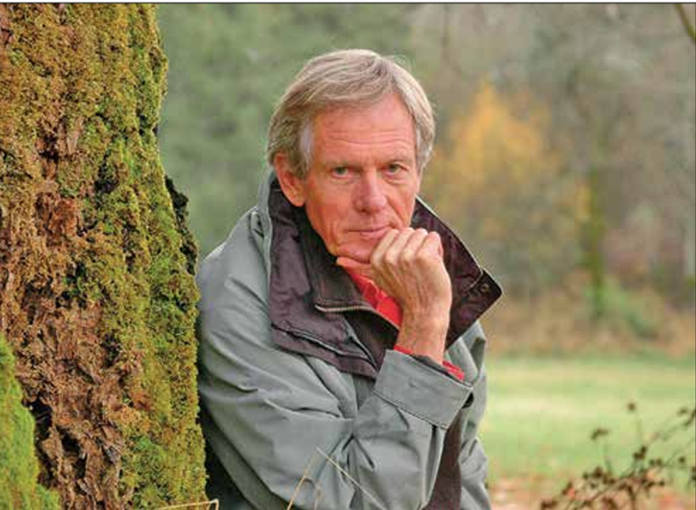
Canadian wildlife artist, Robert Bateman, is just one of the special guests who will attend Doc(k) day in Haliburton April 11.

Those Other Movies (TOM) and Doc(k) Day, which organize the one-day documentary film festival, announced March 16 that Bateman, Bristol Foster, and director Alison Reid, of The Art of Adventure, will be coming to introduce their movie and answer questions after the screening.

Myra Stephen, on behalf of the committee, said “as young men in their 20s, Bateman and spirited biologist Foster embark on a globe-trotting adventure in the 1950s in a Land Rover they name the Grizzly Torque. It is a powerful story of environmental activism, youthful naivety, human connections and respect for all living things.”

Reid uses footage taken by Foster and artwork by Bateman.

The other special guests are Ron Mann and Mairéad Filgate, who’ll discuss their film project, Clairtone. Mann directs this tale about the rise and fall of Clairtone Sound Corporation, an audacious Canadian electronics company founded by Peter Munk and David Gilmour during the vibrant 1960s. It features dancer and choreographer, Filgate.

Haliburton audiences have delighted in Filgate’s performances locally in Dusk Dances, Sculpture Forest Re-imagined, Note the Weather and more.

Stephen said they’ll bring four documentaries: three full-length and one shorter film to the Northern Lights Performing Art Pavilion for this year’s event.

“It is an opportunity to come together as a community to learn, reflect, and be inspired. We are excited this year to present an allCanadian line up with films that touch upon the immigrant experience, the natural world, artistic pursuits, community contributions, dementia care, entrepreneurship and adventure.”

Other films include I am the Art: Nobuo Kubota, which explores the life and artistic journey of 92-year-old Nobuo Kubota, a Japanese-Canadian artist whose work spans painting, sculpture, sound, music, installation, and film.

The other is We Lend a Hand: The Forgotten Story of the Ontario Farmerettes, which reveals the true story of the Ontario Farm Service Force. It put 40,000 volunteer teenage girls to work between 1941 and 1952, arriving from different parts of Ontario and Quebec to many locations in Southwestern Ontario. Their job was to ensure critical food production during a perilous period of modern history. Most had no prior farming experience. They worked under relentless weather conditions and schedules and produced hundreds of thousands of tons of food that was shipped to the frontlines to feed starving European populations and even prisoners of war. Many of the women are now in their late 90s.

VIP passes for the full day are available at thoseothermovies.com – $30 for Those Other Movies seasons pass holders and $35 for general public. A limited number of single tickets for all films will be for sale on April 11, starting when doors open at 9 a.m.

The schedule:

● 10 a.m. I am the Art: Nobuo Kubota (85 min.)

● Picnic lunch. Bring your own lunch; eat and chat together in the cafeteria.

● 1:30 p.m. Clairtone (73 min.)

● 3:30 p.m. We Lend a Hand – The Forgotten Story of Ontario Farmerettes (49 min.)

● 7:30 p.m. The Art of Adventure (90 min.) + Q&A with director Alison Reid

Training the next generation of actors

0

Instead of perfecting pirouettes and practicing advanced dance routines, a group of County kids have been learning the art of theatre at Haliburton’s Skyline Dance Studio in recent weeks.

Skyline has partnered with local performing troupe Ctrl-ART-Del to offer guided instruction to seven youth, teaching basic stage skills every Saturday morning since Feb. 7. The 90-minute sessions, led by Ctrl-ART-Del volunteers, were made possible thanks to a $6,135 donation from the Arts Council Haliburton Highlands and the Kennisis Lake Cottage Owners Association.

“This is a three-part connection, where Skyline offers the space, Ctrl-ART-Del leads programming and the Arts Council funds it,” said Ella Leis, stage and production manager with Ctrl-ART-Del. She said the initiative got underway after a chat with Skyline’s executive director, Amanda Conn, last fall.

“They have a musical theatre program they run as a dance class and get so many kids coming out for it, who absolutely love it and wanted an opportunity to learn more,” Leis said. “There aren’t too many theatre opportunities or classes for young children in Haliburton County. We normally work with teens but have wanted to branch out to younger demographics for years.”

Hannah Klose, the troupe’s assistant director and fellow founding member, said she was one of the first instructors to volunteer. Over the past few weeks, she, Leis and other Ctrl-ART-Del members have worked on performing building blocks, including movement and voice work.

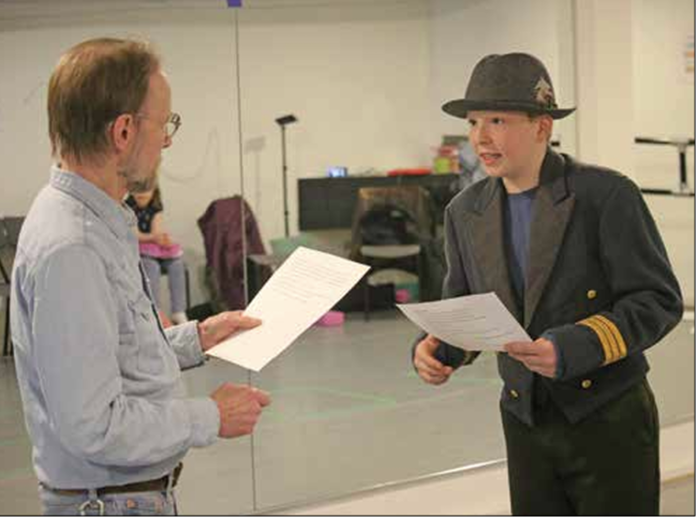
The key, she said, is teaching youth to find comfort within their body so that when they do take to the stage, they can keep a handle on their nerves. They started with fun games before advancing into practicing monologues and performing scene studies.

In week three, the students performed a piece from The Wizard of Oz. On March 14, at their final gathering, they took turns delivering individual segments from favourites such as Oliver Twist and The Little Mermaid.

Thirteen-year-old Joshua Morgan said this was his first exposure to any kind of in-person acting class, noting he was grateful for the opportunity to learn from experienced performers.

“Acting is one of my passions. I really like to make people laugh,” Morgan said. “The biggest thing I learned was that punctuation means pause.

“On a scale of one to 10, I’d have to say this was an 11,” he added, saying he’d like to take what he’s learned to the stage some day through Ctrl-ART-Del.

Leis and Klose say that’s the ultimate goal – sparking enough interest to create the theatre group’s next generation of performers.

“We try to instill the important foundations of theatre so that when these kids start to mature, they already have an understanding of how to stand on stage, how to be still, how to breath and speak loudly,” Klose said. “It’s all about making them feel comfortable in a theatre setting.”

With the theatre-based program proving popular, Leis said they’re hoping to run another next year. There are two further sessions coming up before that, also funded by the Arts Council. One is more musically focused, working on songwriting, and the other on pottery.

“The music one is going to be more teen focused, with the pottery for younger kids in that seven to 12 range. They’ll be running throughout spring and into summer,” Leis said, noting they’re free to participants thanks to the Arts Council money. Register at Leis at info@ctrlartdel.ca.

Flipping for funds

0

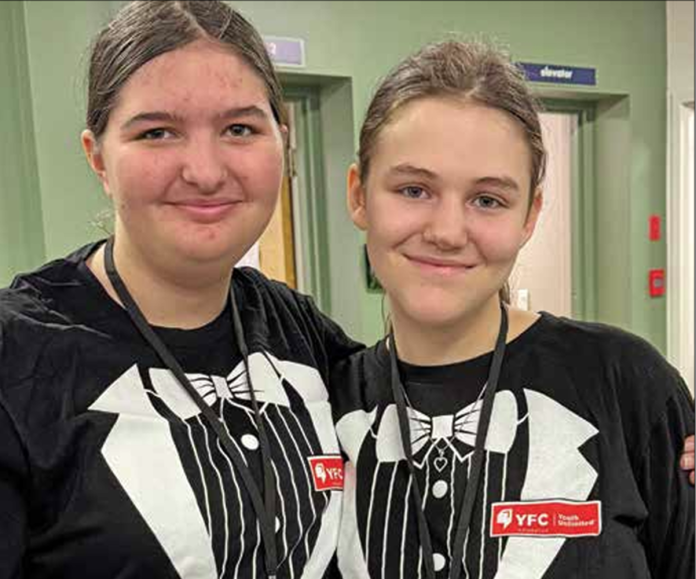
Haliburton Youth Unlimited had a successful second annual pancake fundraiser March 7 at Lakeside Church.

More than 100 community members attended to help them raise money to support their spring programs.

Weekly, Youth Unlimited provides free after school programs for youth Grades 4-12 at the Bridge Youth Centre in Haliburton.

Community director Leanne Young said more than 80 youth attend regularly, “benefitting from the free programming and positive community and activities.”

For more information about programs, or how to donate to support programming, go to www.yfc.ca/haliburtonhighlands/ or contact them at haliburton@kawyu.ca

Horsing around in the snow

0

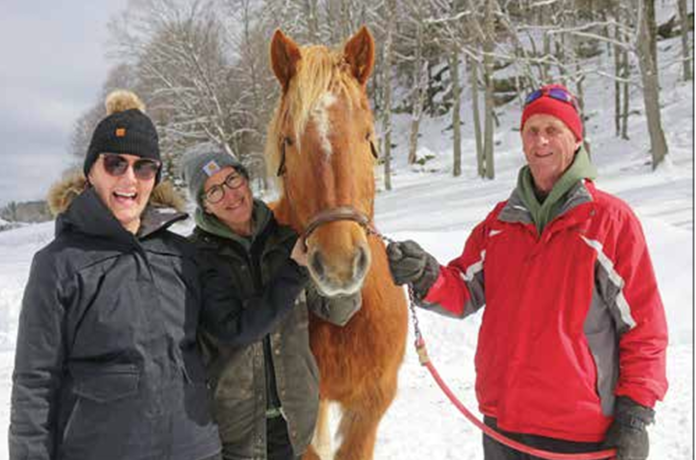
Walkabout Farm Therapeutic Riding Association took a late winter flurry in stride March 14, proceeding with its planned ‘Hike with Horses’ event despite overnight snowfall.

Owner Jennifer Semach said about a dozen people attended, enjoying strolls around her property’s trail system with Walkabout’s 10 horses – Coconut, Sweet Pea, Poppy, Sassy, Apollo, Monty, Gracie, Valentino, Julia and Ginny.

The non-profit offers equine-assisted therapy programs through spring, summer and fall.

Semach said there will be another Hike with Horses event April 11, with the popular Friendship Fri-YAY community drop-in resuming May 1, from 10:30 a.m. to 1 p.m.

The recreational equine assisted participation (REAP) program, where Semach takes some of Walkabout’s miniature horses into local long-term care homes, starts again in May, running every Monday.

For more information, visit www.walkaboutfarmtra.com.