

Home Blog Page 13

U9 MD Hockey Haven

0

The U9 MD hockey team enjoyed a memorable and successful season marked by growth, teamwork, and a strong sense of camaraderie.

From the first puck drop to the final game, the players demonstrated tremendous dedication and enthusiasm, improving their skills and supporting one another every step of the way. Practices were filled with energy and determination, and it was clear that each player took pride in contributing to the team’s development. From the pre-game chants to the smiles on and off the ice, these moments will all be missed.

Offensively, the team saw standout performances from top scorers Maddox Gaffeney and Nathan Demerchant, who consistently found the back of the net and led by example. They were supported by a talented group of forwards including Gryphon Luck, James Pettes, Jack Parker, Jack Reid, Ella Sperrino, and James Seed, all of whom brought speed, skill, and relentless effort to every game.

On the defensive side, Hudson Lynch, Annabelle Hutson, Johnny Adlam, and Easton Sperrino played a crucial role in protecting their zone, showing resilience and strong positional awareness. Behind them, goaltender Quinntin Clark made significant strides throughout the season. Having not played net at all before, Quinntin developed into a confident and reliable goaltender, making key saves when the team needed them most. His growth in the crease has been remarkable, and he has a very bright future.

Beyond the rink, the team created lasting memories during tournament travels. Time spent together at the pools, water park, arcade, and bowling alley brought the players closer and helped build strong friendships that will last well beyond the season. A season that would not have been possible without the dedication and commitment of the coaching and support staff. A special thank you goes to head coach Jamie Luck, assistant coach Jeff Burk, trainer Adam Hutson, and manager Ally French for their countless hours, guidance, and support. Their leadership helped create a positive and encouraging environment where players could thrive.

Overall, it was a fantastic season full of growth, friendships, and unforgettable moments both on and off the ice. Keep winning the small battles and the opportunities will come. Best of luck in your upcoming tryouts.
Punch Up hilarious and heartwarming

0

Youth theatre company, Ctrl-ART-Del is returning to one of its favourite playwrights as it gets set for a spring production of Punch Up.

The work of Kat Sandler, who wrote Mustard performed two seasons ago, has been chosen again.

Spokesperson Christine Carr said they selected this play for several reasons.

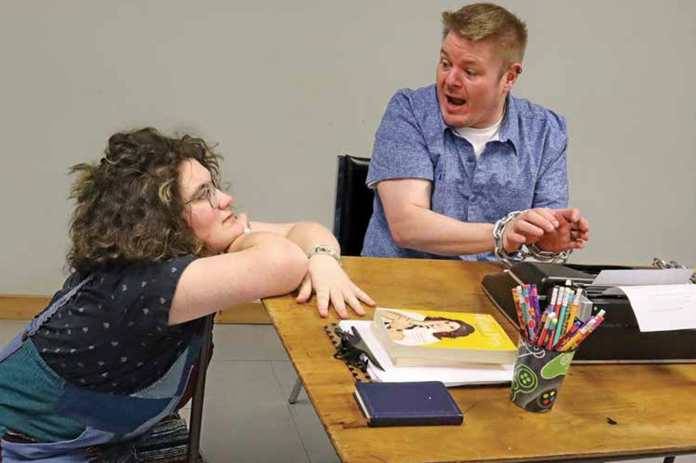
Punch Up features a cast of three. In the play, Duncan has always been a pretty boring guy, leading a simple life while working at a bread factory. He stumbles upon Brenda, a sad young woman who’s about to end her life. Convinced he’s fallen in love, Duncan strikes up a desperate deal: if he can get her to laugh, she’ll give life another shot, but if she doesn’t even giggle, he’ll help her go through with her plan.

There’s just one catch: Duncan isn’t funny. So, he borrows Pat, his second-favourite comedian, to help him come up with the perfect routine. But Pat is having a hard time mustering his sense of humour after a bad break-up.

Carr said Sandler’s plays are witty and entertaining, but reflect the real world and its many challenges. “It allows the cast to delve into deeper themes in very relatable ways, and that comes through to the audience. They will be entertained, will absolutely laugh, but hopefully will also be made to think,” she said.

Asked about a theme of suicide ideation, Carr said, “a scary part of today’s world is how real and prevalent these challenging themes already are in society. That reality is paralleled in many of the works we choose to produce. As with any of our plays, we focus on creating safe spaces where the cast can explore the themes and topics, knowing they have support.”

She said Punch Up examines how people can fight the darkness by finding love and laughter in their life. “It explores the importance of connection.”

The cast features some familiar faces: Chris Chumbley, Sophie Lee and Spencer Zumpano.

Chumbley plays Pat. Carr said, “Chris perfectly embodies Pat, the bitter yet hilarious cynical comedian. This role allows him to showcase his comedic timing and his capacity to embody the character, no matter how damaged they may be.”

Zumpano plays Duncan. “Spencer previously played this role during our youth scene study and connected well with the character. He pairs his love of comedy with his acting experience to bring an unintentionally hilarious and awkward character to life,” Carr said.

Lee plays Brenda. Carr said, “Sophie’s character has experienced true heartbreak and loss and Sophie brings these challenging emotions to life, countering Duncan’s comedic nature. She helps ground the production and has stepped up perfectly into a more serious role.”

Carr encourages folks to check the play out.

“This play is hilarious yet also heartwarming. It explores the importance of love and connection in what can be at times a challenging world. While the play tackles serious topics, it is one that has left us dying of laughter throughout the rehearsal process. We are very excited to see the audience react to the play’s humour and life.”

Recommended for ages 13+ due to the serious nature of the themes and language. The play is April 16-18, 7:30 p.m., at the Northern Lights Performing Arts Pavilion. Tickets are available on-line (tickets. ctrlartdel.ca) or at the door.

What a night

0

I ended up getting a little more than I bargained for sleeping overnight in my car in Head Lake Park last Friday (March 27).

For years, I’ve covered Places for People’s annual Sleeping in Cars fundraiser. My first one was 2021, back when it was held at Abbey Gardens. I remember speaking to an older couple there who came out to share their experiences sleeping in sub-zero conditions in a barely-heated caravan that winter.

I felt for them, as most empathetic people would. But I didn’t really understand their situation as, fortunately, I’d never been exposed to the elements in such a brutal and prolonged way.

I got a taste of sleeping in the cold last spring, when the power at my Lindsay home was out for five days thanks to that historic ice storm. Still, I was inside an insulated building in a comfy bed next to another warm body and wrapped in half a dozen blankets.

Having gone through that, I mistakenly believed I was experienced in the art of arctic sleeping. I agreed to partake in P4P’s fundraiser without any worries or concerns. Despite most of my friends and family looking at me like I’d gone mad when I told them what I’d be doing, I thought I’d be fine and approached the night as something of a vacation.

Temperatures rose in the lead-up to the event, but it was chilly before sundown – around -6 Celsius. The overnight low was listed as -14, feeling like -18 with the wind chill. Hanging around the fire with some of my fellow car-sleepers, I fooled myself into thinking, again, that this wouldn’t be much of a challenge.

After some hearty conversation with familiar faces – and life stories shared with new friends – I trudged off to my car around 11 p.m.

I didn’t prepare as well as some – I saw many people with mattresses in vans, trucks and SUVs – but still, I was proud of the cozy set-up I’d arranged in the back of my Ford Edge. After a brief call home, I settled in to watch a movie on my phone, hoping I’d drift off to sleep part-way through.

I didn’t.

About 30 minutes in, I had to switch positions to stop my breath from condensing the screen. Around the hour mark, I reached back for my hat and gloves, reapplying them to my near frozen appendages. By this point, I was wearing a pair of longjohns, sweat pants, pyjama pants, two pairs of socks, a shirt, sweater, hoodie, fleeced overthrow and wrapped in three blankets.

By the time the movie ended I couldn’t feel my toes. Thankful for the heat packs I accepted from a P4P volunteer earlier in the night – but internally swore I wouldn’t use while inside my car – I applied two on each foot and hand.

There was some relief initially – enough that I was able to drift off sometime around 1 a.m.

My slumber didn’t last long – I awoke every 30-45 minutes for the rest of the night. I could, and probably should, have turned my car on to warm up. But I felt that would have defeated the purpose. Yes, I was there to raise money for P4P. But I was also there to experience what it’s like for those less fortunate than myself.

When the sun came up just before 7 a.m., the inside of my car was like an ice palace. I had to scrape all the windows before setting off home.

It was a miserable night, but one I’m glad I endured. Truly roughing it without a heater felt like I’d legitimately earned the $380 raised from family and friends. It also gave me a much greater appreciation for the warm bed I have at home. I don’t think I’ve ever slept as well as I did on Saturday.

It might be a stretch to say I enjoyed my overnight stay in Head Lake Park, but it was an experience I can honestly say I’ll never forget.

Wins for health care

0

While many people are still smarting over the loss of the emergency department in Minden, no one can argue that having one ER site has allowed medical improvements in Haliburton County.

Haliburton Highlands Health Services (HHHS), with the help of its foundation, and the general public, has seen a $6 million investment in the diagnostic imaging wing.

To recap; we got a CT scanner in 2024. We were recently told that having a CT has led to a significant decrease in out-of-town ambulance trips for patients. Our ambulance service isn’t taking as many people to Lindsay, Peterborough, or Bracebridge for CTs.

Between 2022-23, the number of transfers was climbing. Now, the number of trips has dropped by about 67 per cent from a 2023 peak. They’re now doing about one transfer a day, down from three. That means more ambulances staying in the County for Highlands accidents and emergencies.

It also means less fuel and wear and tear on ambulances – which means our ambulances will last a little longer. We also know that having a CT scanner has helped with physician recruitment. After years of not much action, we are starting to see more regular announcements about family doctors and ER physicians coming to Haliburton County.

The next addition was the mammography unit. Once again, it is saving women and some men from having to travel to regional hospitals for the scan. It’s another gamechanger.

And, just last week, the health services unveiled a new state-of-the-art X-ray suite. Moving it from its current location will also result in changes to the ER to improve patient flow, and adding a mental health room to support community members and families when they need a private space.

On March 25, County council was expected to green light the financial paperwork to bring Dr. Jeet George for a May 1 start. That’s another 700 patients off the waiting list. He’ll be at the Highlands Family Health Organization and working a day a week in the ER. The team still needs three additional family physicians to bring their staffing level to a full complement, but it’s come a long way.

Today, we have an exciting story about how HHHS is bringing a virtual simulation program to the hospital. Thanks to Dr. Harrison Bishop, it means doctors and nurses, and other members of the healthcare team, can train onsite for possible accident and emergency scenarios, rather than doctors having to go to larger centres for training. Ultimately, it means better patient care for all of us.

The other big news sees Jack Hutchison taking the reins as president and CEO of HHHS March 30. Hutchison spent 11 years working with
the Weeneebayko Area Health Authority, made up of a group of six Indigenous communities across the western James Bay Coast – the past three as senior vice president and chief operating officer. In 2022, he also spent nine months as vice-president of people and culture at Headwaters Health Care Centre in Orangeville.

With the departure of former bosses Veronica Nelson and Jennifer Burns-West to Ross Memorial Hospital, Hutchison is joining a health service that has had some wins.

So, as much as we lament the loss of the Minden emergency department, we look forward to seeing what Hutchison and his team can continue to do at Haliburton hospital – our County’s hospital.

Council pumps brakes on transit talks

0

Once again, plans for a bus between Haliburton village and Minden Hills – with the possibility of one day expanding to Algonquin Highlands and Highlands East – have driven off the road because staff and council have deemed the cost to be too high. In a report to a County of Haliburton council meeting last week, director of economic development and tourism, Scott Ovell, asked councillors to pump the brakes.

The County issued a request for proposals for an on-demand or hybrid transit service in the fall of 2025. They received four bids. However, Ovell said they were all more than double the $182,601.52 the County has in a transit reserve. “If County council still wishes to explore
transit solutions within the County, staff would recommend discussions during 2027 budget deliberations around annual contributions towards the transit reserve,” he said.

This term of County council has been trying to find an affordable provider since 2024 with no success.

Ovell added the Eastern Ontario Wardens’ Caucus has been discussing how the provincial government is working towards developing provincial framework to standardize ride-share rules. He said the goal is to improve service in rural areas and reduce municipal red tape as individual municipalities regulate and manage taxi and ride share licences.

Some towns subsidize rides

“It should be noted that if this were to take place, it would not guarantee a ride-share company would choose to operate in Haliburton County, with some businesses citing population density and geography as cost barriers to entering the marketplace in rural Ontario, with some seeking subsidies from local municipalities to offsetoperating costs.”

He said a recent example is Prince Edward County, which used $50,000 of its portion of the Municipal Accommodation Tax in 2023 to support a partnership with Uride. He noted the contribution was lowered to $30,000 in 2025.

“County staff will continue to monitor progress on the provincial legislation and will follow up with council should provincial legislation be updated.” Ovell added.

Coun. Bob Carter said the need for some form of public transportation “is not going to go away… particularly as the County’s population grows, and to more unsettled areas.” He agreed with what was being proposed but said, “I think the next step is we should ask staff to try to put together what it would cost for us to have transportation. In other words, what would the subsidy need to be. So, when we get into budgeting, we decide.” He said towns such as Peterborough heavily subsidize their transportation,supplemented by Trent University providing students with bus passes.

Coun. Jennifer Dailloux suggested it might be time to scrap a fixed route system, in favour of subsidizing private systems. She suggested they talk to organizations such as Point in Time, and SIRCH, as well as Haliburton Highlands Health Services. The latter two have trialled smaller transportation projects in the Highlands.

Coun. Murray Fearrey said with little commercial or industrial tax base, the cost will come on the backs of residential taxpayers.

CAO Gary Dyke said they are not stopping the discussion, and staff will be looking to reprioritize spending in future. “Transit will be an important part of this as we go forward.”

The Ontario government announced April 1 it is doubling its support for the Ontario Transit Investment Fund (OTIF) through the 2026 provincial budget, increasing it from $5 million to $10 million annually over the next three years. The OTIF supports the start-up and expansion of transit projects like new bus services, on-demand rideshare services and door-to-door transportation

Minden Hills to crack down on STRs

0

Minden Hills is about to give its short-term rental bylaw more teeth by making the STR coordinator a full-time, permanent position
and looking to implement an administrative monetary penalty (AMP) to help with enforcement.

Council made the moves at its March 26 meeting on the recommendation of new director of finance, Zach Drinkwalter.

The township developed a STR bylaw in 2024 to police the industry and adopted a four per cent municipal accommodation tax (MAT).

They hired Granicus Canada to help with administration, but municipal staff are still required to manage licences, respond to questions from licence holders, follow up with non-compliant property owners, and coordinate inspections.

Last September, the town hired someone to work 24 hours a week to help, with the contract up this coming fall. Drinkwalter said since the new hire started, “there has been a noticeable improvement in compliance and increase in corresponding revenue. For example, prior
to the position, there were 67 properties not in compliance, but, as of January, that number has been reduced to 46. However,

Drinkwalter said more non-compliant properties show up each week.

There are problems with MAT collection too, he said, such as property owners being unsure of how to report, failing to report on time, or submitting inaccurate reports.

“While the bylaw permits the township to audit STR operators to ensure accurate reporting, no staff had previously been assigned to carry out this function, nor was there the capacity to address this new line of business,” he said.

“Since the introduction of the part-time position, the township has seen a significant increase in MAT collection.” For example, they collected $0 in MAT tax in 2024, $13,681 in 2025 and $23,448 so far in 2026.

With STR revenue, it went from $10,000 in 2024, to $48,500 in 2025 and $4.500 so far in 2026.

“These amounts are expected to increase further with the proposed changes,” Drinkwalter said.

Amping things up

Drinkwalter added they don’t have the tools to enforce the new laws, so recommended the AMPs. They’re are a municipally administered enforcement tool that allows local governments to issue financial penalties for bylaw violations through an administrative process, rather than through the provincial court system.

When a penalty notice is issued, the recipient may either pay the fine or request a review through a municipal screening and hearing process. The system lets municipalities keep 100 per cent of the revenue generated from penalties.

“Implementing AMPs will provide the township with an effective tool to issue and collect fines for non-compliant STR operators in a timely and efficient manner. AMPs can be expanded to other areas in the future,” Drinkwalter said.

He said the new full-timer could administer AMPs, anticipating revenue to cover the added costs. He estimated$204,164 in revenue in 2026, offset by $140,106 in expenses.

Mayor Bob Carter agreed with the AMPs, saying fines must be punitive enough to dissuade people from operating without a licence. A fine schedule will come back to council for future approval.

Coun. Tammy McKelvey also wanted AMPs, and that they be applied to all bylaw infractions, not just STRs. She initiallystruggled with making the position full-time due to cost. However, she was convinced by Drinkwalter and CAO Cynthia Fletcher.

Fletcher said, “if you want the program to be successful, you have to resource it properly.”

Coun. Pam Sayne was in support, saying hopefully over time the position would pay for itself.

Deputy mayor Lisa Schell said she would hold true to the principle that the STR program must pay for itself, without using taxpayers’ money. She also questioned whether they would need bylaw to work after-hours.

Drinkwalter said his experience with other councils is the program was self-funded and generated substantial revenue, with some night and weekend work required for enforcement.

Minden starts up septic re-inspections

0

Minden Hills said it will start its annual septic re-inspection program in May “to ensure the protection of our local environment and water quality.”


The township is hosting a public information session about the program April 7 at 6:30 p.m. at the S.G. Nesbitt Memorial Arena (55 Parkside St., Minden). It is for Zones D1 and D2, which can be found on a map at mindenhills.ca/septic reinspection.


The township said inspectors will conduct on-site visual assessments of sewage systems to identify potential malfunctions or environmental risks between May and October. Affected property owners will receive a detailed notice by mail prior to the inspection.


They are asking homeowners to ensure their system components (tank and leaching bed) are accessible and the questionnaire is returned to the septic re-inspection program email as soon as possible. These questionnaires must be returned prior to the inspection date. They
will be included in the package mailed to property owners in this year’s inspection zone.


For program details, maps with zone detail, and FAQs, visit www.mindenhills. ca/septic-reinspection

JDH parent council to query survey

0

The J.D. Hodgson parent council is following up with Trillium Lakelands District School Board’s (TLDSB) equity and inclusion task force committee to address concerns local families have raised with a recent student census completed in-class by youth in Grades 7-12.

Chair Andrea Hogan told a parent council meeting March 30 she’ll be writing a letter to TLDSB, while also raising the issue at an upcoming district meeting attended by regional parent council figureheads.

This is in response to the census, completed March 3, where students were asked to answer questions about their first language, Indigenous identity, ethnic origin, race, religious beliefs, gender identity, sexual orientation and their family’s socio economic status.

Philip Primavera and Minna Schleifenbaum, who have three kids enrolled at JDH, have criticized the survey. They were registered speakers at the meeting and asked why the school board needs to know sensitive information about kids. They also expressed concern over the
impact questions may have on them.

Primavera said he wrote a letter to TLDSB in March seeking answers, receiving “a standardized response, which was total dribble.” He followed up twice, asking for specifics on how the board would use the information to improve student learning and has not heard back.

“I think it’s fair to say when something like this is introduced in a school setting, parents deserve a clear, specific explanation,” Primavera said. “I also question how this was done. If the survey was truly voluntary, why was it administered during classroom time instead of being sent home for families to review together?

“If this had been sent home and required a parent’s signature for processing, I believe many families would have taken a closer
look at this,” he added.

Principal David Waito said letters were sent to parents Jan. 31. Parents had until Feb. 12 to opt out. According to TLDSB, only 0.77 per cent of the student body were pulled.

Hogan asked Waito how the survey was administered and how teachers handled students who had been opted out. He said educators went over vocabulary and made sure kids understood all the terms included. It was completed on a Chromebook and took 15-20 minutes, with Waito saying students were also told they could skip any question they felt uncomfortable answering.

Students who didn’t participate had the option of completing other schoolwork or reading, he said.

Schleifenbaum felt the questions were too heavy and wondered if youth as young as 12 were properly equipped, educationally and
emotionally, to interpret them.

One teacher at the meeting said her Grade 8 son took the census and admitted he didn’t know how to answer some of the questions.

“These are not neutral questions. They carry emotional weight and can shape how a child perceives themselves within their school community,” Schleifenbaum said, asking if the board or Waito vetted the survey before it was released. “The school must have approved this… what makes this OK?”

Waito said some of the questions are mandated through Ontario’s Anti-Racism Data Standards – though controversial ones on sexual orientation, gender identity and socioeconomic status were recommended, not required.

“We have to do a census every two years,” he said, noting recommended questions come from data TLDSB has deciphered from provincial Right to Read and Dreams Delayed reports, outlining how information about a student’s background can help schools build plans to improve the educational experience for youth from different cultural or ethnic backgrounds or with learning disabilities.

“I’d encourage you to take a look at those documents… because they talk about the importance of different approaches for students with different racial and socioeconomic backgrounds,” Waito said.

Primavera also queried how much had been spent on this census, noting how JDH and Stuart Baker elementary school councils are currently fundraising $300,000 for a new playground. Those pieces of infrastructure are not covered by the Ontario government.

The Highlander asked TLDSB how much the census cost but did not receive a number, only confirmation the district received reimbursement from the province.

“It’s incredible the province is prioritizing this sort of stuff over the physical and mental stimulation a playground provides,”
Schleifenbaum said. “We have our priorities all wrong.”

Hogan said she would report back to parents once she hears from TLDSB.

“I’m looking for answers to some of these questions too,” she said.

Mayor says new footbridge a priority

0

Dysart et al mayor Murray Fearrey has promised the township is committed to replacing the faltering footbridge in Head Lake Park.

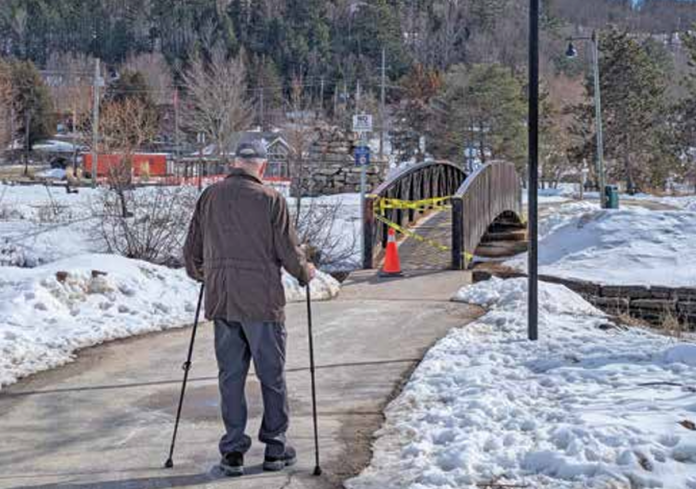
The walkway has been in poor condition for several years and was closed for three days March 27-30 after municipal officials were notified about a missing deck board. Parks and recreation manager, Andrew Wilbee, investigated the bridge on Monday and said two boards were missing. Staff replaced the missing pieces and had the bridge reopened that afternoon.

“This will only be a temporary fix as it is becoming more and more difficult to fasten the boards to the metal frame,” Wilbee said.

Public works director Rob Camelon told council in early 2024 the bridge was nearing end of life, with the underside heavily rusted. Council initially approved a $590,000 replacement in October 2024 but did a U-turn last week, opting to shelve the project.

That came after Camelon said the price may be even higher now due to a lack of steel availability in Canada. Due to U.S. tariffs, importing sheet steel and tube piling – needed to secure the foundation – would significantly increase costs, Camelon said.

“We may go to tender and the price could come back just ridiculous and we can’t afford it,” Camelon told council at its March 24 meeting.

There, coun. Pat Casey asked about installing a Bailey bridge – a portable pre-fabricated structure – which he said could be sourced locally through Canadian manufacturer Algonquin Bridge.

Camelon said there would be structural issues to overcome going from an arced design to a straight structure, but the biggest obstacle would be getting the pre-fab design approved by Transport Canada. The federal body has rules around required headspace under bridges on navigable waterways.

“I think we’re going to challenge Transport Canada on that,” Fearrey said. “We have the Emmerson Dam on the one side and there’s
no way to pass that even in a canoe, so it’s not navigable. We’re hoping to make the case to put a flat bridge in there.”

Going with a Bailey bridge would likely cost $100,000 to $250,000 – saving the township some serious money, Fearrey said.

Public wants bridge

Haliburton resident Bill Cornwall was walking in Head Lake Park on Friday when he came upon the closed off bridge. He was surprised as there were no signs or warnings at the park entrance, only caution tape covering the structure.

He encouraged council to proceed with a permanent fix as soon as possible.

“If it needs to be replaced because it’s dangerous, then they need to replace it,” Cornwall said. “This is a really nice park. It’s a big advantage to Haliburton. An attraction that brings people to the community.”

Jennifer and Steven Waugh were in the park with their two kids on Friday evening and had to re-think their usual walking route.

“It’s not so bad if it’s closed for a couple of days, but it would be a shame if they cut off the two sides [of the park] for a long time while they figured out what they were doing,” Jennifer said. “A lot of people come here to get their exercise and like to walk all the trails, go between the playground and the beach. It would cut off the dog park from the boardwalk, and I know a lot of people use both, especially come summer.”

Fearrey reiterated there are no plans to tear the bridge down without a replacement.

“We won’t leave the park disconnected – we’ll be putting a new structure in there one way or another,” the mayor said.

Councils urged to strike pay committee

0

By Susan Tromanhauser

Grey Highlands coun. Dane Nielsen suggested the public urge Haliburton County councils to form a remuneration committee, like the one in his rural area, during a Haliburton Highlands Healthy Democracy Project public meeting March 25 in Minden.

The Voices and Votes speaker series also heard from former Dysart et al councillors Andrea Roberts and Pat Kennedy and former Algonquin Highlands coun. Carol Moffatt.

Nielsen’s township is a rural community, similar to Haliburton County.

The out-of-town politician said a non council committee in his municipality determined appropriate compensation, which included salary with the same cost of-living raises as staff, along with benefits and mileage.

“If you want someone to learn about sewers and take it seriously, they need to commit serious hours.”

Nielsen added, “no one should be acclaimed – you want the best people.”

There were numerous acclamations across the Highlands in the 2022 municipal election, and voter turnout was low, birthing the HHHDP for the Oct. 26, 2026 poll.

Kennedy acknowledged compensation may be too low to attract young people needing to balance family and work life. With most meetings in the daytime, it discourages working people, but, “if they changed meetings to evenings, the costs would rise to pay staff overtime,” he said.

Compensation ranges across the County are fairly consistent. Highlands East mayor Dave Burton was the lowest paid in 2025
at $32,500 and Dysart et al mayor Murray Fearrey the highest at $40,000. Algonquin Highlands mayor Liz Danielsen made $38,000 with Minden Hills mayor Bob Carter getting just over $38,000.

Deputy mayors received between $25,000 30,000, with councillors paid between $20,000-25,000. Officials that sit on County
council receive extra pay.

Roberts told the crowd of almost 100 her experience taught her “to take pleasure in the mundane things, like reviewing zoning
bylaws.”

Kennedy agreed “you learn to like” discussions about septic systems but there are also highlights of seeing public projects come to fruition and being able to say, ‘I was part of that’.” He cited the visitor centre in Head Lake Park and the Fleming College residence as examples.

Moffatt acknowledged projects sometimes start, but are not completed in a term. She said municipal operations take longer than
private projects. She advised patience.

“You don’t have to like the rules, but you need to work within the rules (of local government).”

The panel members expressed concern about dealing with angry constituents, or fellow councillors. Moffat advised, “you’re supposed to disagree – council should be made up of divergent opinions, different backgrounds.”

Kennedy added it is the role of a councillor to talk with staff and colleagues in a way to “agree to disagree and still go to lunch with them.” He added “people will stop you in the grocery store, and it is important to listen actively and with compassion.” But Kennedy does not
like social media as a method to engage, advising potential candidates “stay off Facebook.”

Nielsen said constituents “are not mad at you, they are mad at the situation. I’ve been called a bleep on Facebook, but not to
my face.” Nielsen believes debate makes communities the best they can be. He added being a local politician is an opportunity to
network with other councillors across the province and learn good ideas to bring back home.

Advice also came from the crowd when former Minden reeve Jeanne Anthon suggested everyone read the local newspaper for facts, not opinions, to learn more.

Haliburton Highlands Healthy Democracy Project next meeting: April 21 Stanhope Community Centre, Lauren Hunter – How to run a successful campaign.